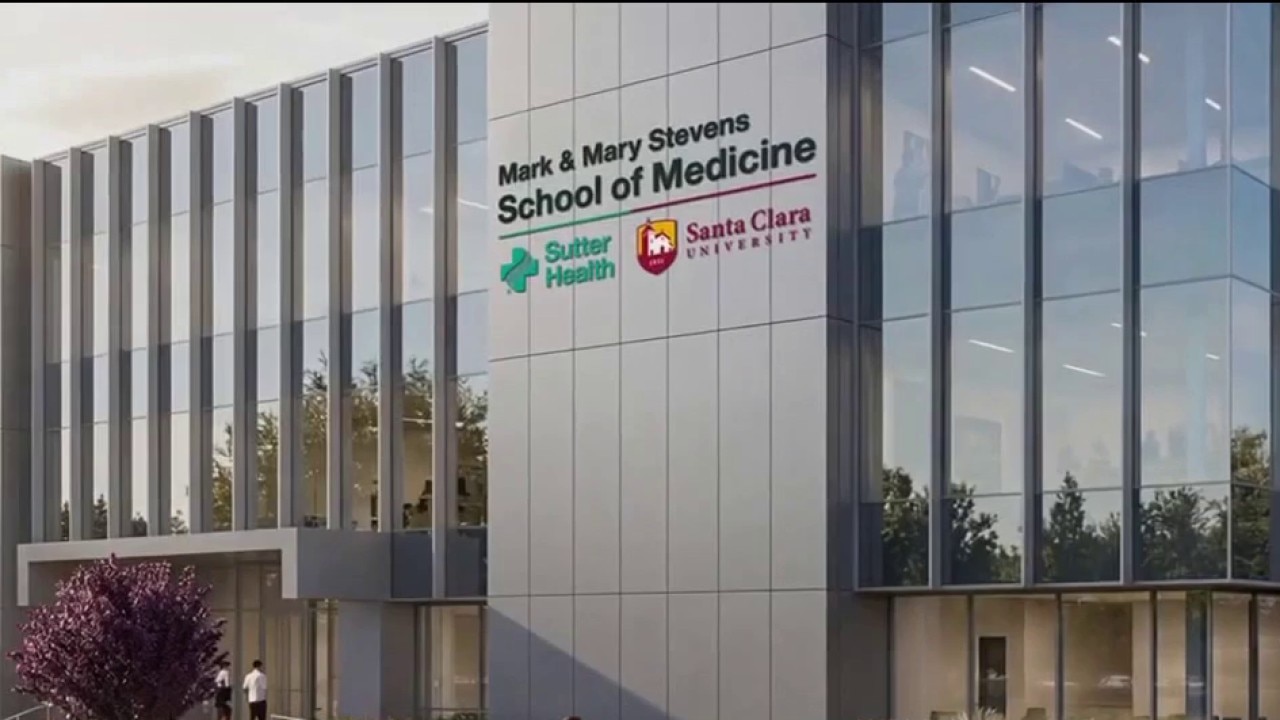
Santa Clara University and Sutter Health plan to open the Mark and Mary Stevens School of Medicine, backed by a $175 million family donation and designed to graduate about 120 physicians annually once accredited. The school will emphasize AI and advanced technology in medical training, aiming to help ease the estimated 100,000-physician annual workforce shortage and strengthen Northern California healthcare capacity. The announcement is strategically positive for regional healthcare infrastructure, but immediate market impact appears limited.
This is a slow-burn supply response, not an overnight fix, which matters for valuation. The immediate beneficiaries are not the schools themselves but the surrounding care-delivery ecosystem: regional health systems, outpatient networks, and ancillary service providers should see a tighter labor pipeline over a 5-10 year horizon if even a fraction of graduates stay local. That creates a modest but real structural advantage for Northern California providers that can offer residency slots, research affiliation, and tech-enabled training environments.
The second-order effect is on physician labor inflation. If this model is replicated, the most exposed cash cost line is staffing for smaller hospitals and independent practices that already lack bargaining power; academic medical centers and integrated systems should absorb talent more efficiently, while rural and subscale facilities face higher contract labor spend. The AI-forward curriculum is also strategically important: it may accelerate adoption of documentation automation, clinical decision support, and workflow tools, creating a nearby demand node for healthtech vendors with enterprise sales motions.
The market may be underestimating the duration risk: accreditation, faculty recruitment, and residency placement are multi-year gates, so any investment case tied to relief in physician supply is premature. The bigger near-term catalyst is not the school opening itself but whether Sutter can turn this into a branded training moat that improves retention and reduces locum tenens dependence. Conversely, if the program struggles to secure enough clinical training capacity, the initiative becomes more symbolic than economically meaningful.
Contrarian view: the shortage narrative is consensus, but the investable angle may be misread. A new medical school is a demand signal for healthcare labor and AI tooling, not a direct fix for margins; in the interim, wage pressure can intensify before it abates. That makes the best trades those that benefit from prolonged scarcity and digitization, rather than betting on near-term normalization.
AI-powered research, real-time alerts, and portfolio analytics for institutional investors.
Request DemoOverall Sentiment
mildly positive
Sentiment Score
0.30
