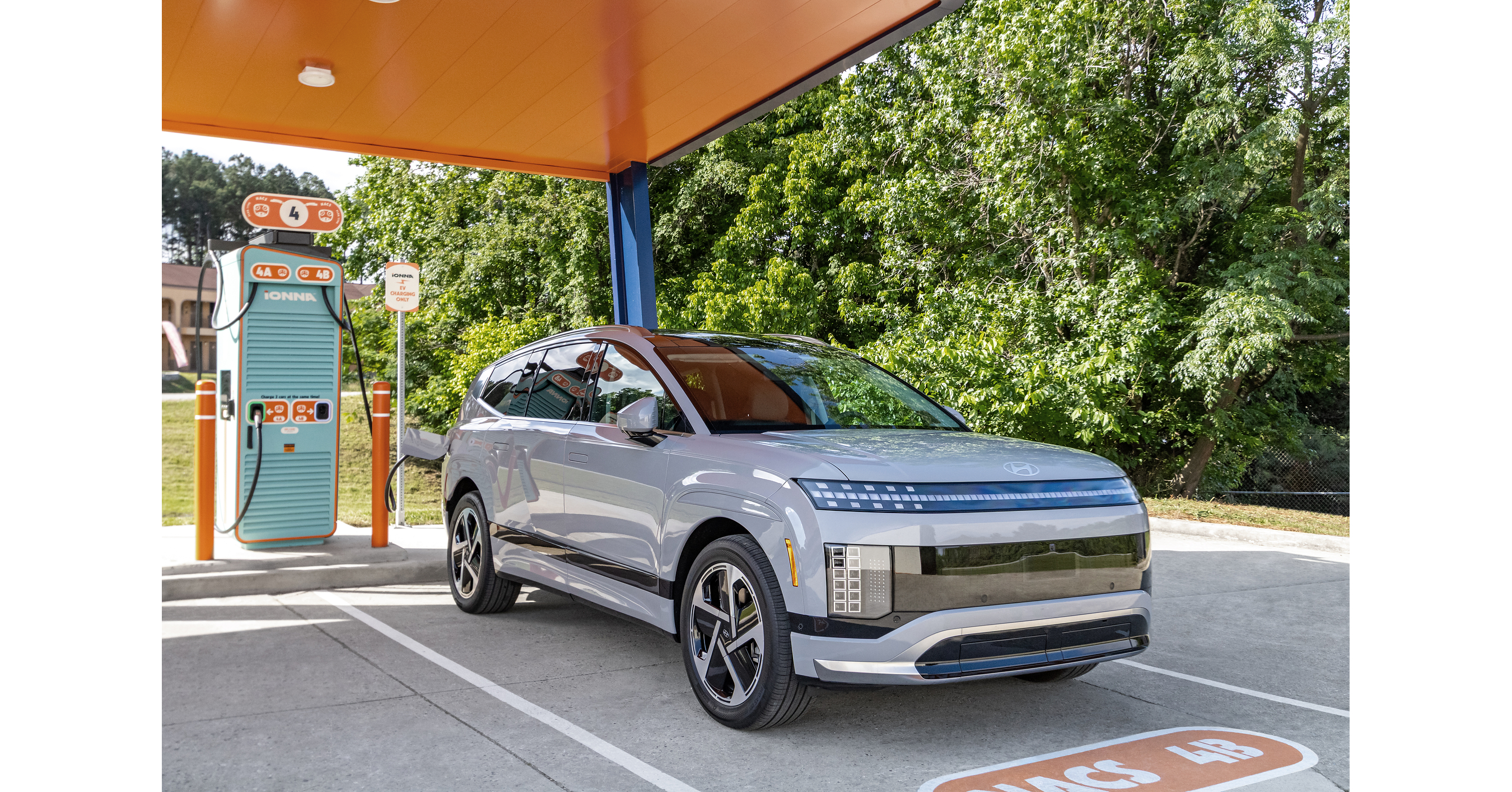
Hyundai is stacking charging discounts at IONNA: eligible EV owners get an automatic 10% ongoing discount plus an additional 10% bonus on charging sessions, totaling 20% through Sept. 30, 2026. The savings apply automatically at IONNA fast-charging stations when customers use Hyundai In-App Charging (MyHyundai with Bluelink) or Plug & Charge. The promotion is combinable with other IONNA limited-time offers, and Hyundai/Genesis indicated it is intended to continue indefinitely, subject to modification or termination.
This reads like a customer-acquisition subsidy, not a meaningful earnings lever. The incremental discount is too small to matter at the consolidated P&L level, but it does matter at the margin for EV conversion because it reduces one of the last remaining frictions: payment complexity and charging uncertainty. The real economic asset is not the price cut; it is tighter software/charging integration that can raise repeat usage, improve lease residual confidence, and slightly lift take-rate on higher-margin EV trims over the next 1-3 quarters.
The second-order effect is on network economics. IONNA is effectively paying for utilization and ecosystem stickiness before station economics are proven, which is normal in the build-out phase, but it means near-term margins are being sacrificed to create habit formation. Hyundai is the obvious near-term beneficiary, while GM, STLA, and MBGYY gain only indirectly if the network becomes credible enough to lower EV adoption friction across the consortium. The more important loser is any charging platform that competes primarily on price rather than reliability and integrated payment flow; this reinforces the idea that software friction, not nominal charging cost, is what drives EV loyalty.
Contrarian view: the market may be overestimating the demand impulse from a promotional discount. If IONNA uptime, station density, and plug-and-charge adoption do not scale, this stays marketing spend with limited unit uplift. The thesis would be falsified if Hyundai U.S. EV share does not improve over the next 1-2 quarters, or if the promo is extended repeatedly, signaling that the network still needs subsidy to generate traffic. In that case, the right read is not share gain, but weak underlying EV demand that requires ongoing incentives to sustain.
AI-powered research, real-time alerts, and portfolio analytics for institutional investors.
Request DemoOverall Sentiment
mildly positive
Sentiment Score
0.25
Ticker Sentiment
