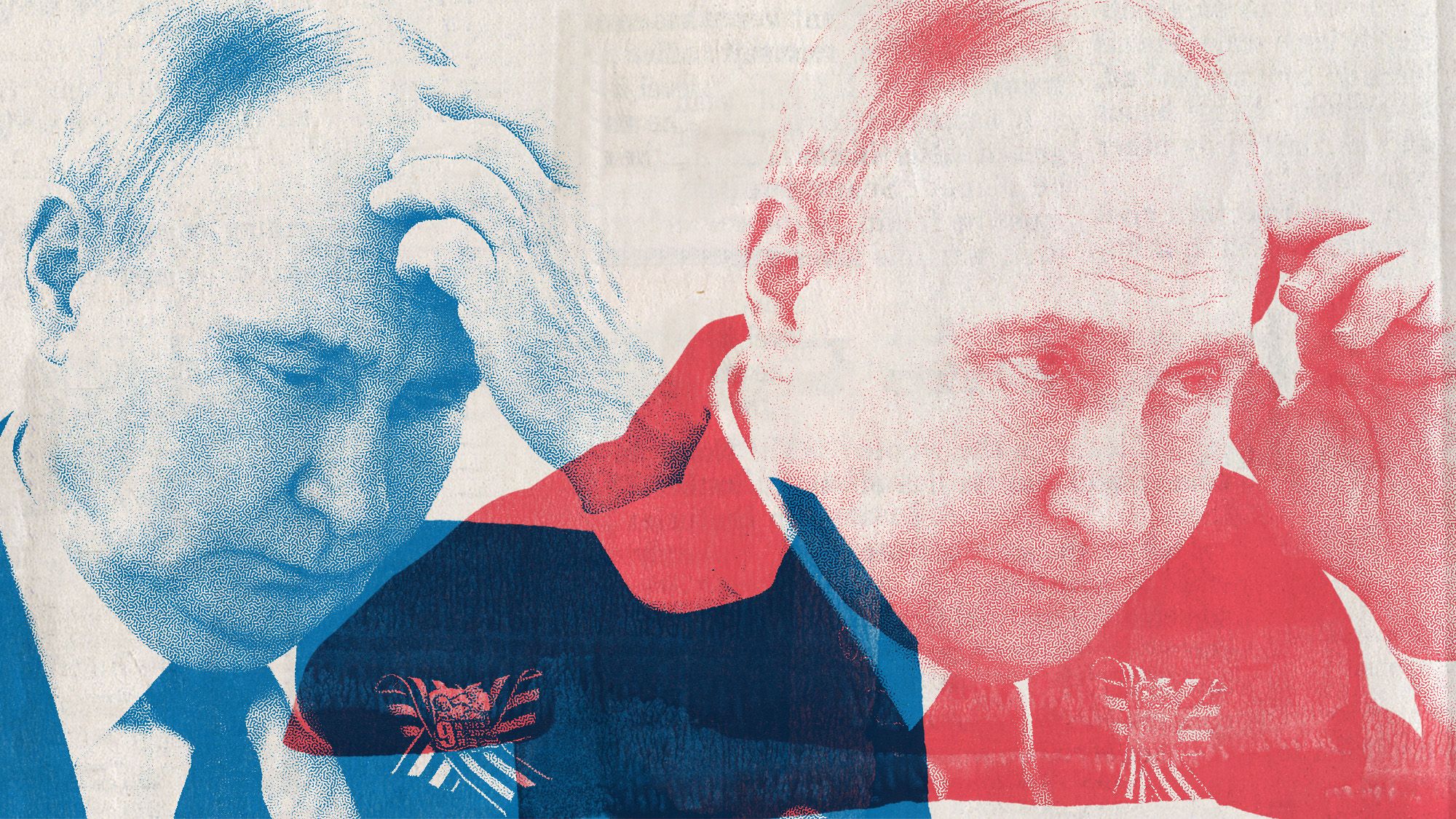
The article describes growing internal pressure on Vladimir Putin amid an unpopular war, allegations of elite dissent, and heightened security measures, including reported bunker stays and surveillance of close staffers. It also cites signs of weakening informal protections within the Russian elite and the possibility of unrest ahead of parliamentary elections. The piece is largely speculative and politically focused, implying limited immediate market impact but a more negative risk backdrop for Russia.
The market implication is not an immediate regime change in Russia, but a rising probability distribution around policy slippage, elite leakage, and internal security spending. That matters because a brittle autocracy tends to overpay for loyalty before it loses control, so the first-order effect is usually not liberalization but a sharper diversion of fiscal resources from productive uses into coercive ones. For global markets, that raises medium-term sovereign risk premia on Russia-adjacent assets, while also increasing the odds of abrupt, non-linear shocks in energy, fertilizer, metals, and shipping rather than a smooth trend.
The second-order beneficiary is any non-Russian supplier that can displace sanctioned or politically risky Russian flows. If internal instability constrains logistics, enforcement, or export discipline, marginal barrels and molecules from the Middle East, US shale, Norway, LNG, and even select Latin American producers become more valuable, not because demand changes, but because optionality does. The hidden loser is Europe’s industrial base: even a modest increase in supply uncertainty can re-ignite input-cost volatility, which compresses margins in chemicals, glass, paper, and heavy manufacturing long before headline energy prices move materially.
The real catalyst path is timing: this is a months-to-quarters story unless there is a rapid elite rupture. In the near term, fear can actually strengthen the incumbent by encouraging preemptive repression and further capital controls, so betting on near-term regime collapse is low-probability. The higher-conviction setup is a slow deterioration in governance quality that keeps war spending elevated while reducing policy flexibility, which is bearish for Russian domestic risk assets and bullish for volatility in commodities and defense procurement outside Russia.
Consensus is probably overpricing the headline probability of a coup and underpricing the probability of regime hardening. Authoritarian systems often become more dangerous when they are weaker, not less: internal distrust rises, decision quality falls, and external escalation risk increases as a diversionary tactic. That means the trade is less “Russia falls apart” and more “Russia becomes more erratic,” which is a cleaner framework for positioning in defense, energy optionality, and select commodity hedges.
AI-powered research, real-time alerts, and portfolio analytics for institutional investors.
Request DemoOverall Sentiment
moderately negative
Sentiment Score
-0.35
