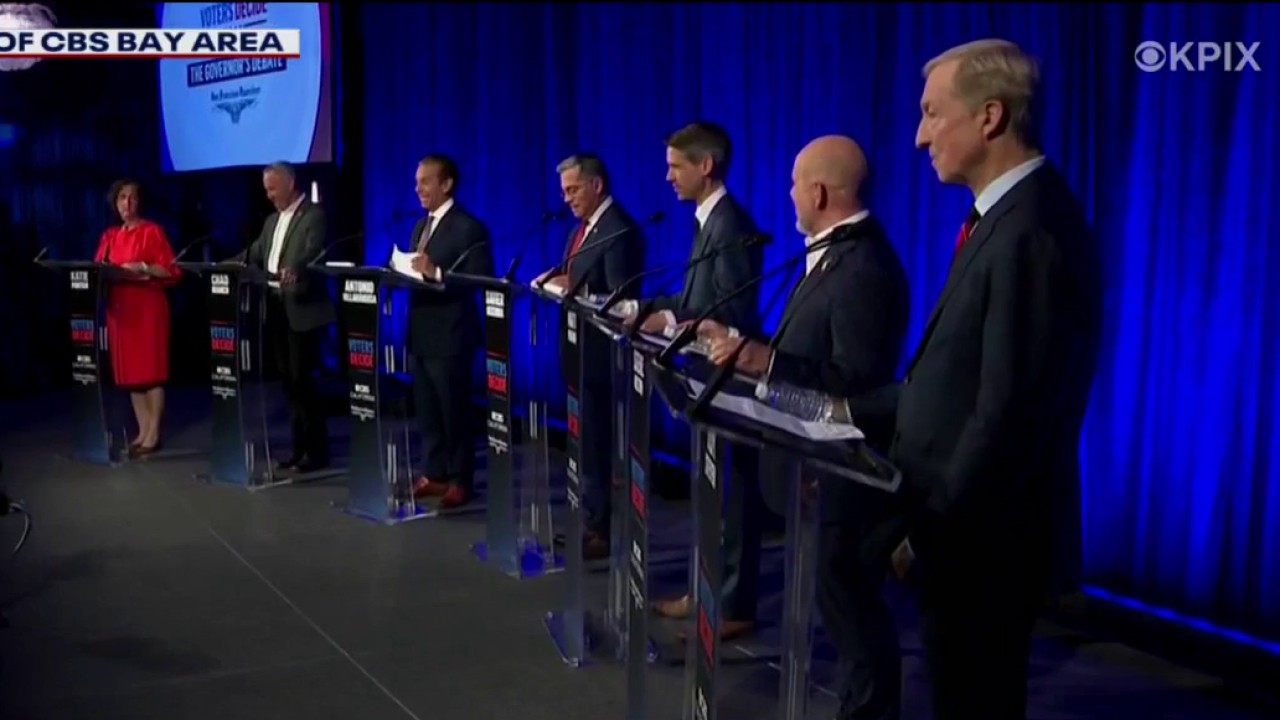
California’s gubernatorial debate centered on Xavier Becerra, with rivals attacking his ethics, funding plan, and links to a campaign scandal involving his former strategist Dana Williamson. The article also highlighted policy contrasts on AI chatbot regulation, housing, and budget/funding proposals, but it is primarily political news with limited direct market implications. Republicans Steve Hilton and Chad Bianco are positioning to consolidate support in a crowded field, while Becerra remains the Democratic frontrunner ahead of the June 2 primary.
The market-read here is less about the governor’s race itself and more about policy optionality and regulatory cadence in California. A frontrunner under sustained attack usually has to triangulate toward safer, status-quo-friendly positions, which lowers the probability of abrupt pro-business surprises but also reduces tail risk of aggressive tax or labor moves. For equity holders, that means the state’s policy discount should compress only modestly unless the race starts signaling a credible anti-corporate governing coalition.
CVX is the cleanest named exposure, but the issue is not campaign rhetoric so much as the persistence of California-specific reputational and political overhang. A Chevron contribution becoming a debate-line item matters because it keeps the company in the narrative crosshairs during an election cycle where Sacramento politicians may want to prove independence from large oil. Near-term cash flow is not threatened, but the second-order risk is higher legislative noise around credits, local permitting, and environmental enforcement over the next 1-2 quarters.
The AI-chatbot dynamic is more important than it looks: bipartisan agreement on tighter regulation increases the odds California becomes a de facto national standard-setter, especially if child-safety language is used to justify broader compliance obligations. That creates an incremental headwind for consumer-facing AI platforms, ad-tech, and any software business monetizing conversational agents, with the largest effect likely showing up first in product rollout timing rather than headline revenue. If this hardens into statute, expect a 6-12 month drag on experimentation and higher legal spend for model providers.
Contrarian take: the consensus may be overestimating the immediate market impact of the race and underestimating the signal from the moderate lane. If a centrist Democrat or even a Republican makes the runoff, the practical policy outcome could be narrower than current campaign rhetoric implies, especially on taxes and business regulation. The bigger risk is not one election but a prolonged, litigation-heavy legislature that keeps California policy uncertain without producing truly radical changes.
AI-powered research, real-time alerts, and portfolio analytics for institutional investors.
Request DemoOverall Sentiment
neutral
Sentiment Score
0.00
Ticker Sentiment
