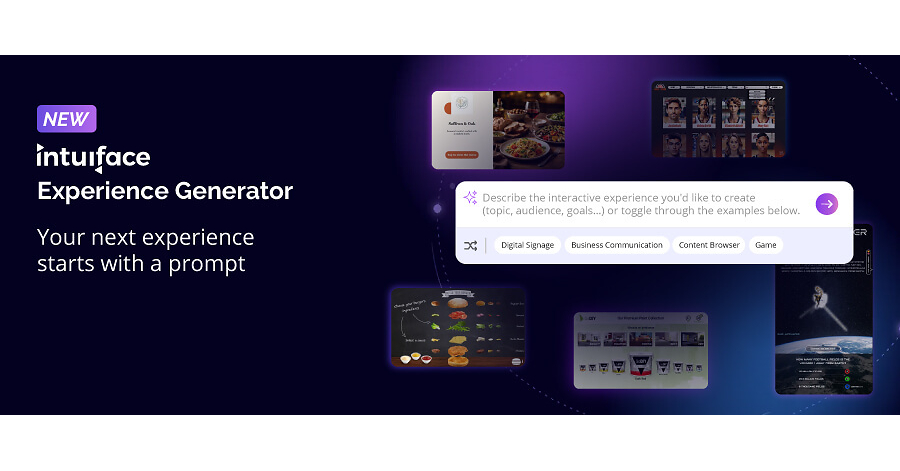
Intuiface launched the general availability of its AI-powered Experience Generator, which converts natural-language intent into touch-ready interactive web experiences that integrate across the Intuiface platform. The product is positioned as a leap from the prior beta (moving from tuned templates to generating full experience architecture, layout, connections, and content). Intuiface also noted token economics—typically ~1 AI token per generated experience with monthly refreshed pools, with optional additional token purchases for higher-volume teams.
This is more a distribution and workflow announcement than a near-term monetization event. The economically relevant signal is that AI is moving from content generation into orchestration of complex, multi-step authoring, which should raise output per designer and reduce the labor share of each deployment. That is supportive for software vendors with sticky runtime/integration layers, but it is bearish for services-heavy shops that monetize billable hours assembling bespoke experiences.
The bigger second-order effect is competitive compression in the long tail of experiential software: once browser-based AI can generate a usable first pass, the moat shifts from design labor to deployment, integrations, and customer data. That tends to help platforms with strong back-end hooks and hurt pure-front-end authoring tools, but the revenue impact likely shows up over 1-3 quarters, not immediately. Token-based pricing also suggests a classic land-grab phase: adoption can outpace monetization until management proves upsell discipline.
Contrarian read: the market may overestimate how much this changes buying behavior. In museums, retail, and corporate venues, the hard part is usually not creating an initial screen but securing approvals, integrating sensors/data, and maintaining content over time. If AI only accelerates the first 10% of the workflow, the structural revenue uplift is modest and the real winner remains the incumbent platform, not the AI feature itself.
AI-powered research, real-time alerts, and portfolio analytics for institutional investors.
Overall Sentiment
mildly positive
Sentiment Score
0.25
