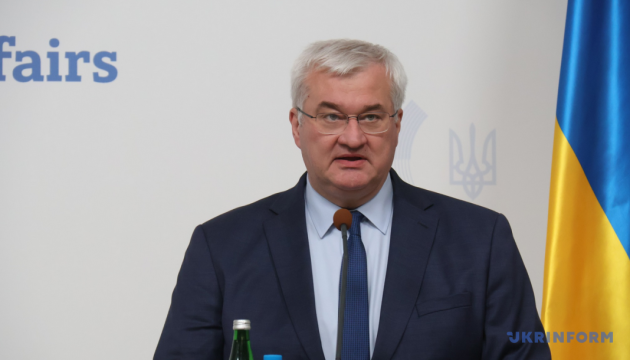
Ukraine’s Foreign Minister Andrii Sybiha is heading to Brussels for EU and NATO talks focused on accelerating EU accession, strengthening defense support, and increasing pressure on Russia. A key event will be a high-level coalition meeting on returning Ukrainian children, with officials from Canada, the EU, and NATO partners discussing sanctions, legal pressure, and coordination. The article is geopolitically significant but has limited direct market impact beyond defense and sanctions-related sentiment.
This visit is less about headline diplomacy and more about tightening the enforcement stack around Russia: sanctions, legal pressure, and coalition coordination. The near-term market implication is not a broad risk premium change, but a higher probability of incremental measures that keep Russian logistics, dual-use procurement, and illicit financing under pressure for months rather than days. That tends to matter most for maritime insurers, trade finance, shadow-fleet servicing, and any European industrials with residual Russia-linked exposure that can be forced into accelerated unwinds.
The child-return agenda is strategically important because it widens the aperture for sanctions beyond battlefield events into human-rights enforcement, which is politically easier for EU capitals to sustain. The second-order effect is a more durable consensus for long-duration support packages: once the frame shifts to restoration, reintegration, and accountability, rollback becomes harder even if front-line dynamics stagnate. That reduces the odds of a near-term policy détente and raises the floor for defense procurement, border security, and counter-drone spending across Europe.
The biggest underappreciated catalyst is not a single announcement but sequencing: EU accession steps, NATO consultations, and coalition actions can arrive in staggered form over 1-3 quarters, creating multiple re-rating windows for defense and European security beneficiaries. Conversely, any visible slowdown in child returns or diplomatic fatigue could become a political headwind, especially if partners perceive the issue as symbolic rather than operational. In that case, the trade is less about war outcome and more about whether enforcement momentum can keep ratcheting higher without triggering sanctions fatigue.
Consensus is likely underestimating how much this kind of multilateral coordination supports European rearmament as a secular theme, even absent a fresh battlefield escalation. The move is probably underdone in defense equities relative to the probability that Europe continues to spend on air defense, ISR, electronic warfare, and border/security infrastructure through 2026. The better risk-adjusted expression is to own the enablers, not the headline names: systems, munitions, sensors, and integration capacity.
AI-powered research, real-time alerts, and portfolio analytics for institutional investors.
Request DemoOverall Sentiment
neutral
Sentiment Score
0.05
