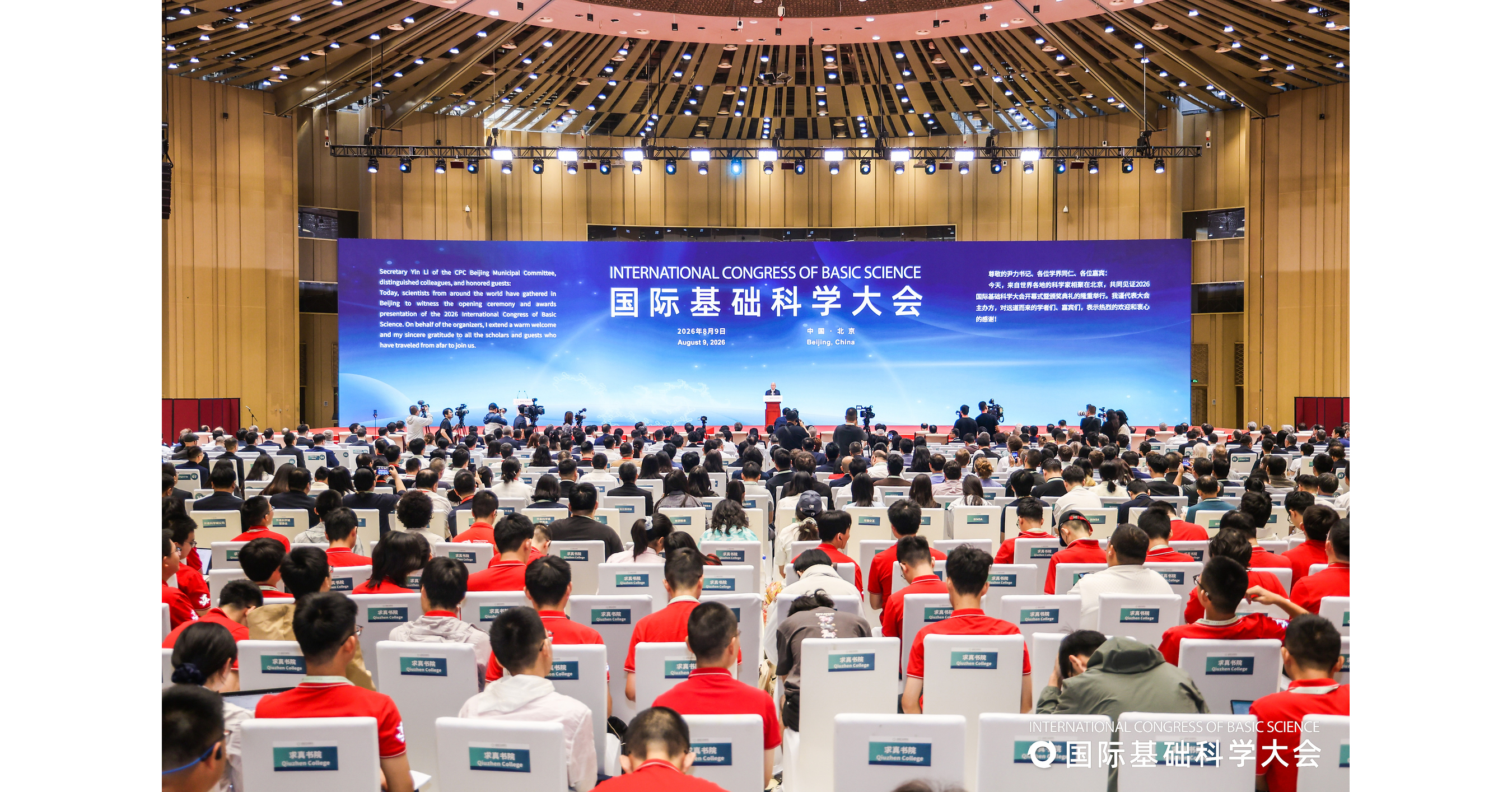
Le Congrès international des sciences fondamentales (ICBS) 2026 s’est ouvert à Pékin avec plus de 1 000 participants et plus de 500 sessions sur deux semaines. L’agenda met en avant des thèmes d’avant-garde comme le raisonnement génératif (grands modèles), la vision par ordinateur, l’interaction homme-machine et l’information quantique, ainsi qu’un forum dédié aux sciences fondamentales et à l’IA. La nouvelle est principalement institutionnelle/événementielle et n’implique pas d’impact financier direct mesurable à court terme.
This reads more like policy theater than a directly monetizable catalyst. For listed equities, the only durable impact comes if the conference is followed by budgeted funding, procurement, or tax support for AI compute, university-industry transfer, or research infrastructure; without that, it is noise relative to earnings season and macro data. Immediate price reaction risk is low unless traders extrapolate the event into a broader China-tech policy thaw.
The second-order winners, if any, are domestic AI infrastructure names and local cloud/computing stacks that can capture state-backed demand before consumer internet companies do. The losers are foreign semiconductor and software vendors that remain blocked by localization, export-control, and procurement bias; the conference reinforces China’s preference for self-reliance rather than opening the door to offshore monetization. Over 1-3 months, the relevant signal is not conference attendance but whether ministries translate this into capex, grants, or public-sector deployments.
Contrarian view: consensus may be too dismissive of the talent-density effect. China can still generate incremental advances in open-source models, applied computer vision, and quantum-adjacent research even under hardware constraints, which matters over 6-18 months if enterprise adoption improves. But that is a long-duration call; for now, the burden of proof is on follow-through, and the thesis is falsified if no funding/procurement appears in the next 1-2 quarters or if domestic AI capex guidance stays flat.
AI-powered research, real-time alerts, and portfolio analytics for institutional investors.
Overall Sentiment
neutral
Sentiment Score
0.10
