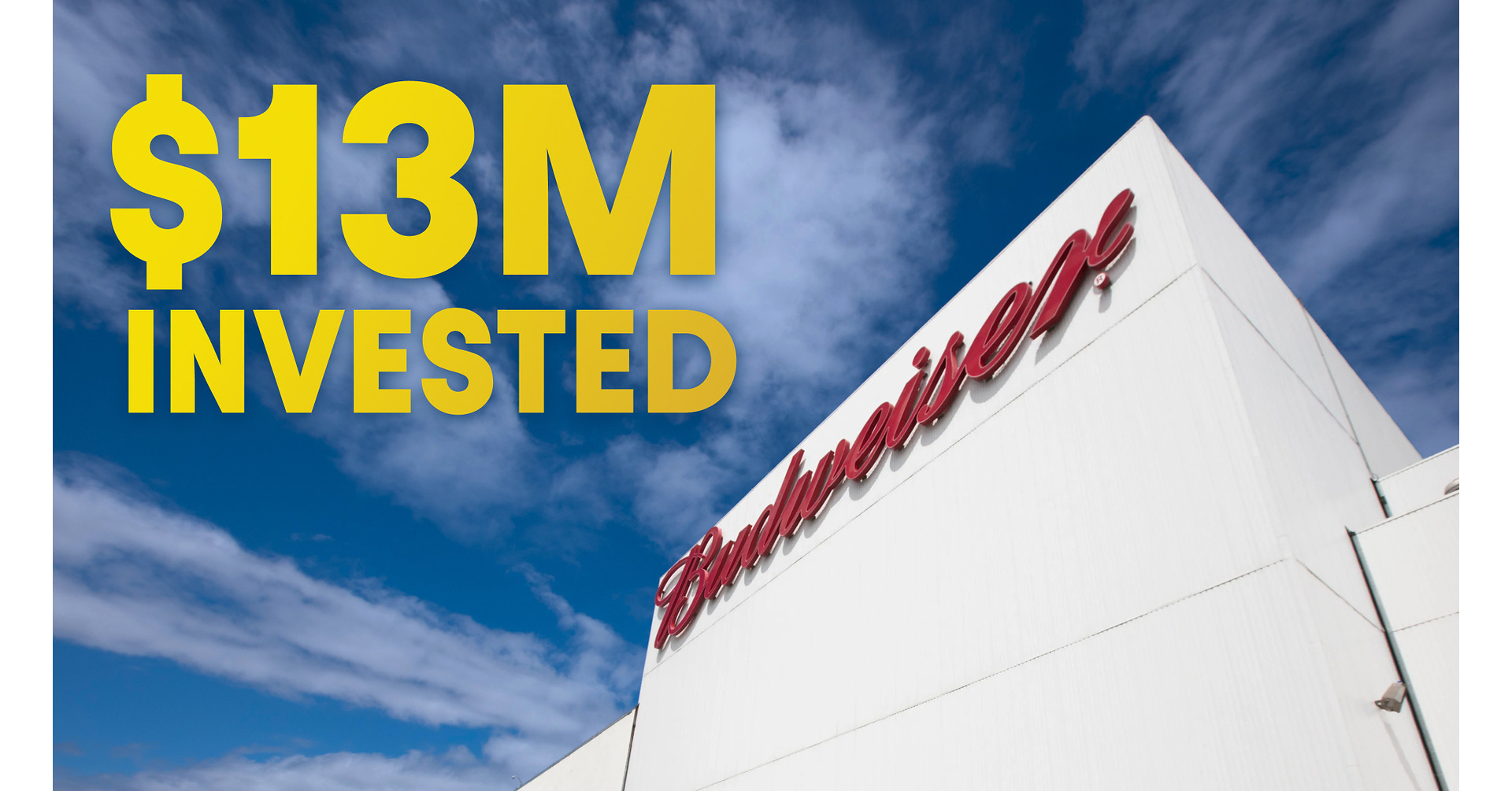
Anheuser-Busch (BUD) announced a $13 million investment in its Baldwinsville, New York brewery to expand production of Michelob ULTRA and Cutwater and to upgrade can/bottle lines. The capex supports growing demand for two of the fastest-growing alcohol brands and adds a new technical skills training center to upskill workers in mechanical, electrical, digital, and operational roles. The investment is part of the company’s larger $600 million “Brewing Futures” commitment to U.S. operations across 2025-2026.
This reads less like a material earnings event and more like a capital-allocation signal: BUD is directing incremental spend toward the brands with the highest velocity, which can improve plant utilization, reduce freight/outsourcing leakage, and tighten service levels during peak demand periods. The economic impact is modest in absolute dollars, but the signal matters because management is choosing growth capacity over maintenance mode, which tends to support gross margin stability if volume holds.
The most relevant competitive implication is shelf-space defense. If Michelob ULTRA continues to outgrow category peers, smaller brand rivals such as TAP are at the greatest risk of losing facings and promotional attention; in beer, incremental capacity often translates into better retailer fill rates and stronger trade terms. Cutwater expansion matters more for adjacent RTD and spirits-based cocktail share than for beer, so the second-order pressure is on RTD incumbents, not the broader beverage complex.
Contrarian view: the market may overstate the significance of a small facility investment and mistake a PR-led capex announcement for a demand inflection. The real test is not the spend itself but whether scanner data and gross margin improve over the next 1-3 months; if volumes merely stay stable, the stock should not re-rate much. Over 6-18 months, the thesis only works if BUD proves it can convert capex into persistent share gains rather than promotional volume.
AI-powered research, real-time alerts, and portfolio analytics for institutional investors.
Overall Sentiment
mildly positive
Sentiment Score
0.35
Ticker Sentiment
