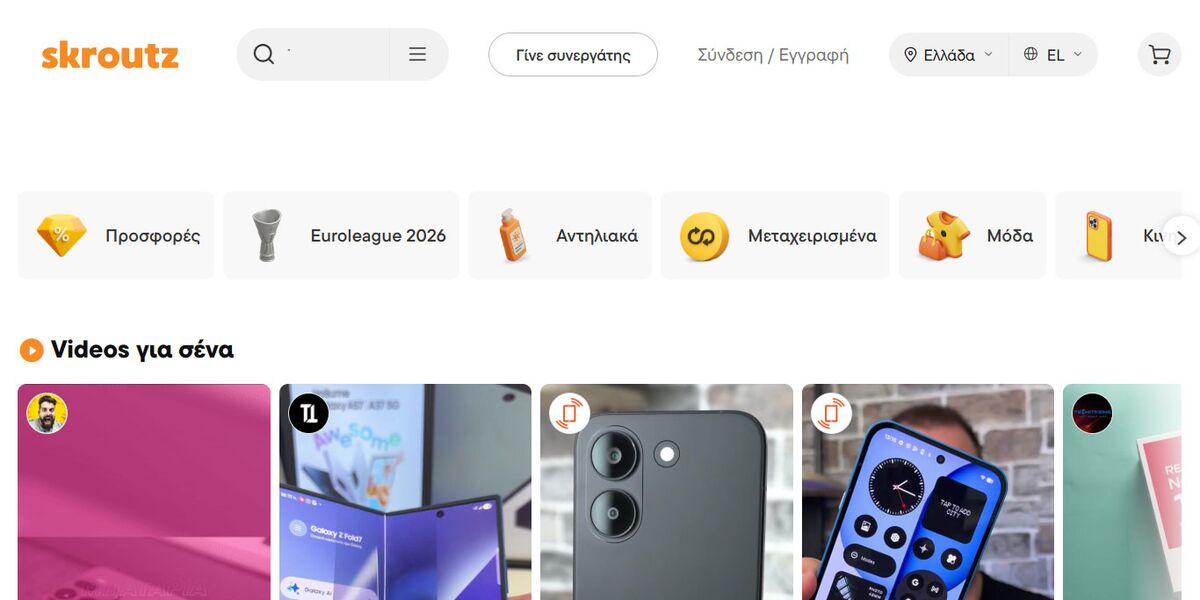
Blackstone has agreed to buy a majority stake in Greek online marketplace Skroutz from CVC Capital Partners, expanding its presence in Greece. The founders will sell part of their holdings but remain invested and continue to run the business, with George Chatzigeorgiou staying as CEO. Financial terms were not disclosed, making the transaction strategically important but not immediately quantifiable.
This is more interesting as a portfolio construction signal than as a single asset event: BX is continuing to monetize the “buy, improve, hold” playbook in a market where private capital can still source control of mid-market consumer platforms at valuations that public-market strategics would struggle to justify. The second-order benefit is reputational — successful stewardship of a founder-led, locally anchored asset in Southern Europe can improve Blackstone’s sourcing funnel across fragmented e-commerce and services businesses in the region.
For competitors, the pressure lands on two fronts. First, regional PE and growth investors will face tighter bidding for founder-owned internet assets if BX is willing to underwrite governance continuity rather than force aggressive integration; that can compress entry yields across the category. Second, local incumbents in e-commerce logistics, payments, and merchant services may see a better-capitalized marketplace accelerate customer acquisition and bargaining power, raising the hurdle for smaller platforms that rely on fee discounts or merchant subsidies to defend share.
The key risk is execution, not deal completion. In 6-18 months, the market will judge whether ownership transfer translates into faster monetization without degrading the founder-led product cadence; if growth decelerates or take rates rise too quickly, the asset can become a classic PE over-optimization story. The broader macro tail risk is a European consumer slowdown that hits discretionary online spend first, which would make an expansion into the Mediterranean look cyclical rather than strategic.
Consensus may be underestimating how much this reinforces BX’s fundraising narrative in private markets: small-to-mid control investments in resilient digital businesses are exactly the kind of realizable, “platform-like” transactions that support fee-bearing capital growth. That said, the move is probably underdone for BX equity if investors are still pricing it as a mostly cyclical real-asset manager; continued proof that the firm can source and exit founder-led internet businesses should command a higher durability premium over the next several quarters.
AI-powered research, real-time alerts, and portfolio analytics for institutional investors.
Request DemoOverall Sentiment
mildly positive
Sentiment Score
0.32
Ticker Sentiment
