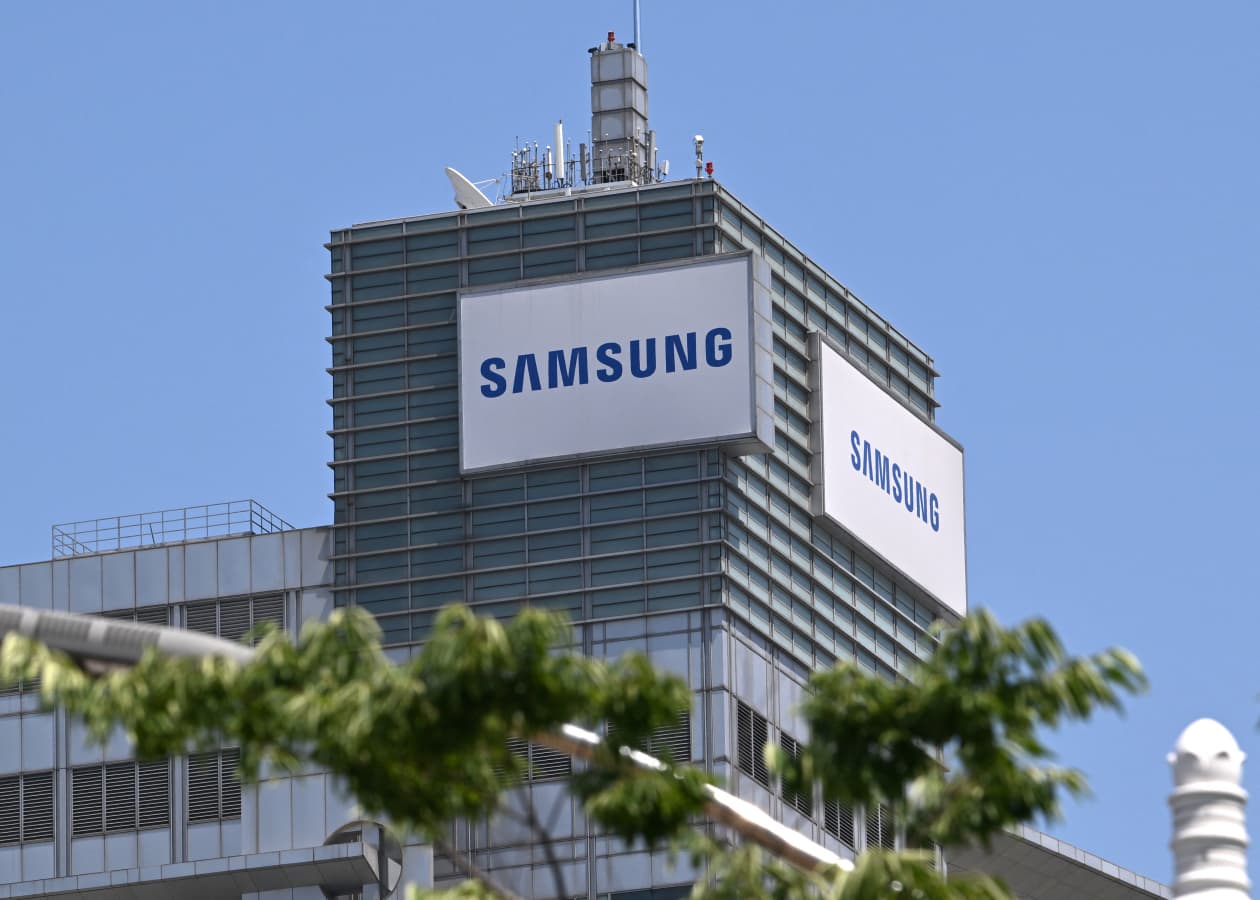
Samsung Electronics’ Q2 operating profit rose to a level described as 19x higher than the same period in 2025, and it beat expectations, but the stock still sold off—falling as much as 10% before closing down 7% in Seoul. The move reflects “sell on the news” positioning despite the earnings surprise, suggesting investors were not satisfied with either the quality of the beat or forward expectations.
The price action matters more than the earnings print: when a mega-cap cyclical gets punished after a strong quarter, the market is usually signaling that the next twelve months matter less than the prior twelve. That is bearish for the stock’s multiple even if near-term estimates move up, because investors are implicitly treating the result as a peak-margin event rather than the start of a durable re-rate. In practice, that often creates a “good news is already in the tape” setup where upside is capped until the company can prove that AI-related memory and mix improvements are sticky, not just cyclical.
Second-order, this is more relevant for competitive positioning than for the quarter itself. If Samsung is not being rewarded for strong execution, peers with cleaner AI memory narratives should keep taking share in investor mindshare: MU as the easier U.S.-listed expression of the DRAM/HBM upcycle, and any supplier tied to share gains at the expense of a lagging incumbent. Conversely, if Samsung chooses to defend share via pricing or capex, that is a negative read-through for memory pricing and for equipment names with delayed order books, but that effect would usually need confirmation over 1-2 subsequent quarters before becoming tradable.
The contrarian view is that the market may be underestimating operating leverage if AI memory mix improves faster than consensus. A selloff on a beat can be a trap for shorts if management later proves qualification wins, because the stock is already de-rated for skepticism. What would falsify the bearish interpretation: explicit HBM design-win momentum, upward margin/ASP guidance, or evidence that memory pricing is accelerating again over the next earnings cycle; absent that, the path of least resistance is a range-bound-to-lower multiple rather than a sustained rerating.
AI-powered research, real-time alerts, and portfolio analytics for institutional investors.
Overall Sentiment
mildly negative
Sentiment Score
-0.35
Ticker Sentiment
