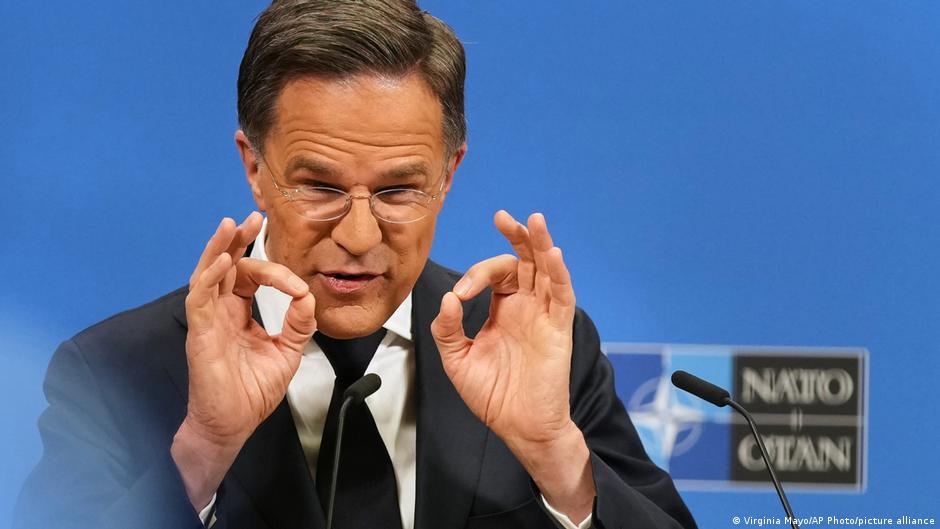
NATO Secretary General Mark Rutte said the planned reduction in US troop presence in Europe would not harm NATO defense plans, framing the 4,000-5,000 personnel adjustment as rotational rather than a strategic withdrawal. The Pentagon is also preparing to cut US troop brigades in Europe from four to three, returning levels to 2021. The article points to broader uncertainty around US commitments to Europe as Washington pivots more toward Asia.
This is less about a one-off troop headline and more about the gradual repricing of Europe’s security backstop. The key second-order effect is budget substitution: if the U.S. reduces forward capacity, European governments will have to fund more enablers—air defense, ISR, munitions, lift, C2, and maintenance—because those are the bottlenecks that make nominal troop counts meaningful. That shifts spend away from labor-heavy base support and toward higher-margin, faster-turn procurement where U.S. primes and select European suppliers can capture multi-year demand.
The market is likely underestimating the timeline asymmetry. Headline risk is immediate, but actual force realignment is a 6-24 month process, which means defense equities can re-rate before budget appropriations fully show up. The bigger catalyst is not the withdrawal itself but the formalization of reduced U.S. crisis-response commitments: that forces allies to buy duplicate capacity, especially in air/missile defense and ammunition stockpiles, and it increases the probability of multi-year framework contracts rather than one-off orders.
The contrarian point is that this is not uniformly bullish for European defense names. Many are already pricing in a permanent security premium, while U.S. names with Europe exposure may benefit more if allies keep buying from U.S. suppliers to fill immediate gaps. Also, a visible U.S. pivot to Asia can compress valuation multiples for Europe-dependent industrials if investors start discounting lower NATO cohesion and higher fiscal drag, even if near-term spending rises.
Tail risk is political reversal: a stabilizing diplomatic deal or a softer-than-feared Pentagon implementation could deflate the trade quickly, especially in crowded defense baskets. But the more durable upside comes from procurement inertia—once ministries publish replacement plans, cancellations become politically costly. That creates a better-than-usual asymmetric setup for defense backlog names over the next 3-12 months.
AI-powered research, real-time alerts, and portfolio analytics for institutional investors.
Request DemoOverall Sentiment
neutral
Sentiment Score
-0.05
