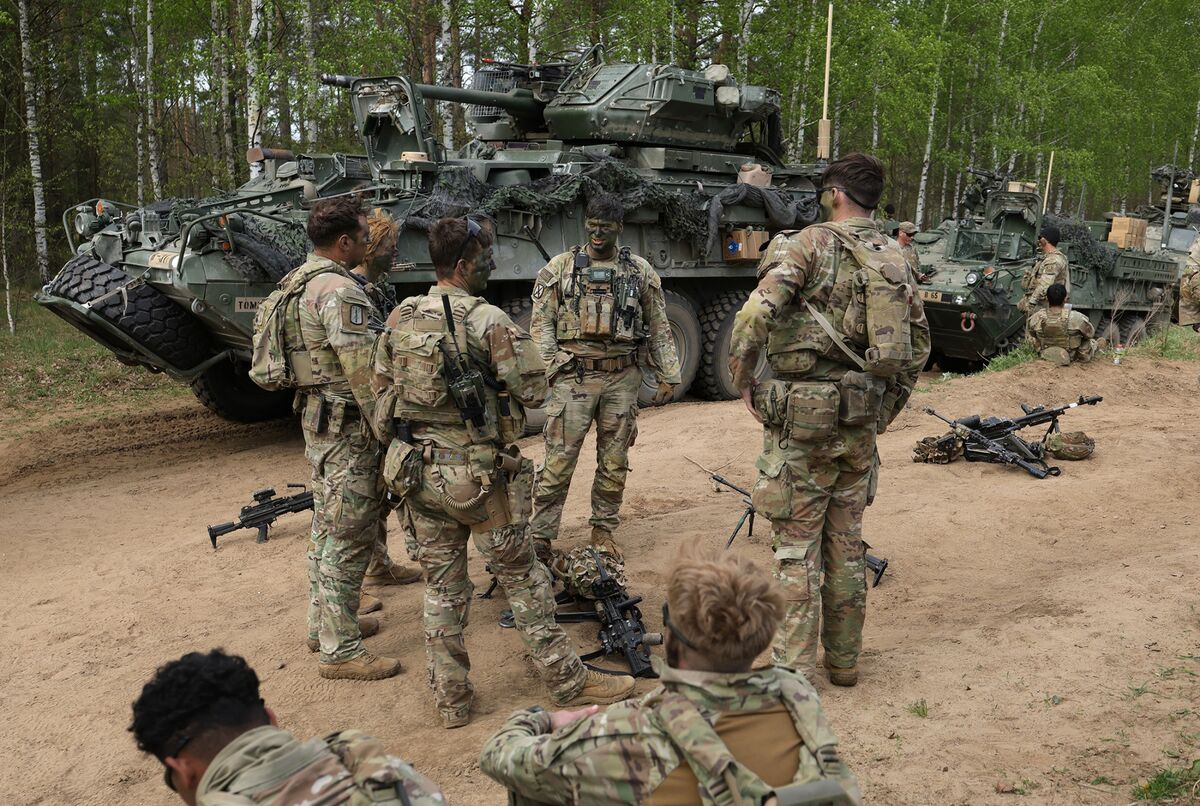
Latvia’s foreign minister said the US has “really invested interest” in maintaining troops in Europe amid NATO allies awaiting Washington’s review of its military presence. The comments are meant to counter expectations of a US pullback as NATO deliberates at an upcoming summit. While not a direct market/corporate catalyst, US force posture uncertainty is geopolitically sensitive and could influence defense-linked expectations across Europe.
The market read-through is less about troop count and more about budget durability. If Washington sustains its posture in Europe, the incremental winners are the contractors tied to readiness, logistics, munitions, comms, base support, and air/missile defense rather than headline platform builders; those revenues tend to recur faster and carry less execution risk. The second-order benefit is to European allies: persistent U.S. presence keeps NATO procurement urgency high, which supports multi-year orders for air defense, artillery, fuel, transport, and infrastructure capacity across the supply chain.
The main loser in a true drawdown scenario would have been the "peace dividend" trade in European cyclicals and some local infrastructure budgets; this reduces that tail risk for now. Over 1-3 months, the key catalyst is the outcome of the review and allied burden-sharing language: a hawkish outcome should lift defense services and munitions names, while any ambiguity likely caps multiples because investors will fade press-release assurances until appropriations show up. Over 6-18 months, the real driver is whether NATO members convert rhetoric into funded procurement, which matters more than troop optics.
Contrarian view: the consensus may be overfocusing on the geopolitical headline and underappreciating that a stable U.S. footprint can actually slow the market from pricing in a larger rearmament cycle. If troop levels are maintained, the near-term upside in pure defense equities may be modest because the "tail-risk removal" is already partially reflected, but the better expression is in companies with direct exposure to European base support, munitions replenishment, and mobility infrastructure. What would falsify the thesis is a concrete U.S. redeployment schedule or a NATO summit that produces no funded follow-through from allies.
AI-powered research, real-time alerts, and portfolio analytics for institutional investors.
Request DemoOverall Sentiment
neutral
Sentiment Score
0.05
Ticker Sentiment
