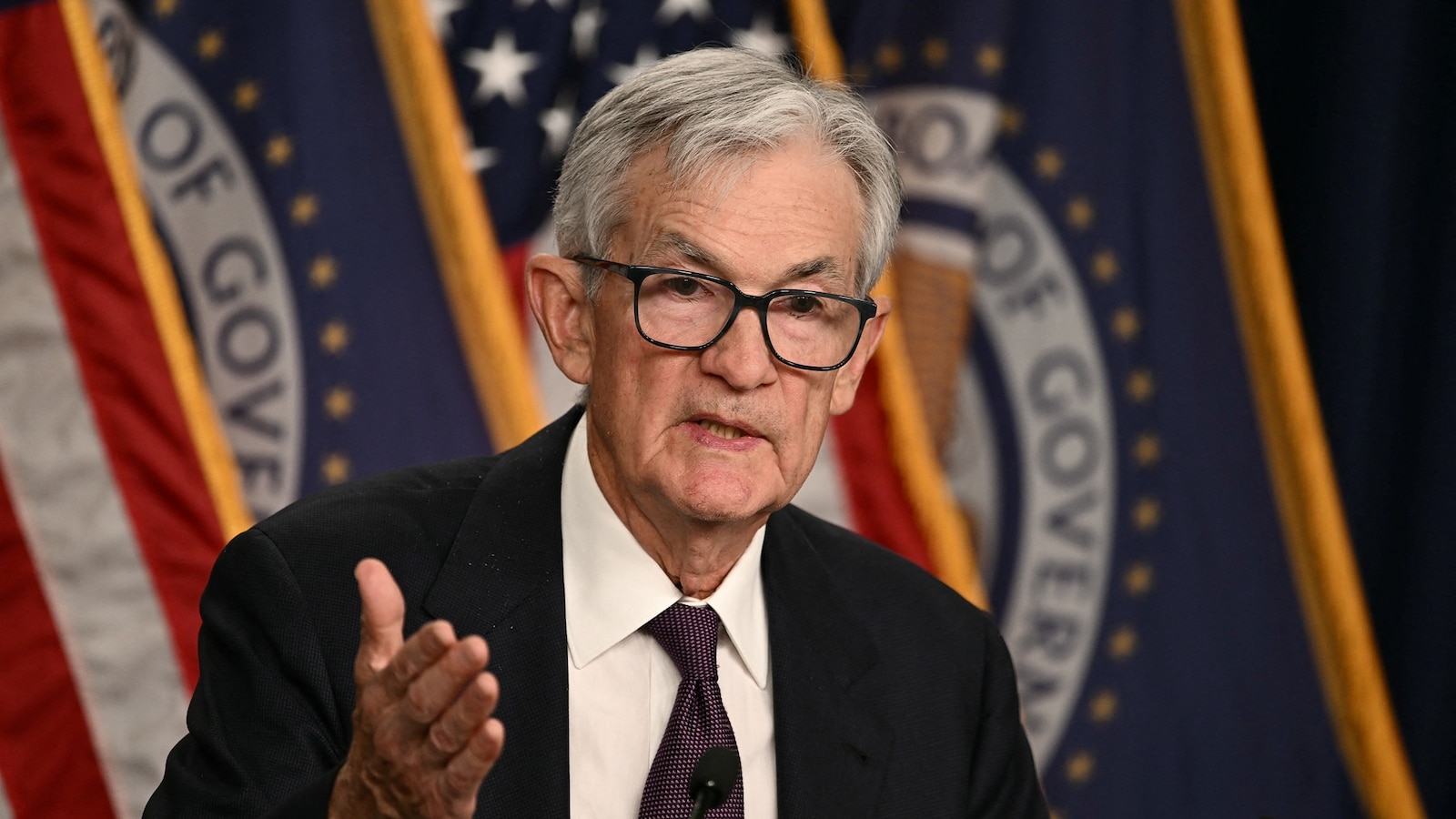
Powell’s 8-year Fed tenure ended after navigating the COVID-19 shock, a 40-year inflation spike that peaked at 9.1% in June 2022, and an unprecedented DOJ probe. The Fed cut rates to near zero in March 2020, then lifted them aggressively to their highest level since 2001 as inflation cooled to 3% by June 2023. Kevin Warsh is set to take over amid renewed inflation pressure and a still-resilient labor market, with unemployment at 4.3% in April.
Powell’s departure does not cleanly translate into a regime shift because the incoming chair inherits a labor market that is still too tight for comfort and an inflation process that is now more headline-sensitive than cycle-sensitive. That makes the near-term policy path highly path-dependent: if energy prices stay elevated, the Fed’s reaction function is likely to remain hawkish even if growth cools, which keeps the front end vulnerable to repricing. The bigger second-order effect is that markets may underestimate how much of the disinflation progress was driven by fading supply shocks rather than policy alone; that leaves inflation breakevens exposed to any renewed commodity shock.
The market has also become structurally reliant on the idea that the Fed can tolerate slower growth without a credit event. That assumption is fragile. Higher-for-longer real rates are already squeezing lower-quality consumer credit and rate-sensitive housing activity, but the delayed transmission means the most fragile balance sheets are still working through the prior tightening cycle. If inflation reaccelerates, the Fed may have to choose between credibility and financial stability, a choice that typically shows up first in regional banks, housing-related equities, and short-duration high yield.
A more contrarian read is that Powell’s legacy may be less about crisis management than about policy asymmetry: the Fed proved it can cut aggressively in panic and hike aggressively in inflation, but it still struggles to communicate regime changes early enough for markets to price them smoothly. That means volatility should stay bid around every CPI and oil print. The transition also raises governance risk: any perception that the new chair is more politically responsive could steepen term premia even if the policy rate path is unchanged, creating a bear-steepener risk that is not fully in consensus positioning.
AI-powered research, real-time alerts, and portfolio analytics for institutional investors.
Request DemoOverall Sentiment
neutral
Sentiment Score
0.05
