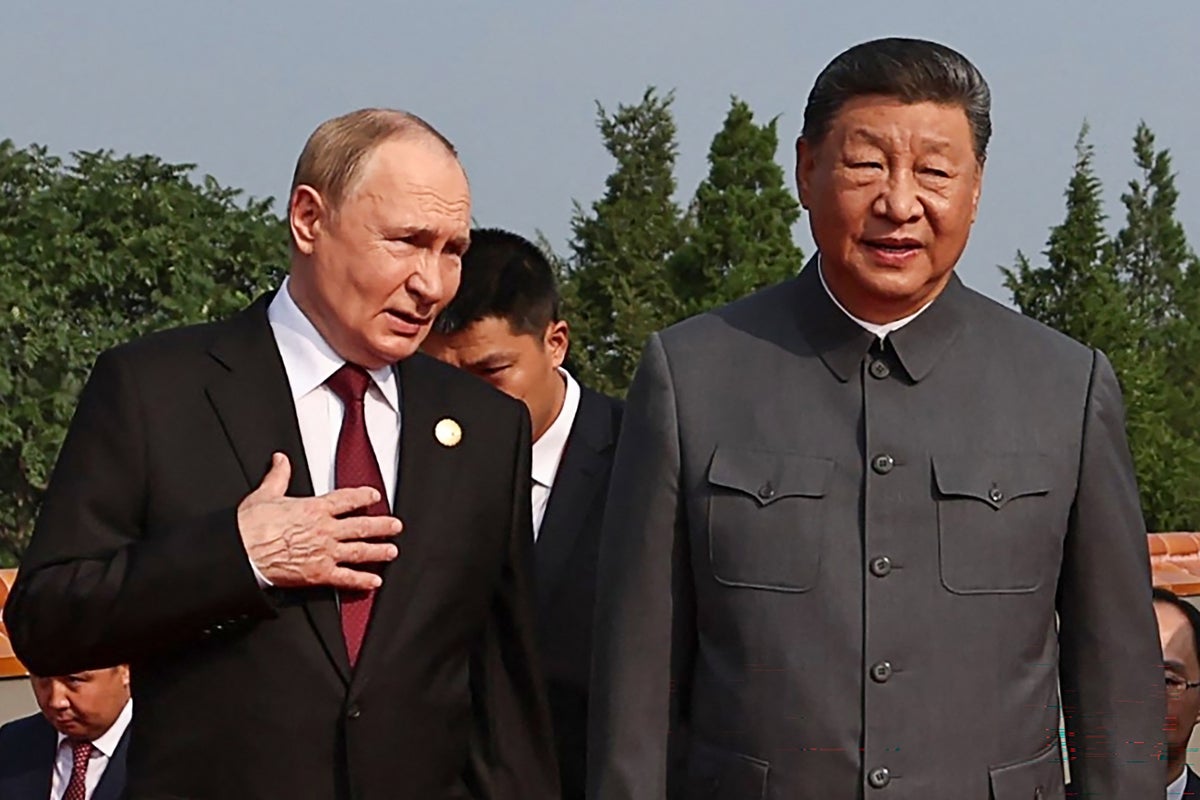
The article highlights Russia’s growing dependence on China, with oil and gas now about 75% of Russia’s exports to China and Russian exports to China rising to $129.32bn in 2024 from $33.2bn in 2015. It also notes the US-China tariff standoff, with average US tariffs on Chinese goods near 48% and US imports from China down nearly 39% in 2025 versus 2024. The geopolitical and trade tensions are market-relevant, but the piece is primarily analytical rather than an immediate catalyst.
The key market takeaway is not simply that China is extracting concessions from both Washington and Moscow, but that the relative bargaining power is diverging sharply. Russia is being pushed into a structurally subordinate role: sanctions have turned its commodity exports into a discounted, concentrated flow into one buyer, which makes its fiscal and external accounts more fragile to any change in Chinese purchasing terms. That creates a hidden downside for Russian-linked energy logistics, sovereign credit proxies, and any EM supplier ecosystem exposed to Russia/China rerouting.
For the US, the more important second-order effect is that tariff policy is now functioning less as a decoupling tool and more as a tax on domestic supply chains with incomplete strategic leverage. China’s rare-earth position gives it a credible, selective retaliation channel that is far more asymmetric than broad tariffs because it can target defense, EV, and semiconductor bottlenecks without fully impairing its own export machine. Expect volatility in industrials and defense suppliers when licensing headlines hit, but the bigger risk is margin compression and inventory hoarding over the next 1-3 quarters, not an immediate trade collapse.
The contrarian read is that markets may be overestimating how quickly geopolitical friction translates into full-blown scarcity. China has every incentive to keep the relationship transactional rather than explosive, and the near-term path of least resistance is to offer enough supply-chain relief to avoid a destabilizing US response while preserving optionality. That argues for trading the volatility around headlines, not betting on a clean break: the most attractive setups are relative-value expressions where policy uncertainty widens spreads, rather than outright macro shorts.
Putin is the most exposed because he needs capital, technology, and a buyer of last resort, while China can wait. Any improvement in Moscow’s terms would likely be temporary unless accompanied by a broader sanctions rollback, which is a low-probability, longer-dated catalyst. Near term, the main risk is not a deal that helps Russia, but a deal that formalizes a one-way dependency and locks in lower pricing power for Russian exports.
AI-powered research, real-time alerts, and portfolio analytics for institutional investors.
Request DemoOverall Sentiment
mildly negative
Sentiment Score
-0.15
