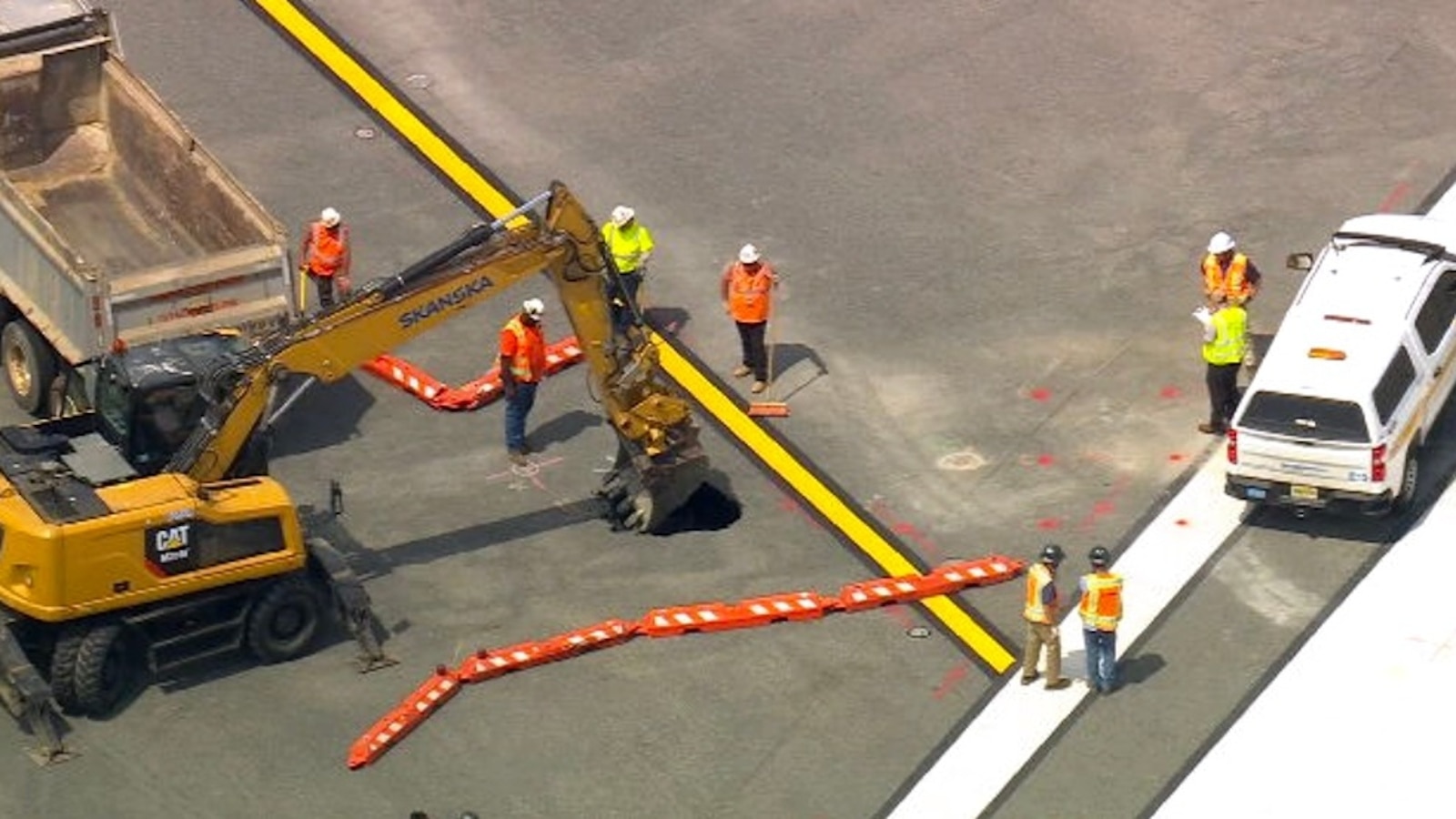
A sinkhole shut down Runway 4/22 at LaGuardia Airport, one of two runways at LGA, with closure expected until 6 a.m. ET Thursday. The disruption has triggered a ground delay, average departures delayed by 98 minutes, and 197 cancellations plus 168 delays as of Wednesday afternoon. The impact is operational and weather-related, weighing on airline schedules and passenger travel, but is unlikely to have broad market effects.
The immediate market impact is not the airport headline itself, but the forcing function it creates on schedule integrity in the Northeast corridor. A one-runway constraint at a slot-controlled hub tends to propagate disproportionately into late-day cancellations, crew mispositioning, and aircraft knock-on effects that can persist into the next morning even after the runway reopens. That means the earnings sensitivity is less about one day of lost departures and more about a 24-72 hour recovery window where load factors, rebooking costs, and overtime expenses can spike across the network.
The primary beneficiaries are the carriers with the best disruption management and the least LaGuardia exposure in their NYC mix; the losers are the airlines relying on high-frequency short-haul business traffic, where alternatives are limited and passengers are more schedule-sensitive. Regional and connecting traffic is likely to be hit hardest because it has the least flexibility to absorb missed connections, which can create a short-lived revenue transfer toward Amtrak and ground transport on NYC-Boston/Philly/DC corridors. Second-order, airport services, catering, and ground handling vendors may see near-term margin pressure from idle labor and irregular ops, but that should wash out quickly unless weather extends the closure.
This looks like a tactical event, not a structural issue, unless inspections reveal broader pavement or drainage problems that imply a larger engineering remediation program. The contrarian read is that the market may overestimate the duration of disruption: hub operations usually normalize faster than passengers expect once a single constraint is removed, so airline stocks can rebound before the news flow turns positive. The real tail risk is not the sinkhole itself but compounding weather or a reopened runway that remains operationally constrained, which would extend the recovery from days into a week and raise the odds of guide-down chatter on near-term yield and completion factor metrics.
AI-powered research, real-time alerts, and portfolio analytics for institutional investors.
Request DemoOverall Sentiment
moderately negative
Sentiment Score
-0.35
