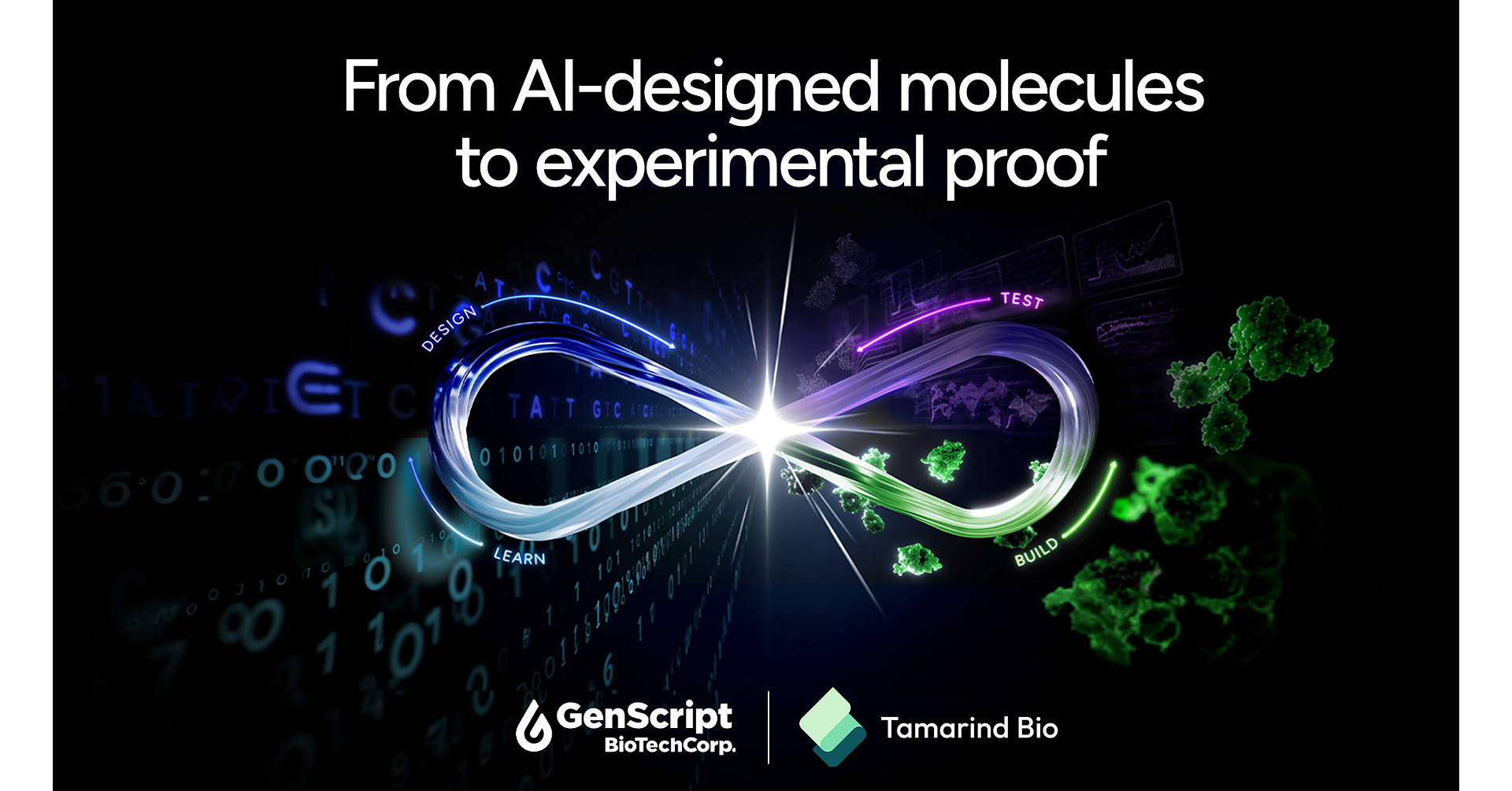
GenScript and Tamarind Bio announced a strategic partnership linking Tamarind’s AI molecular design platform to GenScript’s wet-lab validation services (synthesis, expression, and testing). The workflow is designed to cut design-to-experimental proof time to as little as 4 days and reduce manual handoffs between AI design and lab validation. For portfolio impact, this is a product/platform integration that supports faster candidate prioritization, but the article provides no direct financial figures or guidance.
This is less about a single partnership and more about who captures the scarce step in AI-driven discovery: physical validation throughput. The economic winner is the owner of fast, reliable wet-lab capacity, because AI raises the volume of candidates while keeping experimental confirmation as the gating function; that tends to shift value away from model vendors and toward service providers with turnaround speed, automation, and customer lock-in. If that workflow becomes standard, smaller CROs without integrated design-to-test pipelines should feel margin pressure as pricing migrates to a throughput/SL A model rather than bespoke project work.
Near term, I would treat the announcement as a distribution and positioning event, not a material earnings driver. The market may initially pay up for “AI enablement,” but the real catalyst is whether this converts into repeat orders, higher utilization, and improved gross margin in the validation business over the next 1-3 quarters. If management cannot show attach rate or backlog conversion, the setup fades quickly; if it can, the effect could persist 6-18 months as a workflow standard in biologics and cell/gene therapy.
Contrarian view: consensus is likely overstating how much AI expands total wet-lab spend. Better models can also reduce the number of failed constructs, which caps downstream reagent and synthesis demand even as validation becomes more urgent. The thesis is falsified if customers internalize the stack with in-house automation, or if revenue disclosure shows the partnership is mostly lead-gen with no measurable revenue lift or operating leverage.
AI-powered research, real-time alerts, and portfolio analytics for institutional investors.
Request DemoOverall Sentiment
mildly positive
Sentiment Score
0.25
Ticker Sentiment
