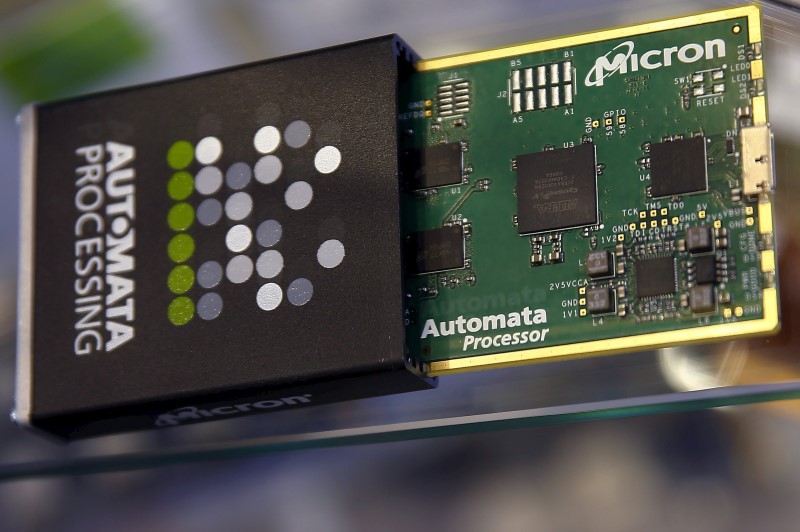
Micron shares rose 5.75% after Deutsche Bank set a $1,000 price target, about 34% above Friday’s close of $746.79 and matching the Street high. The note highlighted AI-driven demand as a fundamental shift in memory-chip dynamics, while potential Samsung labor unrest could further tighten already constrained supply. Micron is up 84% in the past month and 160% year to date.
The real trade here is not just MU beta to AI spend; it is a tightening of the memory supply curve at the exact moment hyperscaler capex is becoming less elastic. If Samsung labor disruption impairs output even modestly, the market will likely reprice into a regime where spot and contract pricing stay elevated longer than consensus expects, which improves gross margin visibility for the whole DRAM stack over the next 1-3 quarters. That said, the magnitude of the stock move already implies investors are beginning to discount a near-perfect mix of supply scarcity and demand durability, so incremental upside now depends on whether this becomes a true multi-quarter shortage rather than a headline event.
Second-order beneficiaries extend beyond MU to the broader AI hardware chain: server OEMs, GPU integrators, and eventually cloud capex plans if memory inflation becomes material enough to pressure bill-of-materials. The biggest hidden winner is likely SK Hynix if the market starts to view Korean supply as structurally unreliable, because buyers will pay a scarcity premium for the most dependable high-bandwidth memory source. The main loser is any OEM or hyperscaler with weak procurement leverage, where a 10-15% memory cost increase can hit AI server margins far more than most models currently assume.
The contrarian risk is that this narrative can peak before the supply issue is resolved. If labor talks de-escalate and Samsung normalizes output, the market may rotate from scarcity premium back to cycle discipline, especially after a 160% year-to-date move in MU that leaves little room for execution misses. The more durable bullish case requires evidence that AI demand is absorbing incremental capacity faster than supply can return, otherwise this becomes a sharp but tradable squeeze rather than a new earnings regime.
AI-powered research, real-time alerts, and portfolio analytics for institutional investors.
Overall Sentiment
moderately positive
Sentiment Score
0.62
Ticker Sentiment
