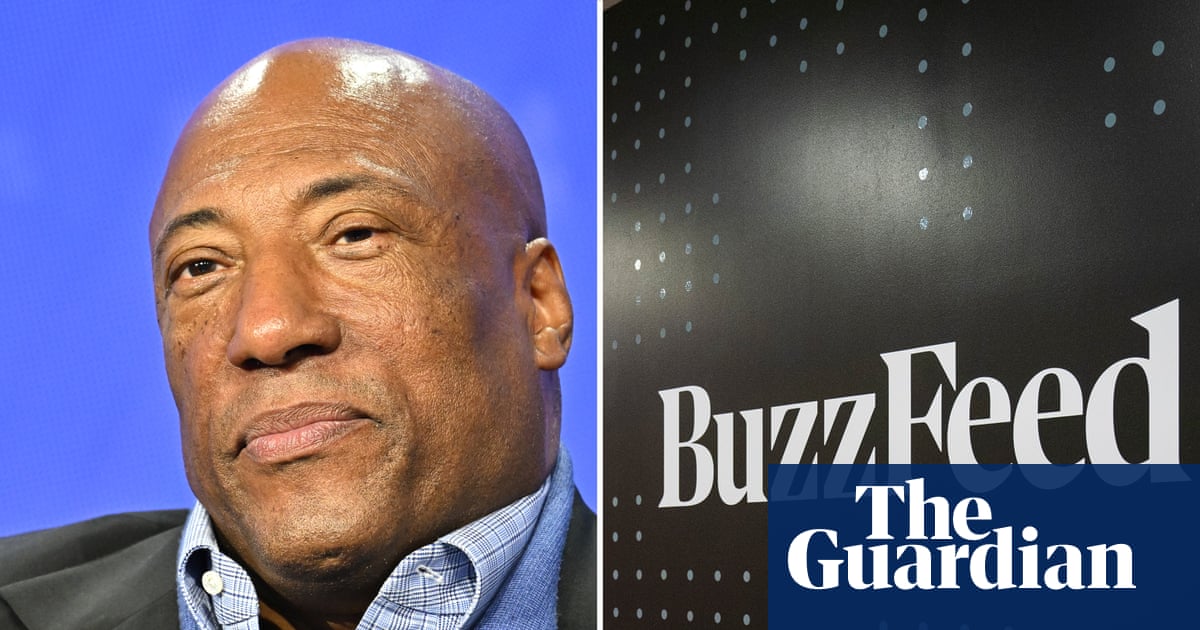
BuzzFeed changed hands for $120m, with Byron Allen buying a controlling stake and taking over as CEO while Jonah Peretti shifts to president of BuzzFeed AI. The company also plans significant cost cuts, likely including layoffs, after reporting a $15m Q1 2026 net loss and a stock price of $0.71 per share. Allen will buy 40m shares at $3 each as BuzzFeed pivots further toward free-streaming video, audio, user-generated content, and AI-driven competition with YouTube.
This looks less like a clean strategic pivot than a forced recapitalization of a structurally impaired asset. The key second-order effect is that the equity is being used as a cheap acquisition currency at a level that effectively resets expectations, but the real value transfer likely accrues to the new controller through control, platform adjacency, and optionality around AI-generated content rather than to legacy shareholders. For holders, the near-term setup is usually dilution-through-restructuring: asset sale rhetoric, overhead cuts, and capex reprioritization can create a temporary bounce, but they rarely fix audience monetization decay.
The competitive implication is that BuzzFeed is attempting to move into a market where distribution economics are brutally unfavorable. Free-streaming video and UGC are winner-take-most arenas with scale, creator lock-in, and heavy infrastructure costs; using AI can lower content costs, but it does not solve demand acquisition or advertiser skepticism. That means the likely outcome is a sharper bifurcation: a smaller, lower-cost content shell that may survive as an option on niche franchises, while larger platforms and better-capitalized media owners continue to consolidate attention.
The contrarian read is that the market may be underestimating the probability of a financing-led squeeze rather than an operating turnaround. A buyer willing to pay above the market price for a distressed equity can create a tactical dislocation in the shares, especially if the new CEO uses aggressive cost cuts to manufacture EBITDA optics over the next 1-2 quarters. But unless there is a credible path to durable CPM lift or subscription conversion within 12-18 months, any rally should be treated as a trade, not an investment thesis.
The broader signal for the sector is negative for incumbent digital-media peers with similar traffic-dependent models. This reinforces that ad-supported media without differentiated IP, pricing power, or creator ecosystem leverage remains a melting ice cube; the more interesting beneficiaries are infrastructure and tooling names that sell AI/video automation, not the publishers themselves. If Allen can extract value, it will likely be through financial engineering and operational compression, which is not a positive precedent for the space.
AI-powered research, real-time alerts, and portfolio analytics for institutional investors.
Request DemoOverall Sentiment
mildly negative
Sentiment Score
-0.35
Ticker Sentiment
