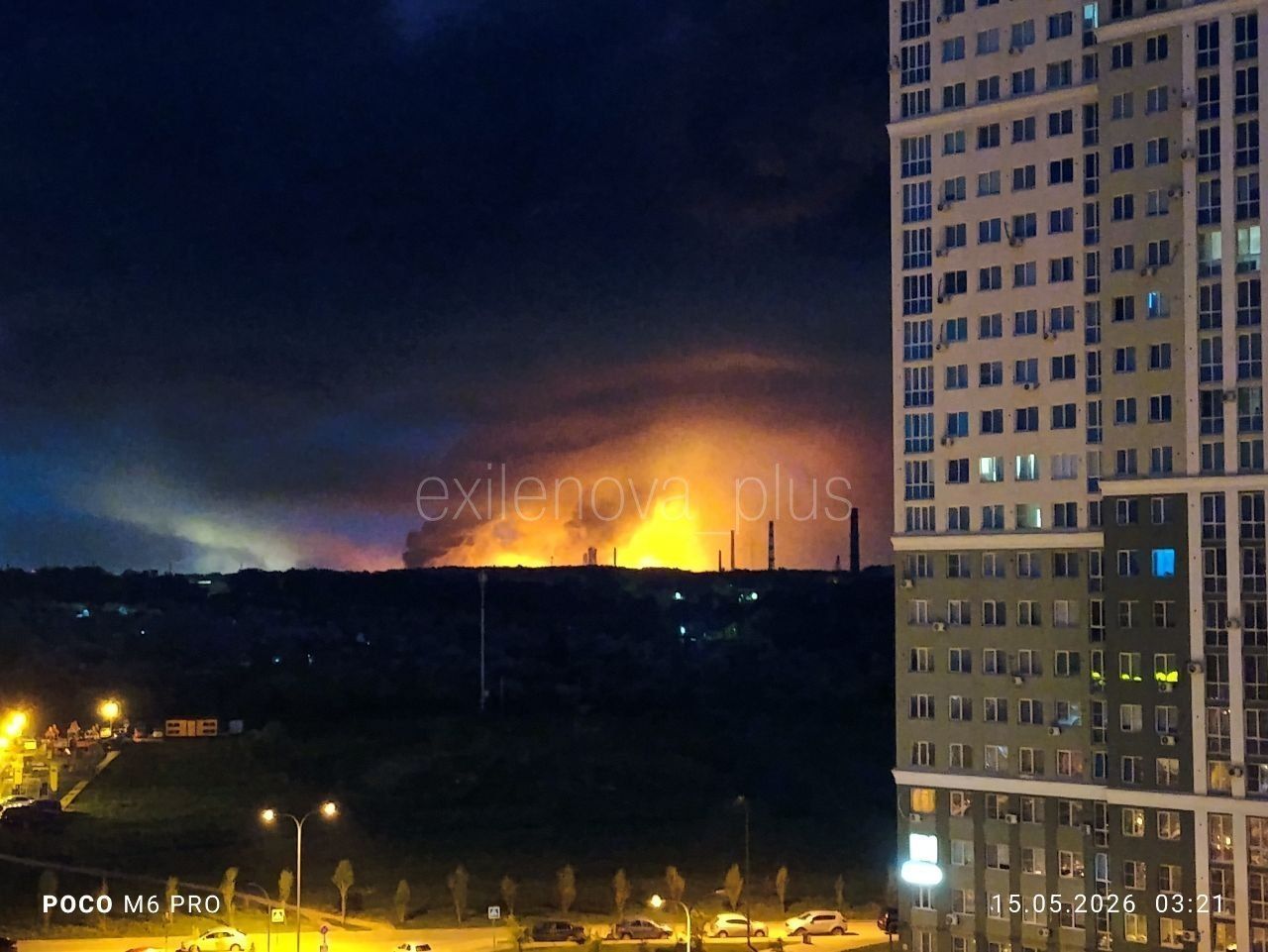
Ukraine reportedly launched a large-scale overnight drone strike on May 15, with the Ryazan oil refinery—one of Russia's largest, processing more than 17.1 million tons per year—reportedly hit and set ablaze. Russian officials claimed 3 people were killed and 12 injured, while damage assessments remain unclear and additional drone activity was reported near Moscow, Crimea, and Yeysk. The attack underscores escalating risks to Russian energy infrastructure and could affect regional oil supply sentiment.
The key market implication is not the headline fire itself, but the widening probability distribution around Russian refined-product availability over the next 2-8 weeks. Repeated strikes on processing capacity are more disruptive than crude-only disruptions because they impair diesel and jet fuel output disproportionately, which tightens the product complex faster than front-month Brent typically reflects. That creates a lagged bullish setup for diesel cracks and European middle-distillate import demand even if crude benchmarks stay rangebound on spare OPEC+ capacity.
Second-order winners are non-Russian refiners and transport-linked energy plays that can monetize a stronger crack spread regime without needing a sustained spike in outright crude. European refiners with export access and U.S. Gulf Coast complex refiners can capture incremental margin if Russia is forced to divert crude away from damaged systems and import more product into sanctioned channels. The more interesting trade is in freight and logistics: rerouting product flows, higher insurance premia, and convoy/security costs should benefit tankers and possibly lift regional storage demand, while increasing volatility in prompt physical markets.
The main risk to the bullish energy read is that the market has already normalized a high baseline of sabotage risk, so headline-driven crude rallies may fade unless there is verifiable multi-unit throughput loss. A rapid repair cycle, successful air defenses, or a policy shock that relaxes enforcement of Russian product exports would compress the risk premium quickly. Timeline matters: near-term pricing impact is likely in days via diesel and crack spreads; the broader crude balance is a months-long story only if attacks persist enough to force structural run-rate reductions.
Consensus may be underestimating the asymmetry between crude supply resilience and refined-product fragility. Russia can often keep exporting crude even with damaged downstream assets, but each additional refining interruption increases domestic fuel rationing risk and export mix distortion, which is more inflationary for end-user prices than headline crude suggests. If the campaign intensifies, the bigger macro transmission is not Brent $100, but a sticky uplift in diesel, European inflation prints, and logistics costs that bleeds into industrial margins.
AI-powered research, real-time alerts, and portfolio analytics for institutional investors.
Request DemoOverall Sentiment
strongly negative
Sentiment Score
-0.70
