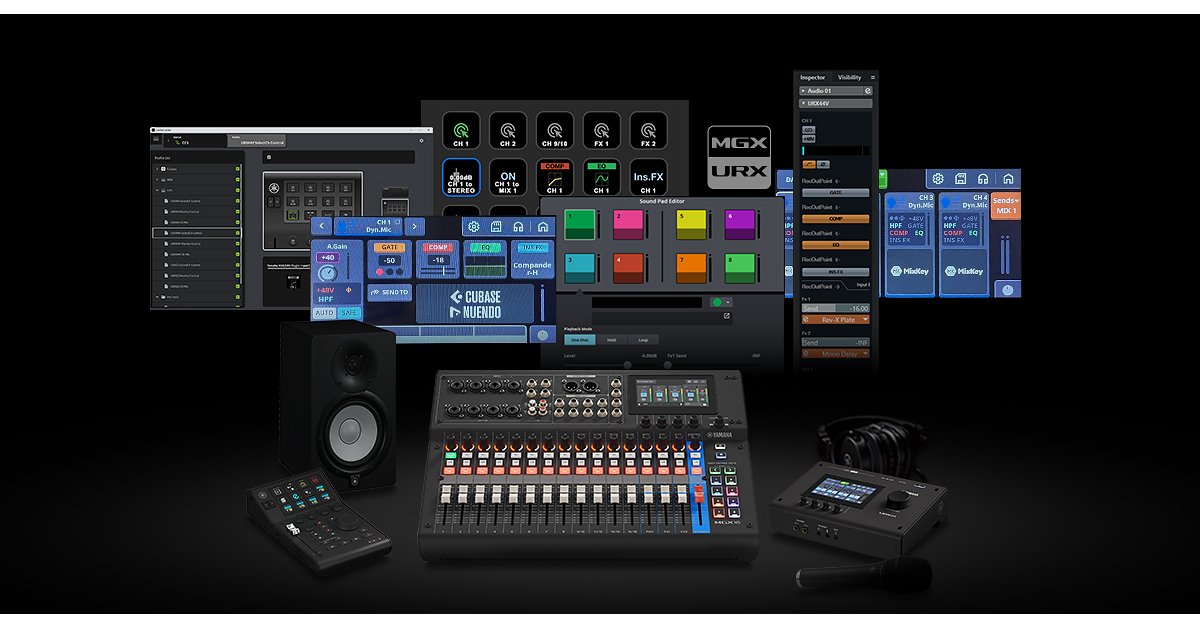
Yamaha and Steinberg released new firmware and software for the MGX/URX mixers and audio interfaces plus the CC1 USB controller and MixKey, aiming to improve workflow efficiency, routing flexibility, and ecosystem integration for streamers and creators. Updates include VST/AU/AAX plug-in availability of MGX/URX onboard effects via Basic FX Suite V4.0 (with 13 additional effects), Stereo Send and STEREO bus assignment controls, and expanded CC1 stability/responsiveness—while planned Winter 2026 features add Console Lock, Channel Copy, 12-band Flex Graphic EQ, and more CC1 action-assignment options. Given it’s a product update with no financial guidance changes, the near-term market impact is likely limited.
The economic significance here is mostly defensive: this looks more like moat maintenance than a near-term revenue inflection. In pro-audio, the value is in reducing switching friction across hardware, DAW, and controller layers; that can quietly improve retention, accessory attach, and dealer re-order rates even if the headline firmware is free. The best read-through is to Yamaha/Steinberg’s ecosystem economics, where tighter integration can marginally support mix and gross margin over 6-18 months if it keeps users from drifting to more open or cheaper alternatives.
The immediate market reaction should be limited because the updates do not by themselves change unit economics or addressable market. The first real catalyst is not the release itself but evidence of adoption: download velocity, channel feedback, and whether the planned winter feature set drives upgrades from installed-base users versus merely satisfying existing owners. Falsifiers would be weak uptake, no improvement in software/plug-in monetization, or a rival ecosystem matching the same workflow gains with lower-friction onboarding. If that happens, the story reverts to incremental support burden rather than competitive advantage.
The contrarian view is that the market may underprice the value of workflow lock-in in creator tools, especially for semi-professionals whose switching costs are disproportionate to device price. But that same dynamic also caps upside: free firmware rarely moves earnings on its own, and any valuation support depends on proving higher lifetime value per user, not product feature count. Net: mildly constructive on YAMCY, but this is a watch item, not a high-conviction catalyst trade.
AI-powered research, real-time alerts, and portfolio analytics for institutional investors.
Request DemoOverall Sentiment
mildly positive
Sentiment Score
0.15
Ticker Sentiment
