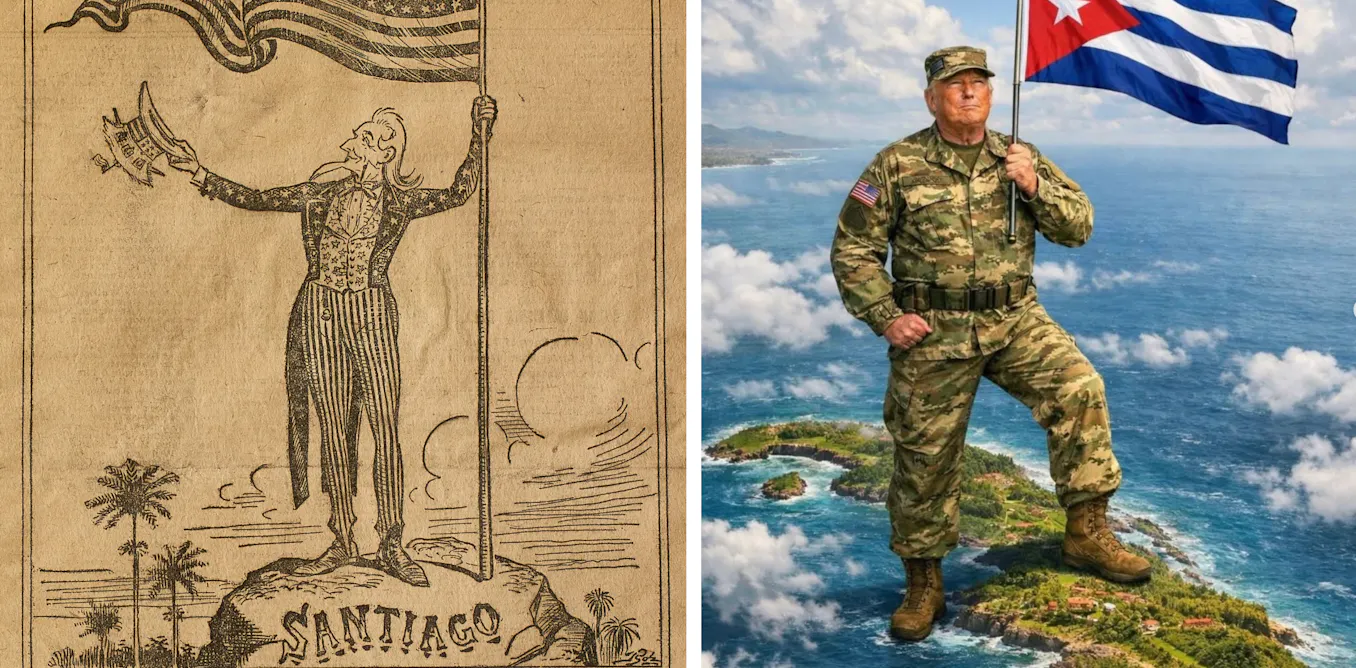
The article argues that AI-generated imagery is reinforcing support for a potential U.S. intervention in Cuba, against the backdrop of rising pressure on Havana after Venezuela's removal from power on Jan. 3, 2026 and a de facto oil blockade since January. It highlights worsening Cuban blackouts, shortages, and political paralysis, while warning that digital fantasies of rescue could normalize military action and a return to U.S. client-state dynamics. The piece is primarily geopolitical commentary rather than market-moving news.
The market implication is not “Cuba risk” in the abstract but a higher-probability regime shift toward coercive U.S. policy that can hit several sleeves at once: EM risk premia, Caribbean logistics, and sanctions-sensitive credit. Even if no kinetic action materializes, the credible threat alone tends to widen sovereign CDS across lower-quality LatAm names for days to weeks, while boosting defense primes and ISR/cyber vendors as the policy mix shifts from diplomacy to deterrence and information operations.
The second-order effect is on capital flows and payment rails, not just commodities. Any tightening around Cuba would likely increase scrutiny on remittance channels, travel intermediaries, and cross-border fintech rails that touch Caribbean flows; that matters because the island’s consumption economy is already dependent on informal external support, so disruptions can create a self-reinforcing squeeze. A sharper constraint also raises the odds of migration pressure to Florida, which is politically relevant but tradable mainly through housing, staffing, and border/security contractors rather than direct Cuba exposure.
The AI angle is more important than it looks: generative content is acting as a consensus accelerator, compressing the time between grievance and policy acceptance. That can make headline risk unusually non-linear over the next 1-3 months, because once a narrative becomes emotionally legible, markets often underprice the probability of a “limited intervention” or expanded blockade. The reversal case is any visible Cuban concession package or a credible off-ramp from the White House; absent that, the risk is a slow grind toward more punitive measures rather than a single shock.
Contrarian view: the most crowded mistake is assuming military action is the base case. The administration may prefer pressure because it is reversible, deniable, and politically cheaper than occupation, so the tradable edge is in asymmetry rather than outright invasion odds. That argues for owning optionality and relative value, not directionally betting on a full regime-change event.
AI-powered research, real-time alerts, and portfolio analytics for institutional investors.
Request DemoOverall Sentiment
moderately negative
Sentiment Score
-0.30
