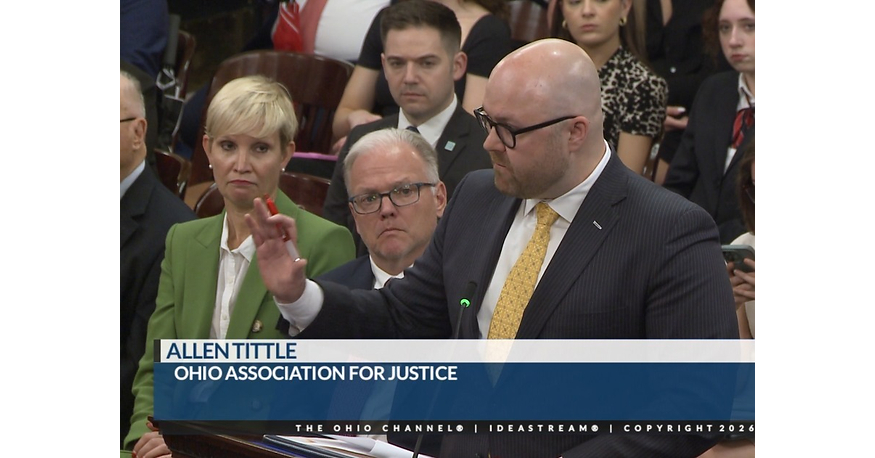
Ohio personal-injury attorney Allen Tittle testified in support of Senate Bill 292 to adjust noneconomic damage caps for inflation, while preserving the existing statutory framework. The bill would maintain the caps but provide an annual inflation adjustment and remove an absolute hard cap in certain medical malpractice cases. Tittle argued current caps—unchanged since 2005—have been eroded by inflation, reducing compensation for permanently injured plaintiffs and conflicting with the Ohio Constitution’s jury-trial protections.
This is not a first-order earnings event for OVBC; the economic transmission is too indirect and too slow. The real read-through is to liability writers and Ohio healthcare providers, where even a modest inflation reset can matter because reserves and reimbursement assumptions are set off historical damage ceilings, not current wage and medical-cost inflation. For a regional bank, the only plausible spillover is through borrower stress if local provider margins compress, which is a 6-18 month credit-quality issue rather than a next-quarter P&L item.
The more interesting second-order effect is that inflation indexing turns a static tort regime into a ratcheting one, so the market should think in reserve adequacy and reinsurance pricing, not headline cap size. That is bearish for medical malpractice carriers and any Ohio-heavy provider with tight operating leverage, but the effect should be gradual and highly state-specific, limiting any broad read-through to national insurers. The consensus risk is overreacting to the testimony as if it implies imminent reform; legislative signals often fade, and the biggest sensitivity is not passage itself but whether the final bill preserves the existing framework or opens the door to broader litigation expansion.
Contrarian view: the move may be overinterpreted on both sides. If the bill advances, the near-term winner is likely plaintiff-side economics, but the investable losers are still mostly private and idiosyncratic, while the public-market impact is muted unless Ohio exposure is concentrated and already under-reserved. Falsifiers are straightforward: committee stall or dilution in the next 1-2 months, or, on the other side, an unexpected actuarial reserve build / premium-rate action from a malpractice carrier within 1-2 reporting cycles.
AI-powered research, real-time alerts, and portfolio analytics for institutional investors.
Request DemoOverall Sentiment
neutral
Sentiment Score
0.00
Ticker Sentiment
