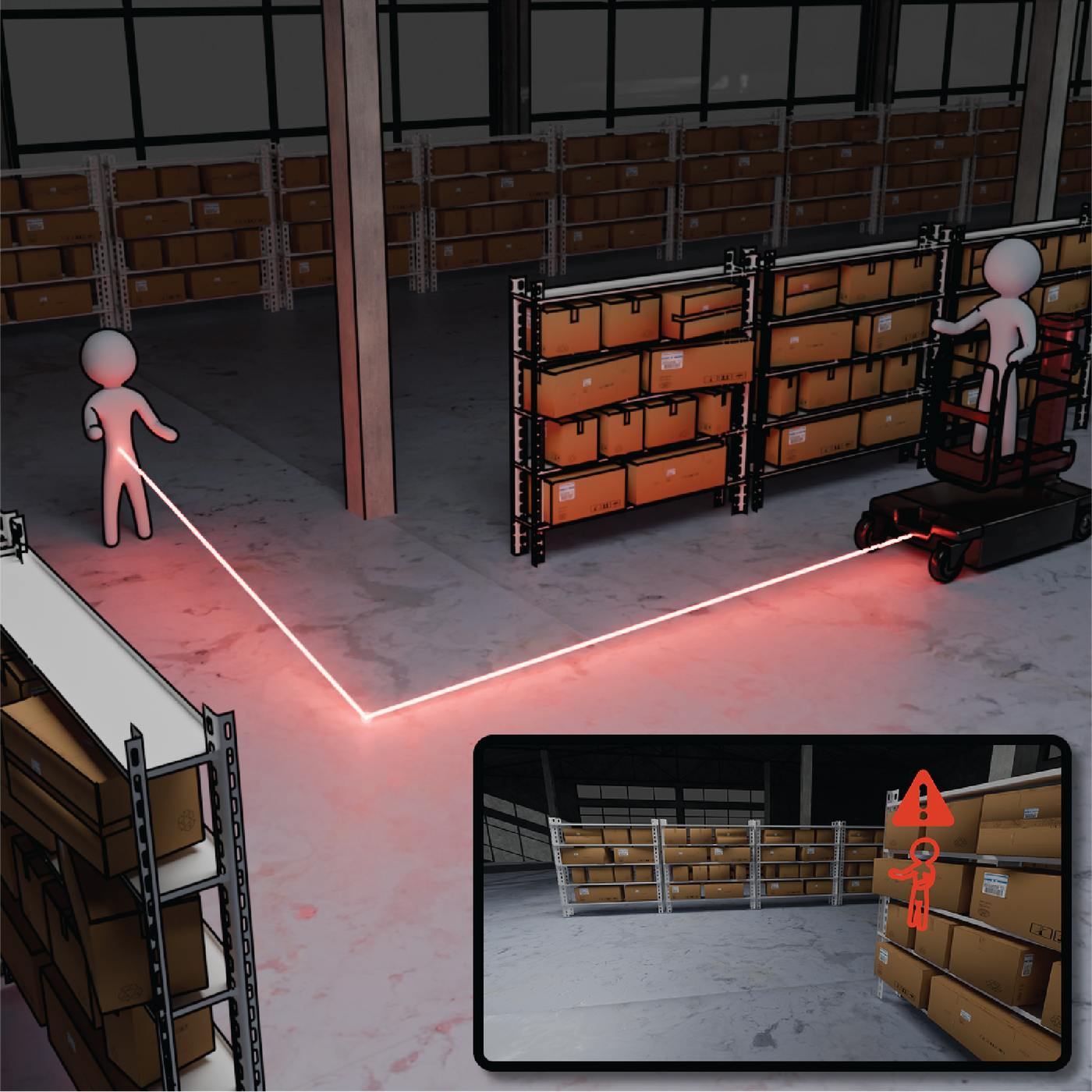
Researchers unveiled a new imaging technique, motion-induced aperture sampling, that converts handheld motion into a way to see around corners using existing hardware. The method could lower barriers to advanced machine vision by replacing a specialized $50,000 setup with plug-and-play capabilities for robotics, AR/VR, autonomous vehicles, and consumer devices. While highly innovative and commercially promising, the article is conceptual rather than a near-term financial catalyst.
This is less a product announcement than a signal that spatial perception is migrating from lab-grade hardware to software-defined capability. If the technique generalizes, the economic moat shifts away from proprietary optics and toward whoever controls the integration layer in phones, wearables, robotics stacks, and vehicle sensors. That favors large platform owners with installed base and distribution, while commoditizing niche imaging vendors whose value proposition was tied to specialized hardware scarcity.
The first-order monetization is probably not consumer demand but workflow improvement in autonomy and robotics: better occlusion handling reduces edge-case failure rates, which is disproportionately valuable because a small reduction in interventions can unlock materially higher deployment rates. That creates a second-order benefit for LiDAR-adjacent ecosystems, edge compute, and perception software, but also a threat to pure-play camera companies if “good enough around-corner sensing” is achieved in software. In automotive, the key variable is not headline capability but certification: adoption could lag 2-4 years behind technical proof, so the market may overprice near-term revenue while underpricing long-dated optionality.
The contrarian risk is that this remains a demoable but brittle capability: motion dependence means it may degrade in low-motion, low-light, or highly dynamic scenes, exactly where real-world autonomy is hardest. If so, the value accrues to research teams and platform narratives rather than to a durable product cycle. The opportunity is to own companies that can embed the method quickly if it works, while fading suppliers whose addressable market shrinks if perception becomes software-led rather than hardware-led.
AI-powered research, real-time alerts, and portfolio analytics for institutional investors.
Request DemoOverall Sentiment
strongly positive
Sentiment Score
0.72
