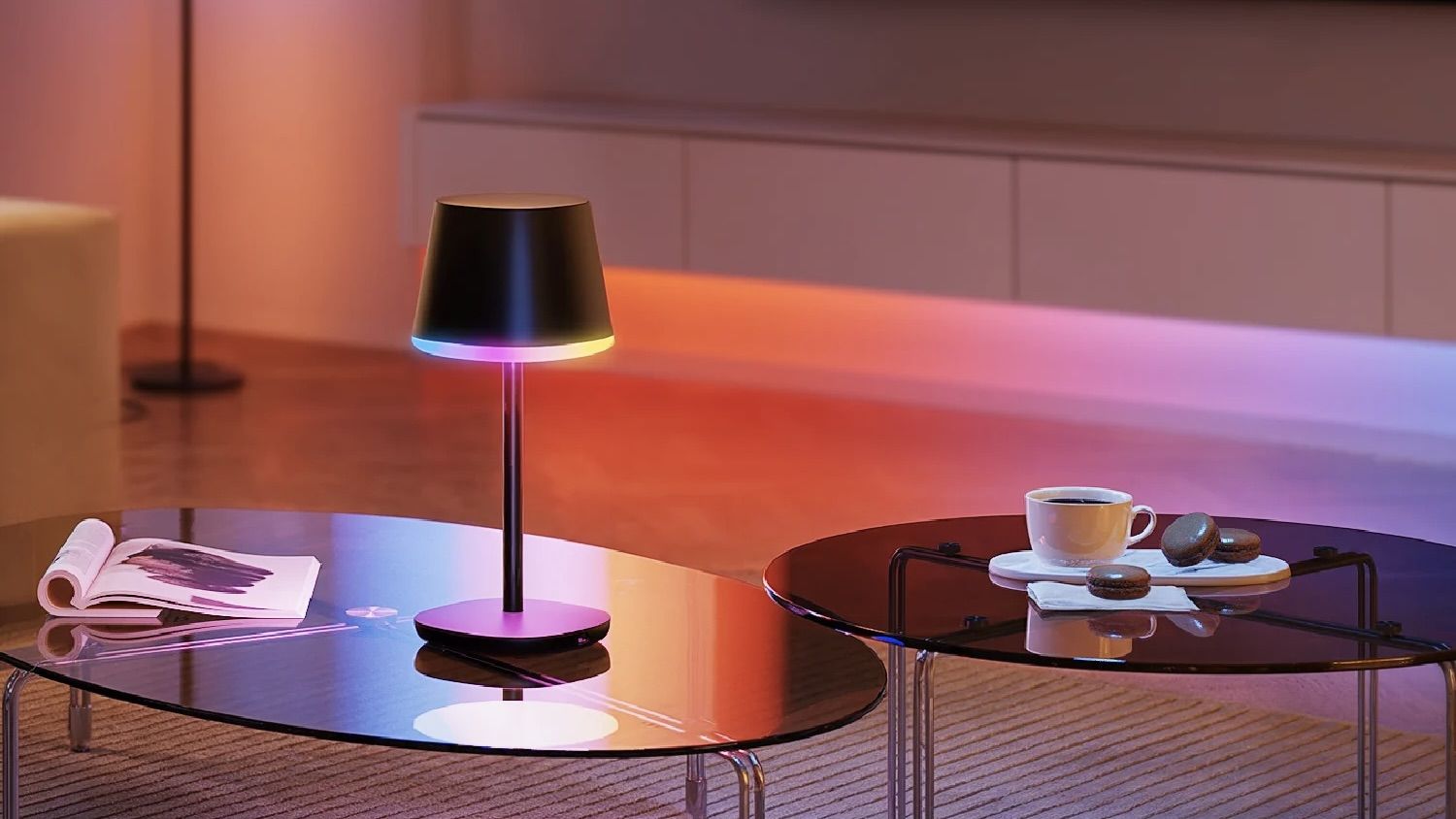
Govee launched the Table Lamp Classic at £69.99/$79.99, roughly half the price of Philips Hue Go at £139.99/$159.99, while matching a similar portable smart-lamp form factor and delivering up to 500 lumens. The product adds RGBICWW lighting, Matter support, a 4,800mAh battery rated for up to 30 hours in Night mode, 72 preset scene modes, and three music-reactive modes. This is primarily a consumer electronics product launch with limited immediate market impact.
This is not a category-reset event; it is a margin-architecture stress test for incumbents. In smart lighting, the moat is no longer hardware differentiation but ecosystem lock-in, app UX, and installed-base inertia, so a near-identical form factor at ~50% lower price likely compresses premium-brand pricing power faster than unit share. The immediate beneficiary is the value tier brand, but the second-order winner may be the broader Matter-enabled ecosystem, because every incremental interoperable device reduces the switching cost of mixing brands and weakens proprietary hub economics.
For Philips Hue, the risk is less “lost lamp revenue” than an adverse mix shift: entry-point products anchor the first purchase, and once that anchor is commoditized, attach rates on higher-margin bulbs, bridges, and accessories can decelerate over the next 2-4 quarters. That matters because premium smart-home categories often rely on a razor/razorblade model; a cheaper lookalike can force price promotions across the portfolio and raise customer acquisition costs just to defend shelf space. On the supply side, this also signals that component sourcing and industrial design are now sufficiently standardized that copy-cycle risk is shortening, which favors manufacturers with scale purchasing and faster inventory turns.
The contrarian read is that lower prices may expand the total addressable market faster than they cannibalize incumbent demand. If consumers were price-sensitive but waiting for a design-compatible, portable lamp with mainstream ecosystem support, then this launch could increase category penetration rather than simply steal share, especially over the next 6-12 months. The key variable is whether the premium brand can keep its perceived quality and software reliability premium intact; if not, the market will likely start discounting the long-tail monetization of its installed base.
AI-powered research, real-time alerts, and portfolio analytics for institutional investors.
Request DemoOverall Sentiment
neutral
Sentiment Score
0.15
