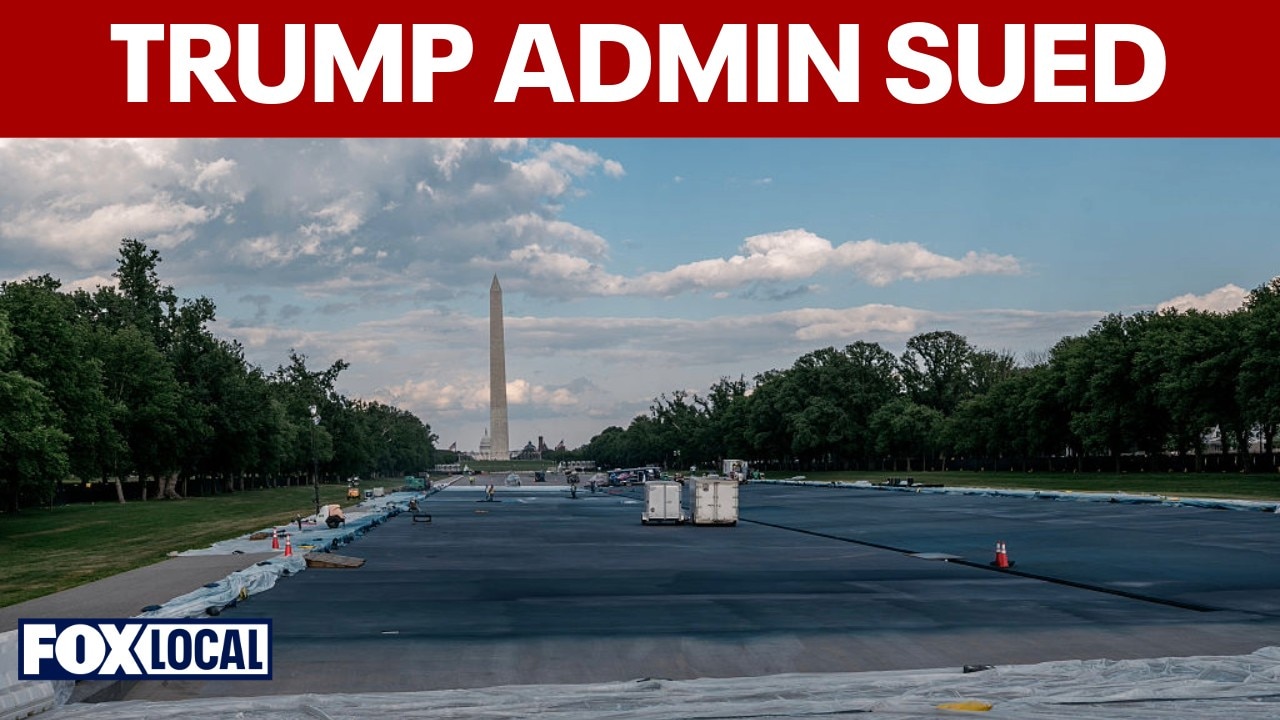
A preservation group has filed a lawsuit to stop the Trump administration's resurfacing of the Lincoln Memorial Reflecting Pool, alleging federal historic review laws were ignored and seeking a halt to further changes until review is completed. The Interior Department says the new dark navy 'American Flag Blue' basin will improve reflections, while the administration still expects completion before July 4 and America's 250th celebrations. The dispute is largely legal and historical in nature, with limited direct market impact.
This is less an asset-level event than a governance signal: the market relevance sits in whether the administration’s willingness to fast-track visible projects starts extending to other federal capital programs. The practical takeaway is that procedural shortcuts can raise execution risk for contractors and subcontractors even when the physical scope is small, because litigation can freeze invoices, delay closeout, and force rework if historic-review compliance is retrofitted later. That creates a near-term winner/loser split between firms with clean compliance chains and those reliant on discretionary federal approvals.
The second-order effect is on the broader federal infrastructure complex. If courts signal that review statutes still bite, agencies may become more conservative on permitting and procurement timing over the next 1-3 months, which is mildly negative for small contractors with thin balance sheets and high working-capital sensitivity. If, instead, the project proceeds without meaningful judicial restraint, it reinforces a “build first, litigate later” precedent that can modestly improve award velocity but increases headline risk and contingency costs across the sector.
The contrarian read is that this is probably not a durable policy-market trade unless it broadens into a pattern. The most likely economic impact is negligible, but the reputational downside can still matter for federal-facing operators because it sharpens scrutiny around ESG, heritage, and public-space projects. In that sense, the real exposure is not the pool itself but the probability that procurement delays or injunctions appear in future civic-infrastructure awards, which can compress multiples for niche engineering and construction names before any actual revenue impact shows up.
AI-powered research, real-time alerts, and portfolio analytics for institutional investors.
Request DemoOverall Sentiment
mildly negative
Sentiment Score
-0.15
