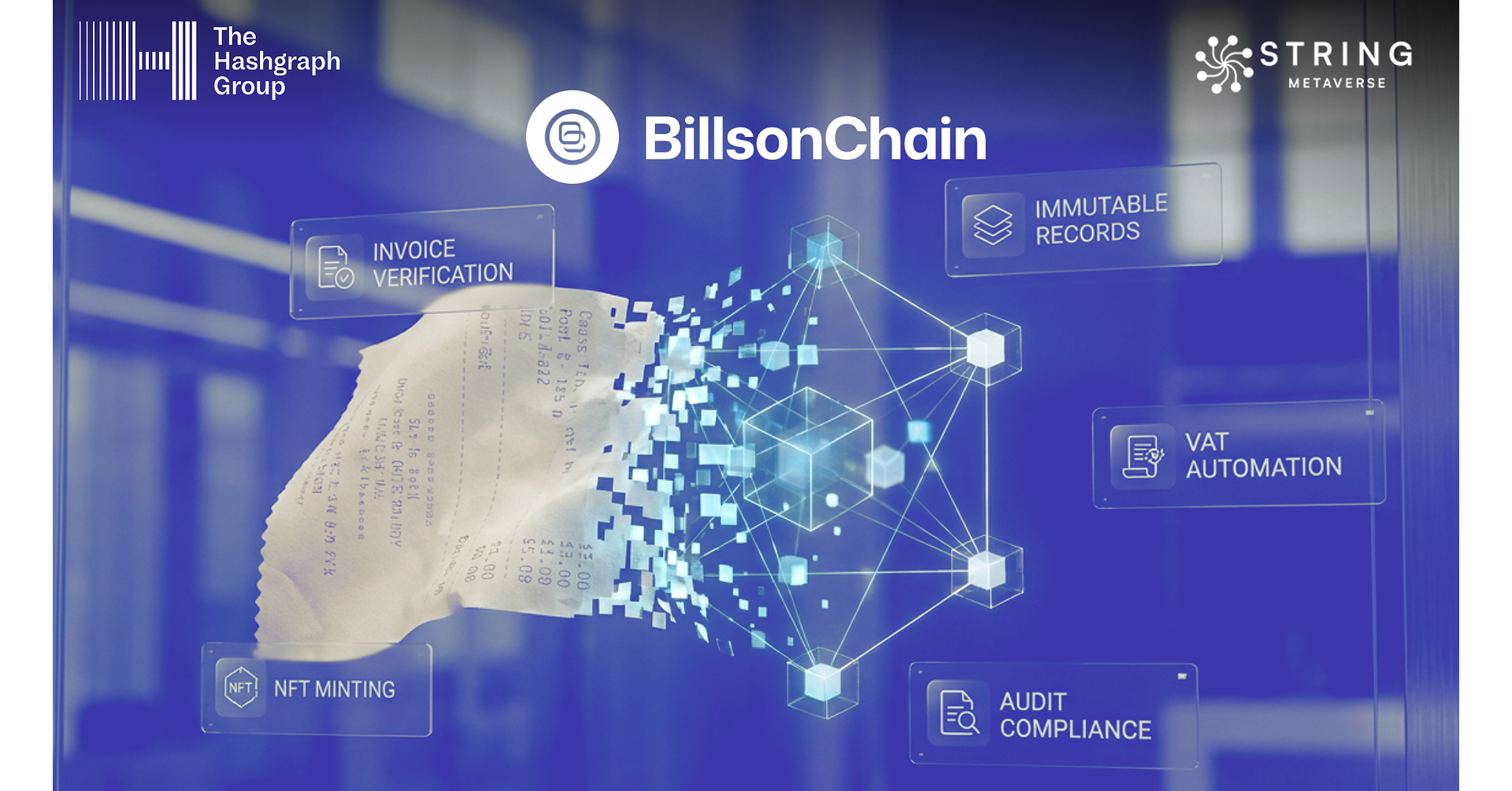
Hashgraph Group and String Metaverse launched the “BillsOnChain” platform on Hedera to automate VAT refund processing and tokenized bill tracking. Within two weeks of go-live, the platform scanned 830,000+ bills on-chain and onboarded 31,000+ users, with 430,000+ NFTs minted, positioned to reduce fraud/leakage and enable bill financing liquidity via immutable receipt tokenization.
The economic winner is not the ledger layer; it is whoever sits closest to invoice workflow and financing. If this concept ever scales, the margin pool accrues to AP/AR software, tax-compliance engines, and working-capital lenders that can underwrite receivables off better data; the blockchain component is mostly a trust and audit utility, not the monetization engine. That argues for watching established fintech and workflow names such as BILL, FIS, FI, PYPL, and ERP-adjacent vendors rather than chasing the microcap Web3 names.
Near term, this is a sentiment event, not an earnings event. The key question over the next 1-3 months is whether any government or enterprise customer signs a paid rollout that converts scans/mints into recurring fees; absent that, the reported usage metrics are more vanity than value. Over 6-18 months, the real catalyst would be legal and systems integration: if VAT reclaim or invoice financing can be embedded into ERP and accepted by tax authorities, adoption could become sticky; if not, this stays a pilot-driven narrative.
The contrarian miss is that on-chain storage does not solve the hardest parts of billing: legal enforceability, data standardization, and customer acquisition. Legacy AP automation and invoice financing are already well served by software vendors with distribution, so the hurdle is not technology but workflow change. That makes the upside asymmetric only if the platform becomes infrastructure inside regulated rails; otherwise the downside is slow fade as the market realizes transaction counts do not equal revenue.
For risk, the falsifier is simple: no follow-on contract disclosure, no recurring transaction fees, or any evidence that user activity is not retained beyond the initial promotion. If adoption stalls over the next quarter, the narrative likely compresses back to a niche crypto use case; if a bank, retailer, or tax authority pilot lands, then the long-duration thesis becomes more credible.
AI-powered research, real-time alerts, and portfolio analytics for institutional investors.
Request DemoOverall Sentiment
mildly positive
Sentiment Score
0.25
Ticker Sentiment
