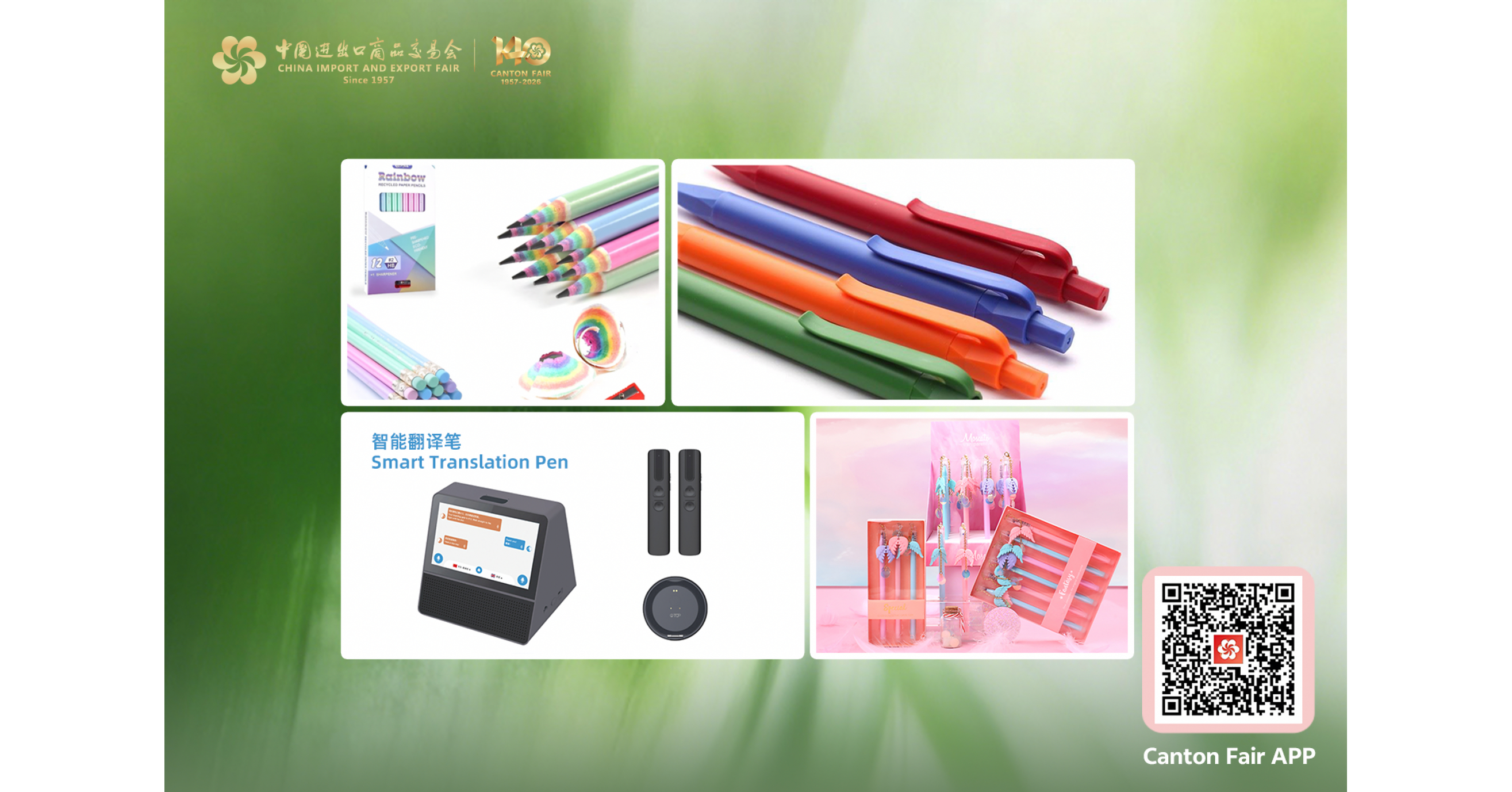
Canton Fair coverage highlights rising back-to-school demand for stationery and learning tools, with exhibitors emphasizing sustainability (e.g., PLA biobased pens and 100% recycled ocean plastic certified by GRS). The fair also showcases AI-enabled stationery such as smart translation pens for multilingual translation and mind-map generation. Looking ahead, the 140th Canton Fair in October will span 1.55 million sq. meters with 30,000+ enterprises, positioning it as a supply-discovery platform ahead of key retail seasons.
This reads more like a procurement and inventory signal than a product-cycle inflection. The important mechanism is that global buyers are still locking in seasonal assortments months ahead in China, which supports import volumes, port throughput, and freight demand into Q3/Q4; that is mildly constructive for ocean carriers and logistics names, but it is not evidence of broad consumer acceleration. For mass merchants and marketplaces such as WMT, TGT, and AMZN, the incremental benefit is better back-to-school assortment coverage and less markdown risk, not a step-change in earnings.
The ESG angle is mostly margin defense, not a new moat. Recycled/biobased inputs can justify a small price premium, but if resin prices ease or certification becomes standard, the feature set quickly commoditizes and the cost advantage shifts back to scale buyers and private-label operators. That favors retailers with procurement leverage over niche stationery brands and small importers that cannot absorb certification, freight, and compliance overhead.
The AI-feature narrative is the most over-interpreted part of the setup. Smart pens may help keep Chinese exporters relevant in a low-ticket category, but the TAM is too small to matter for public equity earnings; the real second-order effect is competitive pressure on educational accessories and low-end consumer electronics as feature creep lowers the bar for differentiation. What would falsify the constructive read is a slowdown in U.S. retail import data, a tariff/customs escalation, or a freight spike that turns landed-cost advantages negative over the next 1-3 months.
AI-powered research, real-time alerts, and portfolio analytics for institutional investors.
Overall Sentiment
neutral
Sentiment Score
0.10
Ticker Sentiment
