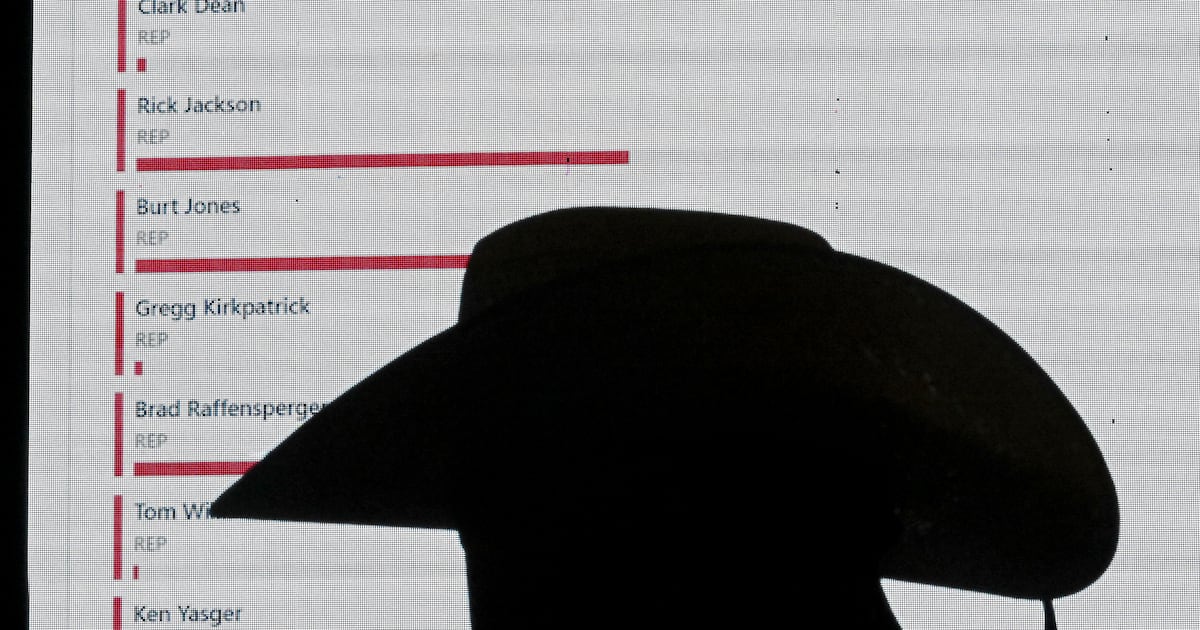
Georgia primary night produced several political and legal developments: ex-GOP U.S. House candidate and Jan. 6 defendant Charles McMichael won a state Senate nomination, while Georgia Supreme Court candidates Sarah Hawkins Warren and Charlie Bethel held their seats against Democratic-backed challengers. The state Supreme Court also vacated a more than $3.7 million order against Rick Jackson’s companies. Separately, Senate Democrats advanced a resolution to curb Iran strikes, a modest legislative signal with limited immediate market impact.
The clearest market implication is not the headline winners themselves, but the signal that Georgia’s primary still rewards high-salience, identity-driven politics over institutional moderation. That tends to increase the probability of a more volatile general-election environment, which is incrementally negative for any state-reliant spenders and for firms exposed to local procurement or policy timing, because campaign rhetoric can harden into regulatory posture faster than fundamentals justify.
The Iran war-powers vote matters more as a governance barometer than as a near-term geopolitical driver. Even if the measure dies, the fact that a chunk of Republican support is movable raises the odds of more frequent intra-party constraint on escalation, which lowers tail risk for defense-sensitive sectors in the next 1-3 months but increases headline volatility around any Middle East event because policy response becomes less predictable.
The court action around Jackson is a reminder that litigation outcomes can reprice balance-sheet risk long after the underlying dispute is old news. The second-order effect is on lenders, sureties, and counterparties to closely held regional operators: even a vacated judgment can keep financing costs elevated until legal finality is clear. That argues for watching any small-cap Georgia construction/real-estate credit names for spread compression only after appellate risk is visibly closed.
The broader contrarian read: the market may be underestimating how little immediate economic impact these political headlines have versus how much they can move local sentiment and donor behavior. In a low-visibility, low-impact news cycle, the right trade is usually not to chase the headline, but to own optionality around volatility and avoid names with concentrated exposure to Georgia policy or federal appropriations uncertainty.
AI-powered research, real-time alerts, and portfolio analytics for institutional investors.
Request DemoOverall Sentiment
neutral
Sentiment Score
0.00
Ticker Sentiment
