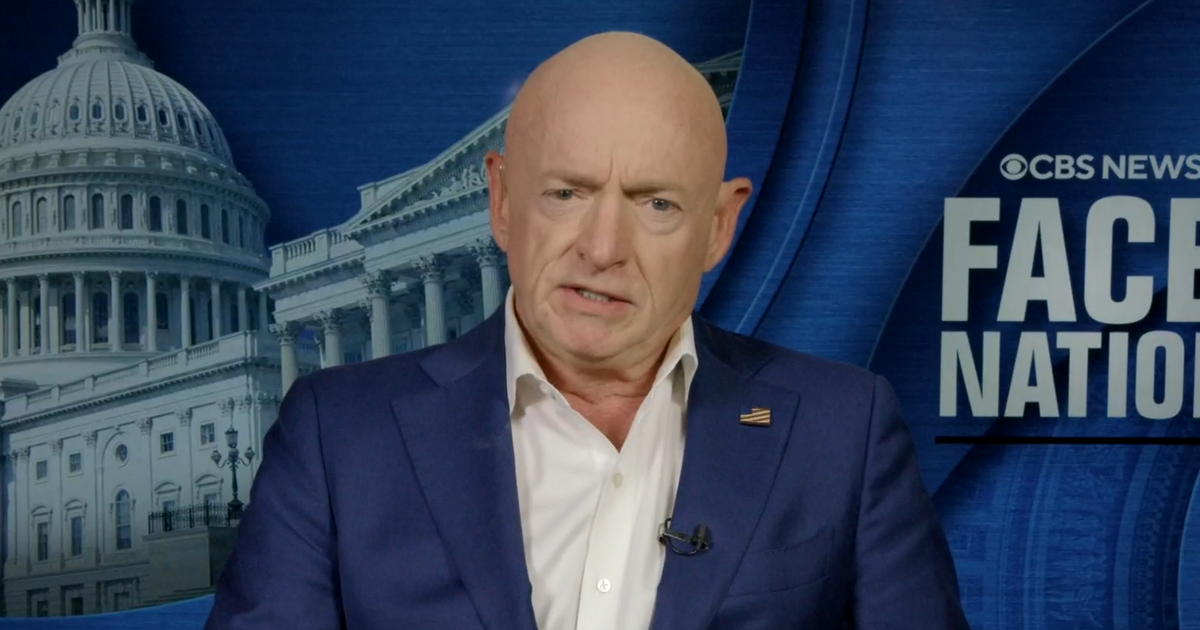
Sen. Mark Kelly said U.S. munitions have been heavily depleted by the Iran conflict and said replenishment will take years, warning this leaves the U.S. less prepared for a potential China contingency. He called the Trump administration’s $1.5 trillion defense budget request “outrageous” and criticized the Golden Dome initiative as likely to waste money. Kelly also said the administration’s sanctions on China-linked entities and Russia are insufficient, and defended his lawsuit against Defense Secretary Hegseth over free-speech rights for retired service members.
The market takeaway is not the headline politics, but the implied tightening of the Pentagon’s near-term procurement and inventory cycle. A prolonged drawdown in interceptors and precision munitions should widen the valuation gap between prime contractors with missile-defense exposure and the smaller suppliers most levered to fill that backlog, while also increasing the probability of emergency multi-year supplemental appropriations. The second-order effect is that budget compression becomes less about topline cuts and more about mix shift: higher share to readiness, interceptors, and reload capacity, lower share to long-dated experimental programs.
The bigger structural issue is time. If replenishment truly takes years, the market should treat “support” as a recurring demand stream rather than a one-off surge, which is bullish for capacity owners across the munitions supply chain but negative for platforms that rely on discretionary modernization spend. That also raises execution risk for the administration’s very large defense ask: the more the debate centers on inventory exhaustion, the harder it becomes politically to approve pet projects with weak physics or poor fieldability. Expect congressional scrutiny to migrate toward bottleneck components, energetics, seekers, and launch rails rather than broad budget aggregates.
On geopolitics, the combination of sanctions spillover, China/Russia alignment, and uncertainty around Taiwan readiness is not enough to trigger an immediate risk-off in defense, but it does extend the tail on defense outperformance. The contrarian point: some of the “missile shortage” narrative may already be partially discounted in primes, while the real upside is in second- and third-tier suppliers that can scale with less headline risk. Conversely, any cease-fire/containment in the Middle East would quickly reduce urgency and compress multiples on the most war-premium names over a 1-2 quarter horizon.
AI-powered research, real-time alerts, and portfolio analytics for institutional investors.
Request DemoOverall Sentiment
moderately negative
Sentiment Score
-0.25
