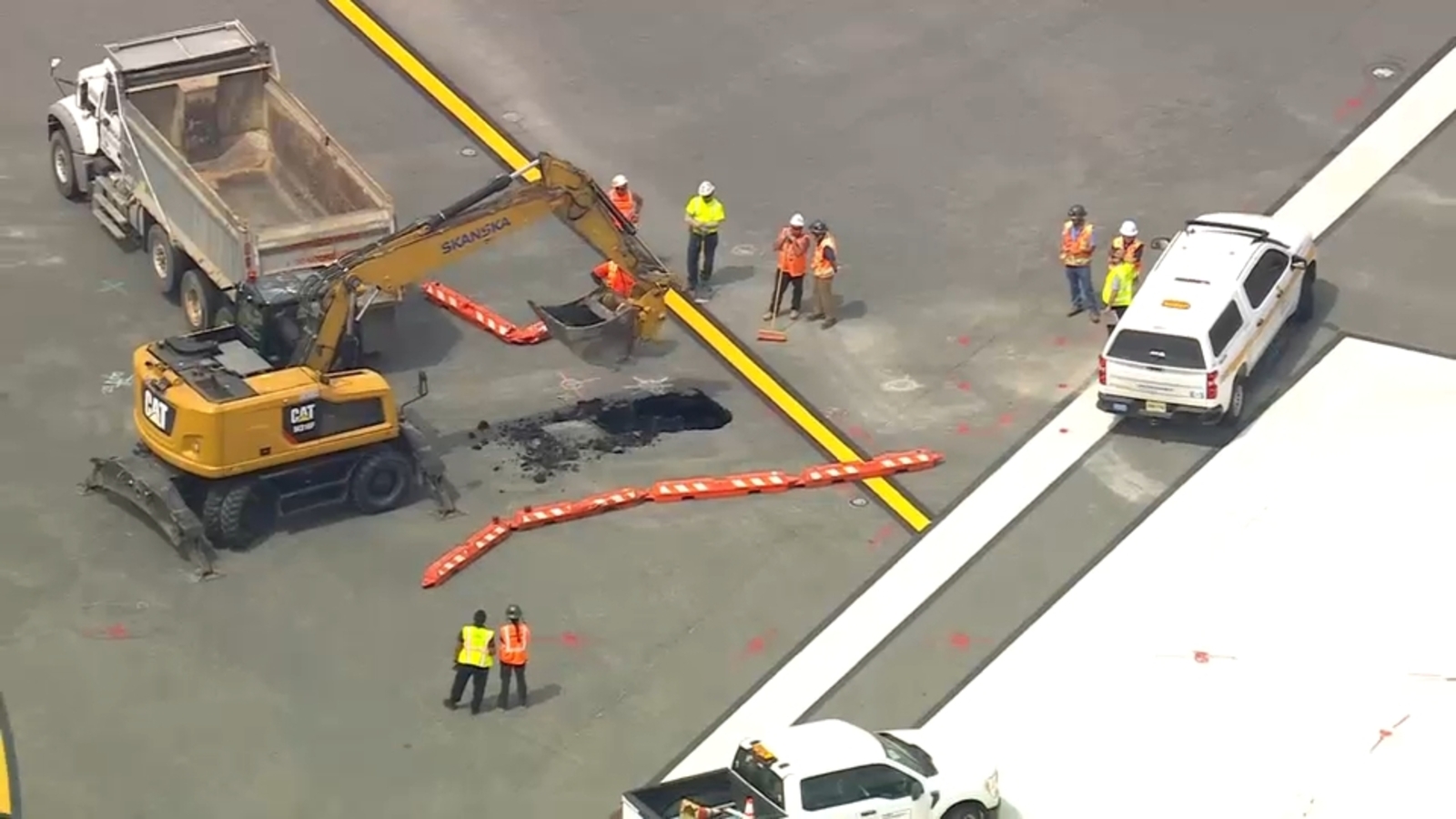
A sinkhole shut down one of LaGuardia's two runways, triggering a ground delay with departing flights averaging 98 minutes late and 17% already canceled. The runway is expected to remain closed through at least 6 a.m. Thursday, with weather potentially extending the disruption. The incident is a localized operational headwind for air travel, not a broader market event.
This is a micro-disruption with macro-like knock-on effects because the airport’s operating model has almost no slack. The immediate economic damage is less about one day of missed flights and more about network propagation: aircraft and crews displaced from a constrained hub create spillovers into subsequent banks, so the revenue hit can persist beyond the physical repair window even if the runway reopens on schedule. The more important second-order effect is that irregular operations disproportionately punish high-yield business travelers, which means ancillary disruption costs and reaccommodation expenses can outrun the visible cancellation count.
The biggest beneficiaries are the substitutes, not the airport itself: rail, car service, and nearby airports should see near-term volume diversion. That favors ground transportation, rail-linked demand, and any lodging exposure near alternate arrival points, while airline unit revenues can actually rise on rebooked itineraries even as net profitability falls from compensation and misconnects. If thunderstorms compound the issue, the probability distribution becomes skewed toward a longer tail of disruption because weather-driven air-traffic-management constraints can make a purely mechanical repair irrelevant for several hours.
The market is likely to underprice the duration risk because the headline is a one-off infrastructure issue, but the real sensitivity is hub tightness. A one-runway airport is more vulnerable than it looks because recovery time after an interruption is nonlinear; once departure banks miss their slots, the system can stay congested into the next operating day. This should fade quickly if the field reopens cleanly and weather clears, so the trade is event-driven rather than secular.
Contrarianly, the long-term signal is not bearish for aviation demand but bullish for resilience capex: this reinforces the value of redundant capacity, stronger maintenance budgets, and better airside inspection technology. The incident should not matter to broader travel demand unless it coincides with a wider weather pattern or recurring infrastructure failures. The key question for investors is whether this becomes an isolated ops event or a data point in a broader thesis about aging transport infrastructure.
AI-powered research, real-time alerts, and portfolio analytics for institutional investors.
Request DemoOverall Sentiment
mildly negative
Sentiment Score
-0.25
