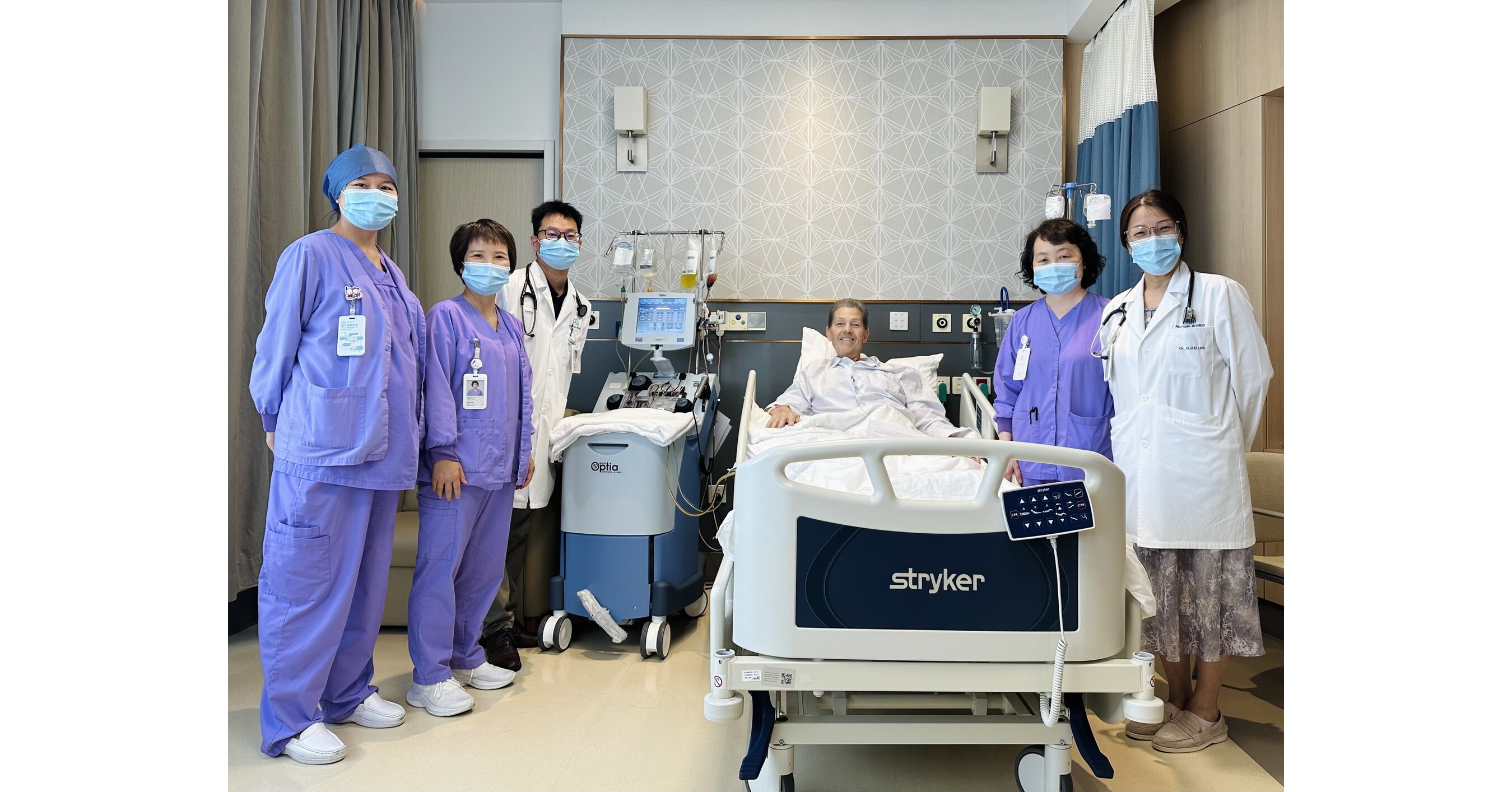
Der Jiahui International Cancer Center hat den weltweit ersten internationalen Patienten für Satri-cel erhalten, die weltweit erste zugelassene CAR-T-Therapie gegen solide Tumoren (für die Behandlung eines soliden Tumors zugelassen). Der 59-jährige Patient aus Neuseeland mit fortgeschrittenem Magen-Darm-Krebs hat die Leukapherese erfolgreich abgeschlossen; die Reinfusion ist für die kommenden Wochen geplant. Der Meilenstein folgt nur wenige Tage auf die China-Zulassung und unterstreicht den erweiterten globalen Zugang zu Chinas neuer Onkologieinnovation.
This matters more as a credibility signal for China’s oncology stack than as an immediate revenue event. The first monetizable path is not broad patient volume; it is a rerating of domestic CAR-T, diagnostics, and high-end private oncology platforms if investors start believing China can originate, regulate, and manufacture first-in-class cell therapies ahead of the West.
The second-order winner is the ecosystem around biomarker-driven care: labs that can reliably screen for target expression, specialty hospitals with international-patient pipelines, and cell-processing/manufacturing capacity that can scale turnaround times. By contrast, U.S. and EU solid-tumor immunotherapy programs are not losing sales today, but their probability-weighted platform value gets pressured if China demonstrates tolerable safety plus repeatable efficacy in a hard indication.
The key risk is extrapolation from a single treatment to a durable commercial franchise. Over the next 1-3 months, the market will likely trade the headline; over 6-18 months, the thesis lives or dies on multi-patient data, manufacturing consistency, reimbursement, and whether ex-China licensing emerges. If follow-on cohorts show constrained supply or excessive toxicity, this becomes a science headline rather than an investable growth story.
Consensus may be underpricing China-origin innovation optionality, but also overpricing near-term monetization. The right way to think about it is as a long-duration call option on Chinese oncology IP exportability, not as an earnings upgrade for any single global pharma name.
AI-powered research, real-time alerts, and portfolio analytics for institutional investors.
Request DemoOverall Sentiment
strongly positive
Sentiment Score
0.55
