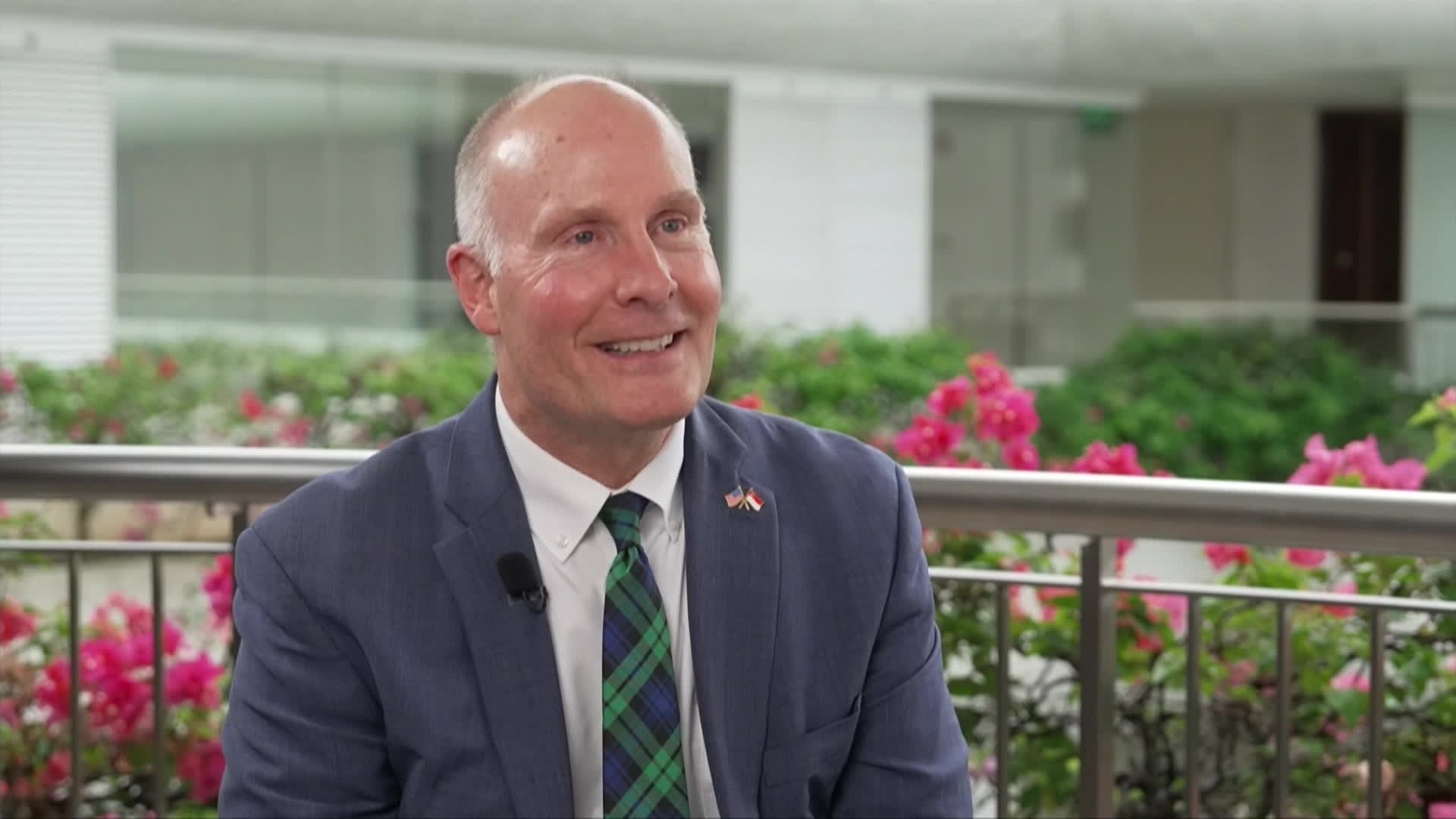
Chairman John Moolenaar, head of the House Select Committee on Strategic Competition between the U.S. and China, urged China to acknowledge its government's shift away from its promises, speaking to Bloomberg on the sidelines of the Shangri-La Dialogue. The statement highlights ongoing tensions and scrutiny of China's evolving policies and their implications for international relations and trade.
Chairman John Moolenaar, leading the U.S. House Select Committee on China, has publicly asserted at the Shangri-La Dialogue that the Chinese government is deviating from its stated commitments. This statement, characterized by a 'hawkish' tone and contributing to a 'mildly negative' sentiment, underscores the persistent and potentially escalating geopolitical tensions between the United States and China. The remarks highlight concerns over China's strategic direction and its implications for international relations and trade policy, themes central to the current geopolitical landscape. While the immediate market impact score of 0.3 suggests a limited direct market reaction to this specific comment, it reinforces a climate of uncertainty that can affect investor confidence and long-term capital allocation, particularly in sectors sensitive to US-China relations and global supply chains. The core issue highlighted is the perceived disconnect between China's promises and its actions, a factor that complicates diplomatic and economic engagements.
AI-powered research, real-time alerts, and portfolio analytics for institutional investors.
Request DemoOverall Sentiment
mildly negative
Sentiment Score
-0.30
