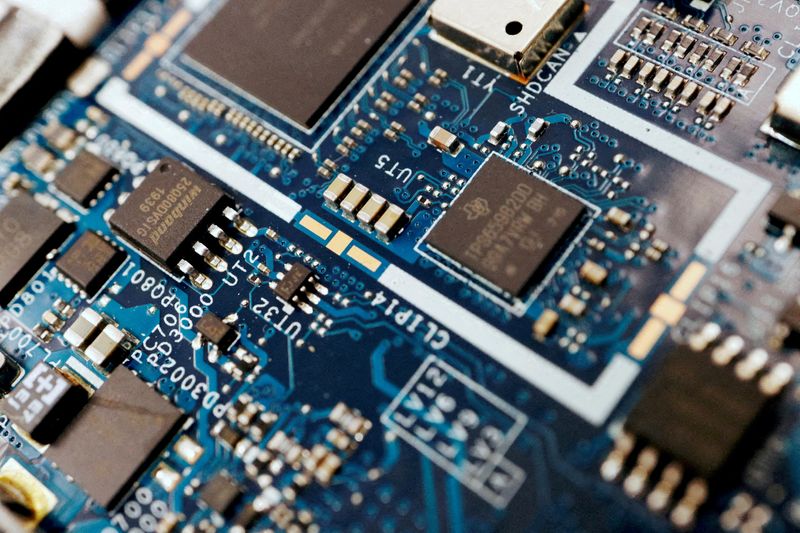
Samsung shares tumbled nearly 9% even after forecasting a 19-fold jump in Q2 operating profit to a record high, failing to convince investors that AI-driven gains justify the sector’s stretched valuations. SK Hynix also fell almost 9%, dragging Asia’s AI/memory-chip supply chain (Nikkei 225 down >2%; Murata -8%+, LG Innotek -5%). The move appears driven by valuation/positioning and “mechanical” selling via single-stock leveraged ETFs, with attention shifting to U.S. earnings and the Fed meeting minutes for guidance on technology spending and rates.
The immediate loser is not just the Korean memory names; it is the entire “AI capex = automatic earnings compounding” trade. When the market starts punishing a beat because the surprise was already owned, it usually means the next leg depends on incremental revision, not absolute earnings, which is a much higher bar for SSNLF and the broader memory basket. The second-order damage is to leverage-sensitive local flows: if single-name momentum breaks, Korea’s ETF/structured-product ecosystem can turn a valuation de-rating into a forced-selling event.
The more durable beneficiaries are the toll collectors on real AI infrastructure demand, not the commodity-like memory exposure. NVDA and TSM are better insulated because their pricing power and foundry bottlenecks are tied to system-level capex, while memory is still vulnerable to inventory and ASP normalization once investors question the sustainability of peak margins. HNHPF is a cleaner read-through on actual server demand than on memory economics, so its weakness looks more flow-driven than fundamental unless order commentary softens.
Catalyst risk is bifurcated: over the next few days, price action and positioning dominate; over 1-3 months, U.S. earnings and Fed guidance will decide whether AI spending is being deferred or merely re-rated. The contrarian point is that this is not yet a “AI demand is rolling over” signal — it is a “multiple too crowded” signal. That distinction matters: if NVDA commentary confirms continued accelerator demand and hyperscaler capex, this pullback should be bought selectively; if guidance implies slower 2025 procurement, memory names can de-rate another 15-25% without needing a full earnings miss.
The falsifier for the bearish tape is a quick reclaim in SSNLF/HNHPF on strong U.S. tech results with no softening in AI capex commentary. Until then, the path of least resistance is lower for the leveraged, domestically-owned Korea complex.
AI-powered research, real-time alerts, and portfolio analytics for institutional investors.
Request DemoOverall Sentiment
mildly negative
Sentiment Score
-0.35
Ticker Sentiment
