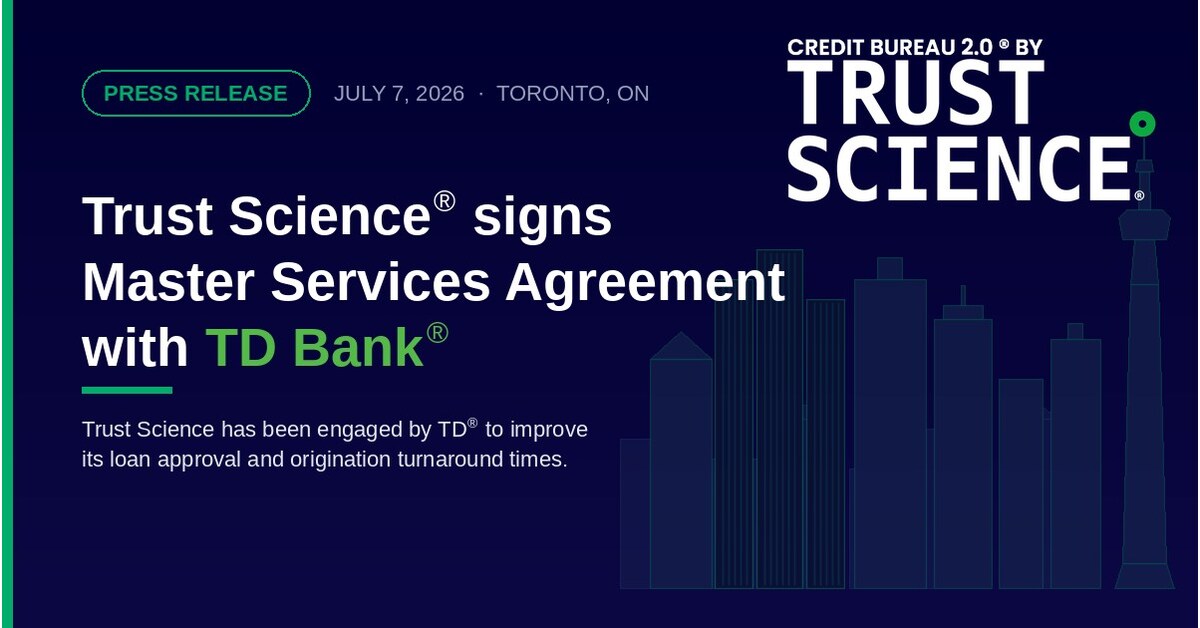
Trust Science entered a bank-wide Master Services Agreement with TD, with TD Auto Finance (Canada) rolling out Trust Science’s AI-based income verification and real-time loan decisioning via its 5,500 authorized dealers. The deal is positioned to speed loan approvals and reduce risk/fraud by automating lending workflows. Overall, this is a modestly positive fintech adoption update with limited immediate market-wide impact.
This is primarily a workflow/throughput story, not a near-term credit-alpha story. The immediate winner is the bank that can reduce abandonment and dealer friction without loosening standards; that supports loan volume and mix more than it moves net interest margin. The hidden loser is the long tail of manual verification, legacy bureau workflow, and outsourced underwriting labor that becomes less necessary if real-time decisioning proves durable.
The market should treat the first rollout as an option value event, not a full earnings bridge. If the process improves conversion in auto finance, the follow-through is 1-3 months: better dealer retention, faster funded-loan growth, and modest efficiency-ratio improvement. The 6-18 month risk is adverse selection — faster approvals can raise booked volume while degrading credit quality later, which would cap enthusiasm and invite regulator/model-governance scrutiny.
Contrarian view: investors often overestimate the P&L impact of 'AI lending' in the first year. The real value is operational, and unless that translates into sustained share gains, the effect on public equities is likely small. For TSLA and other auto-exposed names, any benefit is second-order and probably too small to trade unless broader financing conversion improves across the channel.
AI-powered research, real-time alerts, and portfolio analytics for institutional investors.
Overall Sentiment
mildly positive
Sentiment Score
0.25
Ticker Sentiment
