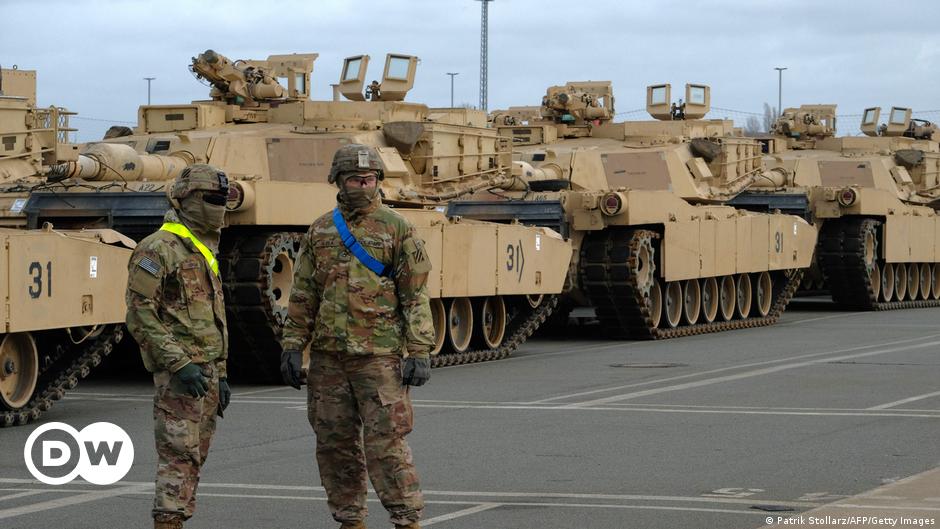
The Pentagon said it is reducing US troops in Europe back to 2021 levels, including a cut in Army Brigade Combat Teams from three to four and a temporary delay to a troop deployment to Poland. The move follows an earlier withdrawal of 5,000 troops from Germany and appears aimed at shifting more conventional defense responsibility to NATO allies. The announcement underscores a more defensive US posture in Europe and could have meaningful implications for European defense spending and regional security planning.
This is less about the immediate troop count than about a structural signal: Washington is shifting Europe from a guaranteed security backstop to a burden-sharing test. The second-order effect is a multi-year repricing of European defense procurement, because capitals that assume lower US readiness will have to accelerate air defense, ammo, ISR, and logistics spending faster than headline budgets imply. The beneficiaries are not just the primes, but the enablers with short-cycle deliverables and capacity constraints, where every incremental order can extend lead times and improve pricing power.
The near-term market read-through is asymmetric. European defense names should continue to outperform on the expectation of higher regional spending, but the more overlooked winners are US contractors with NATO-exposed supply chains that can capture replacement demand if Europe shifts sourcing domestically or to non-US suppliers. Conversely, European industrials and autos face a small but real tail risk: higher sovereign defense outlays can crowd out civilian capex and keep fiscal policy tighter for longer, which is marginally negative for cyclicals over 6-18 months.
The bigger macro catalyst is political, not military. If allies interpret this as a durable downgrade in US guarantees, they will respond through procurement and reserve buildup, which supports defense order books even if the troop reduction itself is modest. The reversal condition is a sharp escalation in Europe or a change in White House signaling; absent that, this looks sticky for quarters, not weeks, because defense planning cycles are slow and budgets are already being rewritten.
Consensus is probably underestimating how much this supports the defense premium while simultaneously creating a de-risking bid for European currencies and cyclicals in the event of further escalation. The move is probably not big enough to trigger broad market stress today, but it is large enough to keep adding to a structural defense trade on dips, especially if more withdrawals are announced into summer budget season.
AI-powered research, real-time alerts, and portfolio analytics for institutional investors.
Request DemoOverall Sentiment
mildly negative
Sentiment Score
-0.15
