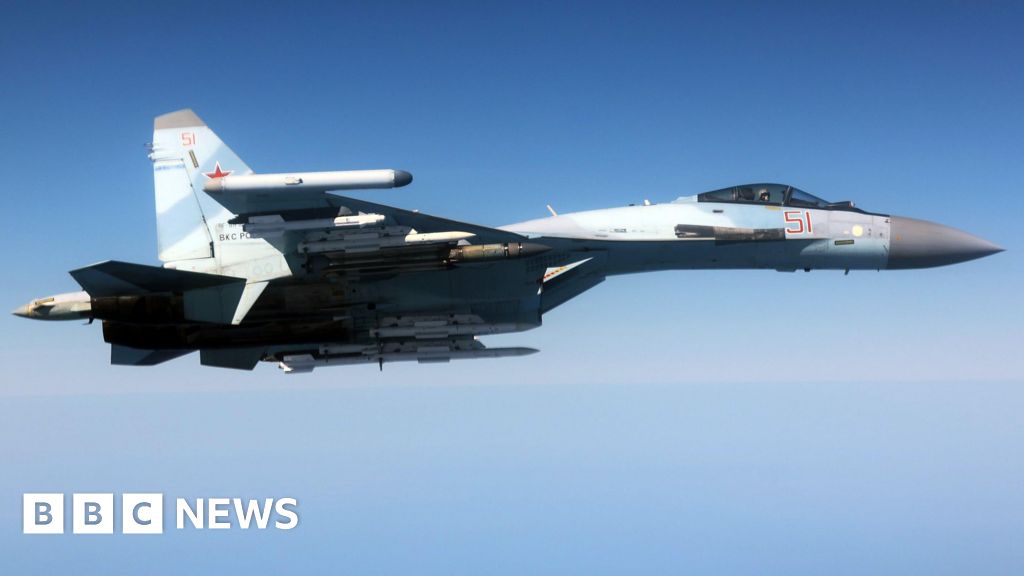
Russian Su-35 and Su-27 jets repeatedly intercepted an unarmed RAF Rivet Joint over the Black Sea, with one aircraft getting close enough to trigger emergency systems and disable autopilot. The MoD called it the most dangerous Russian action since 2022 and said it posed a serious accident and escalation risk. The incident underscores elevated geopolitical tensions and heightened defense risk in the Black Sea region.
This is less a one-off headline than evidence that the Black Sea is becoming a persistent gray-zone friction point where air, undersea, and cyber surveillance assets are all exposed. The immediate market read is not defense primes in isolation; it is a higher probability of sustained NATO force posture, which tends to support a broader basket of sensor, electronic warfare, comms, and ISR-enablement suppliers before it shows up in traditional weapons orders.
The second-order risk is operational tempo and accident escalation rather than deliberate warfighting. When intercepts get closer and more frequent, the tail event is a mishap that forces temporary airspace restrictions, rerouting, or a sharper rules-of-engagement response; that can hit European transport, insurers, and maritime logistics within days, while defense spending repricing takes months. The mention of undersea infrastructure matters because it keeps critical infrastructure hardening and subsea surveillance in focus, which is a more durable budget theme than headline missile procurement.
Contrarianly, the obvious trade is to buy defense, but the better asymmetry may be in overlooked enablers and infrastructure-security beneficiaries. The market often overpays for large-platform names after geopolitical scares, while underpricing firms tied to electronic detection, secure communications, and maritime/undersea monitoring where incremental demand can compound across NATO procurement cycles. If diplomacy de-escalates, the headline premium fades quickly; the structural budget effect, however, should persist as long as the incident is framed as a systemic access-control problem rather than a transient provocation.
AI-powered research, real-time alerts, and portfolio analytics for institutional investors.
Request DemoOverall Sentiment
moderately negative
Sentiment Score
-0.35
