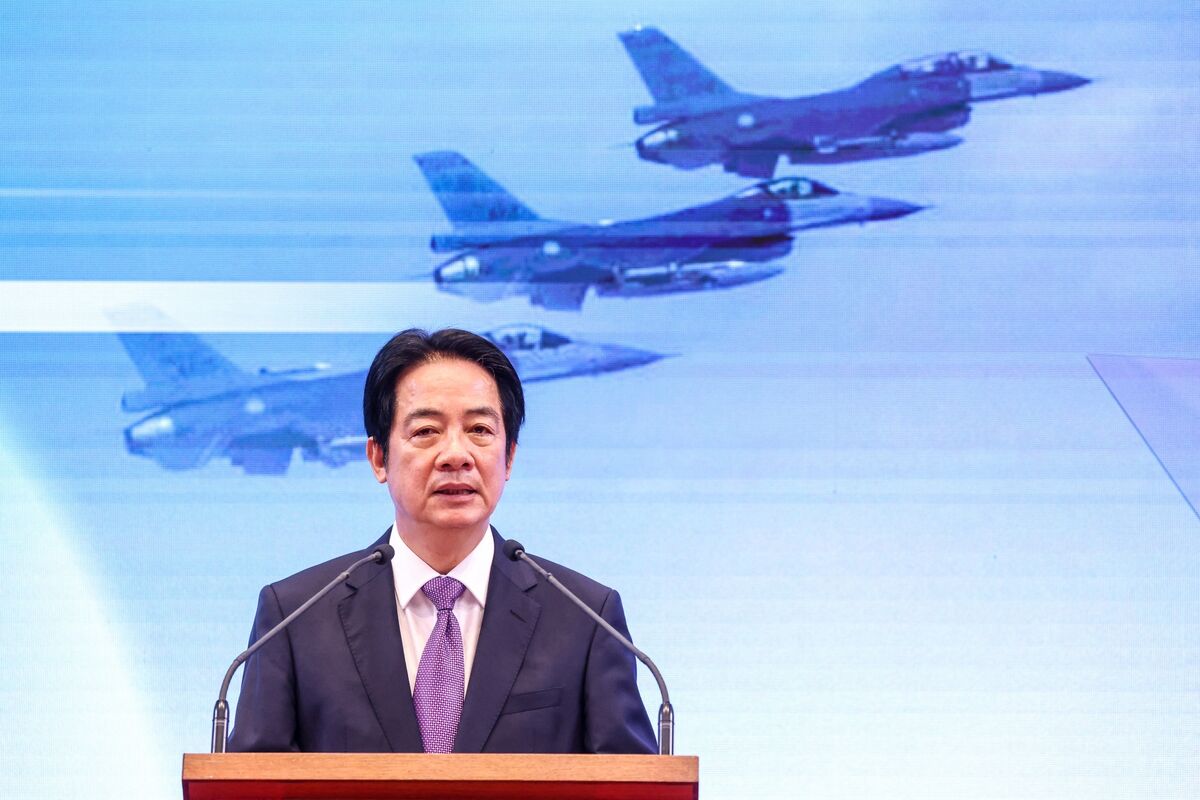
Taiwan President Lai Ching-te said maintaining peace and stability in the Taiwan Strait is a strategic objective, explicitly framing Taiwan as a responsible actor amid heightened concern over conflict with China. The comments appear aimed at easing President Trump’s worries about war risk. The article is largely diplomatic and rhetorical, with limited immediate market impact beyond reinforcing a cautious geopolitical backdrop.
The key market read is not de-escalation itself, but Taipei’s attempt to reduce the probability that Washington treats Taiwan as a discretionary bargaining chip in a broader U.S.-China negotiation. That matters for relative performance: any easing in perceived near-term conflict risk tends to compress the geopolitical premium embedded in Taiwan-facing assets, while simultaneously improving the odds of status-quo defense procurement that is less headline-sensitive and more budget-driven.
Second-order effects are likely to show up in supply-chain positioning rather than direct defense names. The more stable the rhetoric, the easier it is for multinational buyers to keep Taiwan-centric semiconductor and electronics sourcing intact; the flip side is that firms with concentrated Taiwan exposure keep trading at a chronic risk discount, so a calmer tone can support multiple expansion in the broader hardware ecosystem without changing underlying operational concentration risk. Over a 3-12 month horizon, the bigger catalyst is not Taipei’s messaging but whether Washington signals conditional security guarantees or tariff/tech concessions in exchange for reduced tension.
The contrarian risk is that markets may over-interpret conciliatory language as durable policy convergence. If Beijing reads this as tactical signaling rather than substantive restraint, the absence of a material response could actually embolden incremental pressure tactics over the next few quarters, keeping tail risk alive even as front-end volatility fades. In that scenario, the cheapest way to express the view is not outright risk-off, but owning optionality against an eventual re-pricing of Indo-Pacific risk if cross-strait incidents resume.
There is also an underappreciated asymmetry for defense infrastructure: even when diplomacy improves, procurement cycles rarely reverse quickly, because allies use calm periods to restock, harden logistics, and fund redundancy. That means any pullback in defense/security beneficiaries would likely be short-lived unless we see multiple quarters of genuinely lower escalation metrics, not just softer language.
AI-powered research, real-time alerts, and portfolio analytics for institutional investors.
Request DemoOverall Sentiment
neutral
Sentiment Score
0.05
