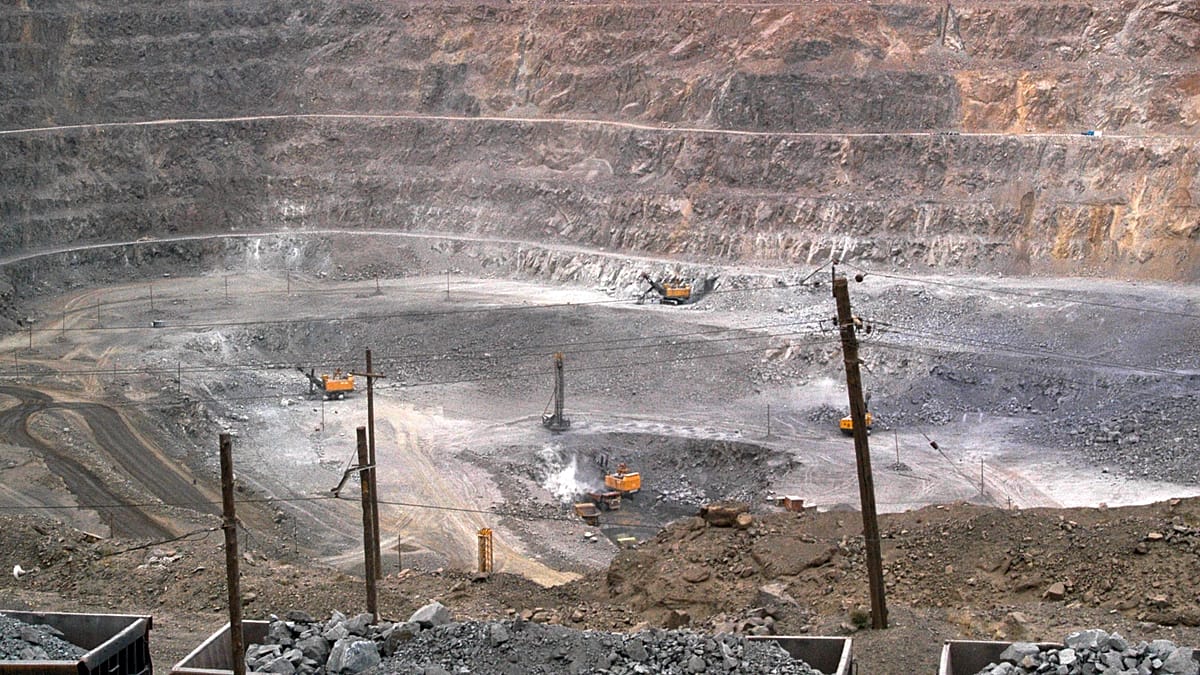
The EU is pushing to reduce its dependence on China for critical raw materials, targeting 2030 goals of 10% extraction, 40% refining and 15% recycling while building 16 overseas partnerships. Officials warned that China still controls about 60% of global critical raw material production and 90% of refining capacity, leaving Europe exposed to supply shocks. The article highlights proposed EU steps including domestic refining investment, strategic reserves and possible easing of water rules to accelerate extraction.
This is less a pure commodities story than an industrial policy trade: Europe is effectively admitting it cannot win the clean-tech stack by price alone, so the margin pool shifts toward firms that control bottlenecks in refining, separation, recycling, grid equipment, and project finance. The second-order effect is that “security of supply” becomes a procurement standard, which should advantage non-China midstream and process-capex providers even if mine economics stay weak; over time, the value capture migrates away from upstream ore bodies and toward equipment, chemicals, and tolling capacity.
The near-term winner set is likely not EU miners so much as diversified industrials and Western process specialists with existing permitted assets and know-how. The losers are Chinese refiners and magnet producers at the margin, but also European end-users if this turns into a higher-input-cost regime; battery and EV supply chains may see slower gross-margin recovery, particularly for firms exposed to LFP, permanent magnets, and specialty graphite. A more subtle beneficiary is defense-adjacent logistics and storage: strategic reserves imply public and quasi-public inventory demand, which can tighten spot markets during restocking cycles.
Catalyst timing matters. In the next 3-6 months, policy headlines can lift European permitting-sensitive names, but actual supply substitution is a 2-5 year process, so initial price action may outrun earnings. The main reversal risk is political: if water and environmental rules are not materially loosened, the market will fade the industrial-autonomy narrative and refocus on higher EU capex without throughput gains. A second tail risk is Chinese retaliation, which could force a quicker strategic stockpile build and create short, violent squeezes in magnet and specialty-material inputs.
The consensus may be underestimating how inflationary this is for the clean-energy buildout: even modest de-risking from China toward allied suppliers likely raises unit costs, which can compress adoption rates unless subsidies stay elevated. That argues for relative-value, not outright beta: long the enablers of de-risking, short the most China-dependent downstream manufacturers. The best setup is to own companies that monetize policy urgency without needing Europe to become globally cost-competitive in extraction.
AI-powered research, real-time alerts, and portfolio analytics for institutional investors.
Request DemoOverall Sentiment
neutral
Sentiment Score
-0.05
