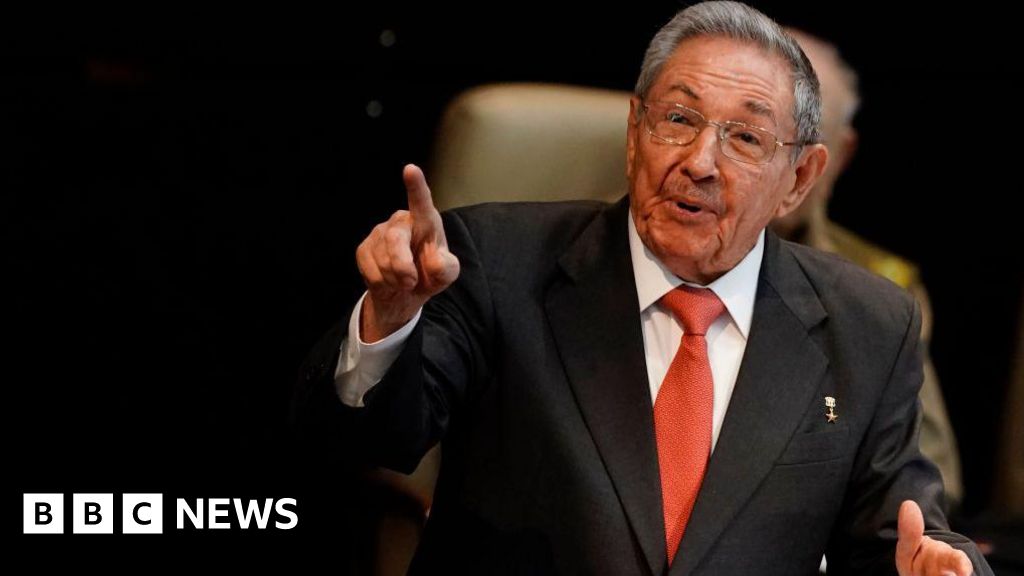
The US is reportedly preparing to criminally indict Raúl Castro over the 1996 shootdown of two civilian aircraft that killed four people, a move tied to Washington's broader pressure campaign on Cuba. The story comes alongside new US sanctions and an oil blockade, plus heightened rhetoric about potential military action, raising geopolitical risk for the island and the region. While unlikely to directly move large public markets, the escalation could affect Cuba-linked risk sentiment, migration concerns, and broader US-Latin America relations.
This is less about Cuba and more about signaling to every sanctioned regime that the US is willing to blend legal jeopardy with coercive diplomacy. The near-term market read-through is not on Cuban asset exposure—there is essentially none—but on how far the administration is prepared to escalate from financial pressure into kinetic ambiguity, which tends to widen risk premia across the Caribbean basin and front-line EM credits. The CIA channel suggests a dual-track strategy: keep a backdoor open while increasing the threat envelope, which usually means the real objective is concession extraction rather than prosecution.
The second-order risk is migration, not litigation. If fuel and power shortages deepen into a broader social-order failure over the next 1-3 months, Florida-linked political pressure rises sharply and any diplomatic off-ramp becomes harder to execute. That would likely spill into higher coast-guard, border, and humanitarian spending, while also increasing headline volatility for Venezuela-linked assets because markets will start pricing a template for regime-pressure operations in the region.
Contrarian take: the indictment threat may be intentionally maximalist and therefore less actionable than the market assumes. A 94-year-old defendant is a low-probability enforcement target, so the real move may be to create bargaining leverage for sanctions relief, aid, or detainee swaps; if so, the hawkish headline can reverse quickly on any humanitarian corridor, fuel shipment waiver, or back-channel engagement. The risk/reward is asymmetric only if the administration sustains pressure without offering a visible exit, which is politically difficult once migration and blackouts become front-page issues.
For positioning, the cleaner trade is volatility rather than direction: buy short-dated upside protection on Venezuela/Cuba-policy proxies or Caribbean risk baskets into the next 2-4 weeks, then fade strength if the story shifts to negotiations. The broader beneficiary set is US border-security and defense names, but the move is likely small unless there is a credible operational escalation; if that happens, the repricing will be in EM sovereign spreads and migration-sensitive assets, not in Cuba itself.
AI-powered research, real-time alerts, and portfolio analytics for institutional investors.
Request DemoOverall Sentiment
mildly negative
Sentiment Score
-0.35
Ticker Sentiment
