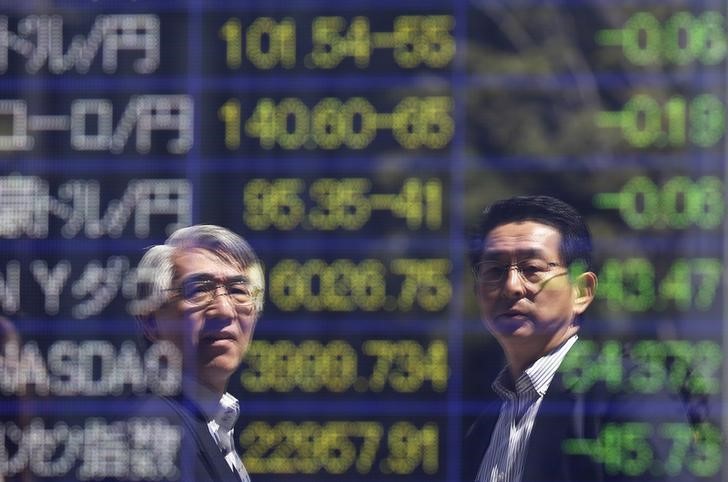
Oil jumped over 3% as the US-Iran peace effort collapsed and military action in the Strait of Hormuz intensified, creating a risk-off backdrop for global markets. Asian equities were mixed: South Korea’s KOSPI surged nearly 5% to a record high on chip strength, while Japan’s Nikkei fell 0.4% and Australia’s ASX 200 dropped 0.7% on weaker earnings/guidance from Nintendo and CSL. Chinese markets rose ahead of the Trump-Xi summit, with April CPI/PPI coming in hotter than expected and S&P 500 futures down 0.1% ahead of Tuesday’s U.S. CPI release.
The market is treating the oil spike as a macro tax rather than an energy bull catalyst, and that distinction matters. In the next 1-5 trading sessions, higher crude is more likely to hurt cyclical transports, India-sensitive risk assets, and broad equities via inflation breakevens than to meaningfully re-rate upstream energy, because the move is still headline-driven and not yet accompanied by inventory evidence or supply destruction. The first-order winner is volatility itself: higher oil raises the odds of a softer CPI print turning into a policy dilemma, which can cap rate-cut optimism even if growth data remain stable.
The bigger second-order effect is cross-asset dispersion, not directional equity beta. Semiconductor and AI supply chains are relatively insulated from this shock, but their input costs rise indirectly through logistics and chemicals; that makes the recent chip-led rally vulnerable only if oil stays elevated for multiple weeks and begins to leak into freight, power, and margin guidance. India is the cleanest short-duration macro loser because the market is already exposed to imported-energy inflation and current account sensitivity, while Japan and Australia face idiosyncratic pressure from domestic earnings misses layered on top of global risk-off flows.
The key contrarian point is that geopolitics often produces an initial crude overshoot that fades once the market realizes the physical supply loss is smaller than the headline risk premium. If the summit between the US and China reduces escalation expectations while Hormuz shipping remains intact, oil can retrace quickly and leave defensives and energy longs crowded on the wrong side. Conversely, a durable move requires either a real choke point disruption or sustained rhetoric that forces inventories lower over several weeks, not just one weekend of headlines.
For now, the right framing is to trade the inflation impulse and regional equity sensitivity, not chase energy beta blindly. The setup favors short, tactical positioning in high-oil-import economies and a hedge against the next CPI surprise, with a willingness to fade the move if shipping flows normalize and crude fails to hold gains into the next macro data window.
AI-powered research, real-time alerts, and portfolio analytics for institutional investors.
Request DemoOverall Sentiment
mildly negative
Sentiment Score
-0.15
