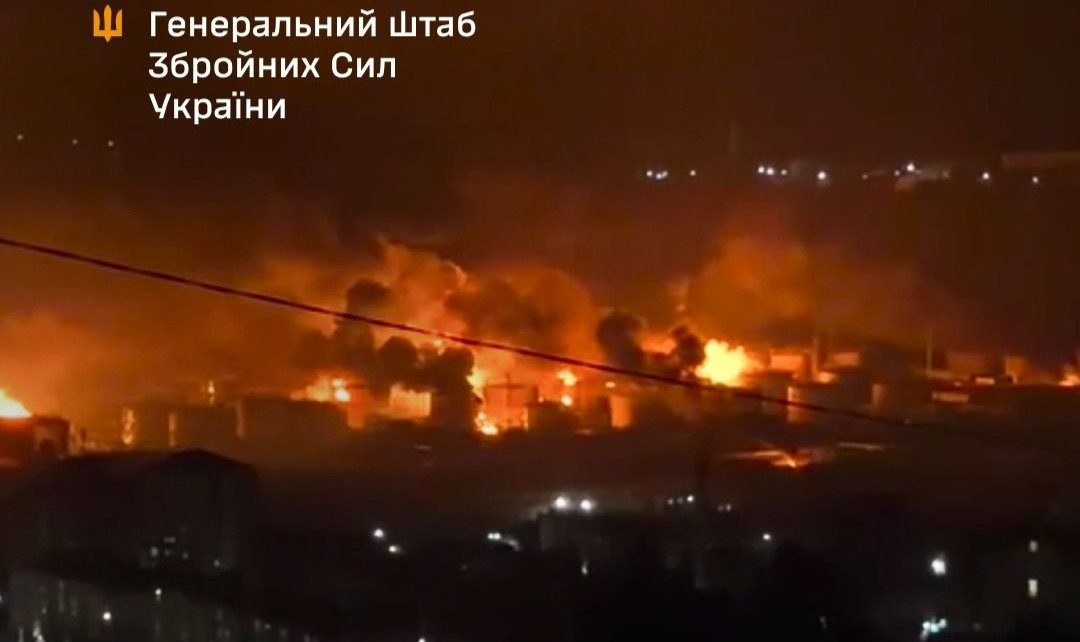
A drone attack ignited a major fire at the Ryazan Oil Refinery, one of Russia’s largest fuel production facilities, with local reports citing multiple explosions and visible smoke. The article also says Gazprom’s Astrakhan gas plant suspended motor fuel production after a separate drone-related fire, and flight restrictions were temporarily imposed near Moscow. The incidents add to disruption risk for Russian energy infrastructure and could tighten regional fuel supply.
This is less about the headline fire itself and more about the market’s realization that Russia’s refined-product system has become a structurally fragile node in the war economy. Even if physical damage is localized, repeated hits on large, inland processing assets create a compounding effect: higher outage risk, more defensive inventory behavior, and a wider internal spread between crude availability and usable motor-fuel output. The immediate macro implication is tighter regional product balance in Russia, which can force policy responses that ripple into export availability and domestic allocation.
The second-order effect is on logistics and air-defense cost curves, not just energy supply. Every successful strike farther from the border increases the number of systems Russia must dedicate to infrastructure protection, while flight restrictions and alarm-driven disruptions impose a broader transport drag that is easy to underestimate in models. If attacks remain episodic, the market may treat this as noise; if they persist over 2-6 weeks, expect a measurable increase in insurance, rerouting, and precautionary shutdown behavior across energy and transport assets tied to the region.
The underappreciated bullish angle is for non-Russian refined-product exporters and Gulf/European trading margins if Russian product exports get constrained even modestly. The bearish angle is for any position that assumes quick normalization: repair time is not the key variable, because operational prudence and repeat-strike risk can keep effective utilization depressed well after visible damage is fixed. The real catalyst to watch is whether Moscow responds by tightening export controls or redirecting product to domestic users, which would support seaborne diesel/gasoline pricing more than outright crude.
Consensus likely underestimates how quickly repeated infrastructure attacks can change behavior without needing catastrophic damage. The move is not simply an energy shock; it is a war-risk repricing of throughput reliability, and that tends to hit second-order beneficiaries like tanker rates, product traders, and selective European refiners before it shows up in headline commodity benchmarks.
AI-powered research, real-time alerts, and portfolio analytics for institutional investors.
Request DemoOverall Sentiment
strongly negative
Sentiment Score
-0.65
