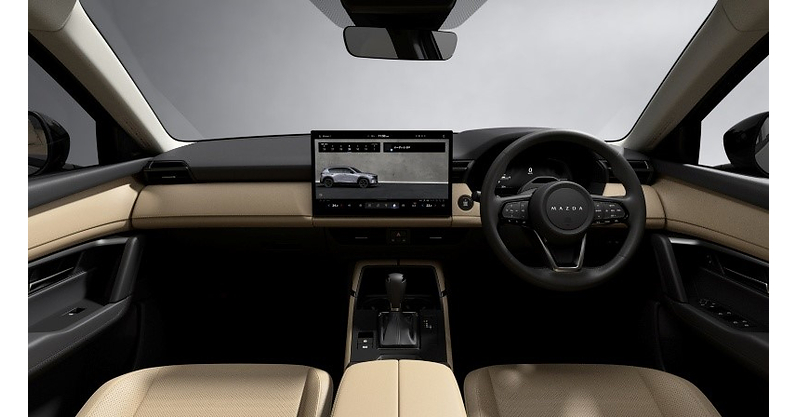
Mazda’s all-new CX-5 rollout (planned worldwide after Europe in Dec 2025 and Japan in May 2026) leans on a software-defined-vehicle cockpit strategy, including an updatable SDV architecture with OTA updates for the HUD and instrument cluster. Panasonic Automotive Systems integrated VirtIO (open-standard virtualization) and Unity’s 3D engine for real-time, high-definition vehicle data visualization, aiming to improve scalability and long-term platform value. The release is industry/technology-positive for PAS/Mobitera, but it is not quantified financially, limiting near-term stock impact.
This is more of a proof-point for design-in relevance than an earnings event. The economic value sits in platform reuse and software lock-in: once a cockpit stack is embedded, future content upgrades and cross-model reuse can raise lifetime value per vehicle, but only if Panasonic converts that into follow-on awards and service revenue rather than one-time hardware margin. For Mazda, the implication is improved trim competitiveness and a better story around premiumization, which can help mix, but it is unlikely to move group revenue unless the architecture expands beyond a single nameplate.
The second-order read-through is on competitive switching costs. If the platform becomes a reference architecture, it can make it harder for rival Tier 1s to displace Panasonic in subsequent launches, while pressuring legacy infotainment and instrument-cluster vendors whose value proposition is increasingly commoditized. The risk is that automakers use these launches to squeeze component pricing; the “software-defined” label can mask low near-term economic contribution if content is still sold like hardware.
Catalyst timing matters: the market should not expect much in days or even a couple of months beyond sentiment. The real test is over 1-3 quarters, when Mazda’s launch quality, take-rate, and any additional design wins show up in backlog commentary; the structural question is 6-18 months, when Panasonic either proves it can scale the stack across OEMs or remains a one-off engineering win. The contrarian view is that the HMI upgrade may be more expensive than value-accretive unless it lifts resale, warranty, or attached services. Falsifiers: no follow-on OEM wins, margin pressure in auto electronics, or launch defects that force software rework.
AI-powered research, real-time alerts, and portfolio analytics for institutional investors.
Request DemoOverall Sentiment
mildly positive
Sentiment Score
0.18
Ticker Sentiment
