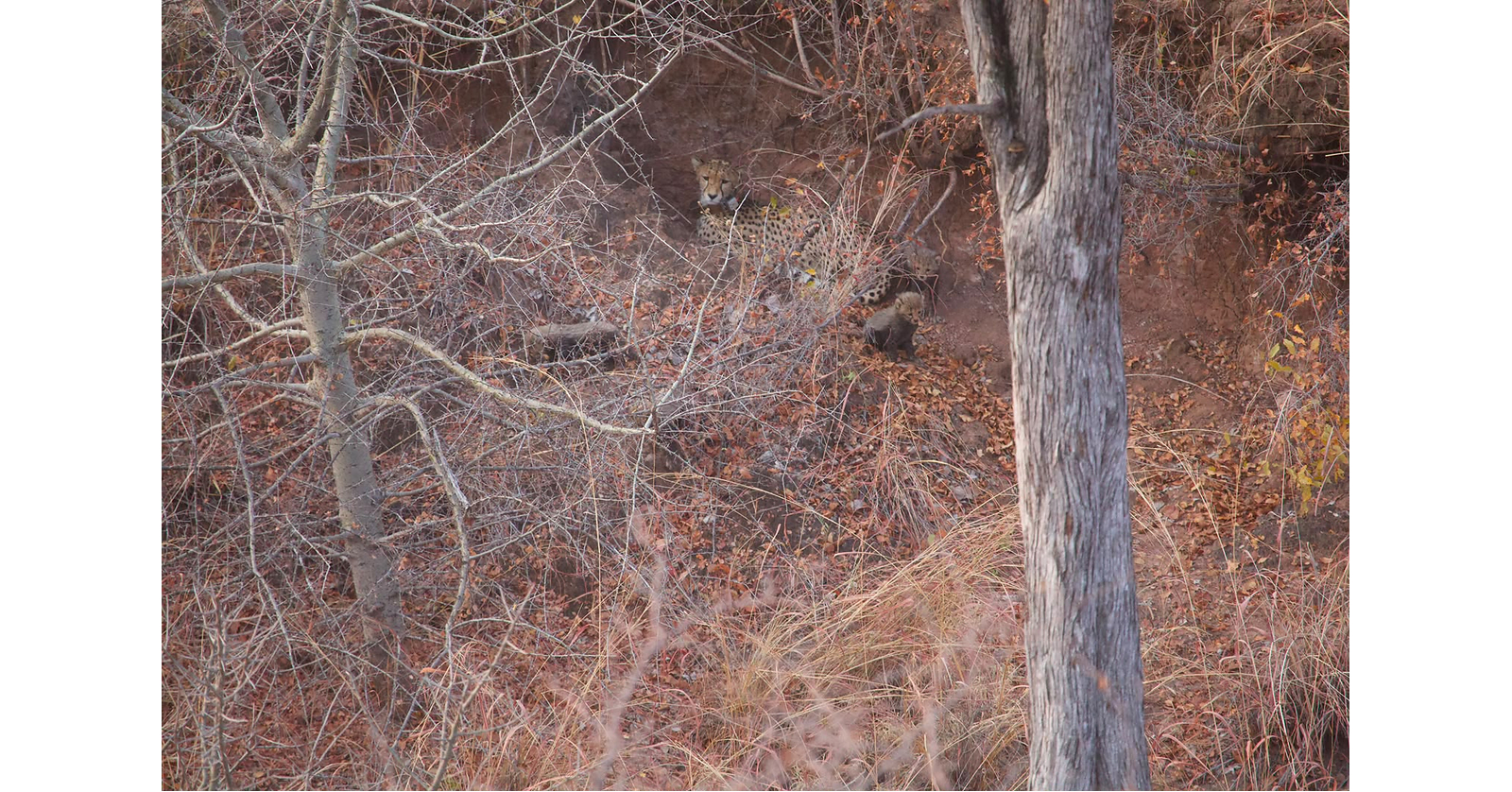
Wildfires deliberately set by poachers in Mozambique’s Panyame conservancy burned perilously close to a cheetah den housing Evey and her 25-day-old cubs. Field teams reported the fire activity as unprecedented and battled for 30 hours before confirming that as of Aug. 17 all fires were put out, with no cheetahs injured or killed. The incident highlights heightened risks to wildlife and the importance of GPS-collar monitoring during major disturbances.
This is not a listed-equity catalyst in the near term; the investable read-through is mainly to operators whose business model depends on stable field access, security, and wildlife visibility. Repeated arson-driven fires raise the cost of monitoring and force more air/ground patrols, which can strain NGO budgets and delay conservation outputs; that matters only if it becomes persistent enough to impair tourism or concession economics over multiple seasons.
The second-order risk is reputational and operational rather than financial: if monitoring lapses, mortality and poaching statistics worsen, which can reduce donor funding efficiency and increase the hurdle rate for future conservation partnerships. For public markets, the only plausible spillover is to Africa-adjacent lodge/safari names or specialty insurers, and even there the signal is too idiosyncratic to size without evidence that fire incidence is broadening beyond a single conservancy. Over 1-3 months, watch for recurrence during the dry season; over 6-18 months, the key question is whether security spending and habitat-management costs become structurally higher or simply normalize after this incident.
Contrarian view: the market should probably ignore this unless the same pattern repeats, because one localized fire event does not equal a durable change in regional conservation economics. The real falsifier is not the headline itself but a measurable deterioration in wildlife counts, lodge occupancy, or fundraising conversion rates across the region; absent that, any attempt to trade this would be noise.
AI-powered research, real-time alerts, and portfolio analytics for institutional investors.
Request DemoOverall Sentiment
mildly negative
Sentiment Score
-0.25
