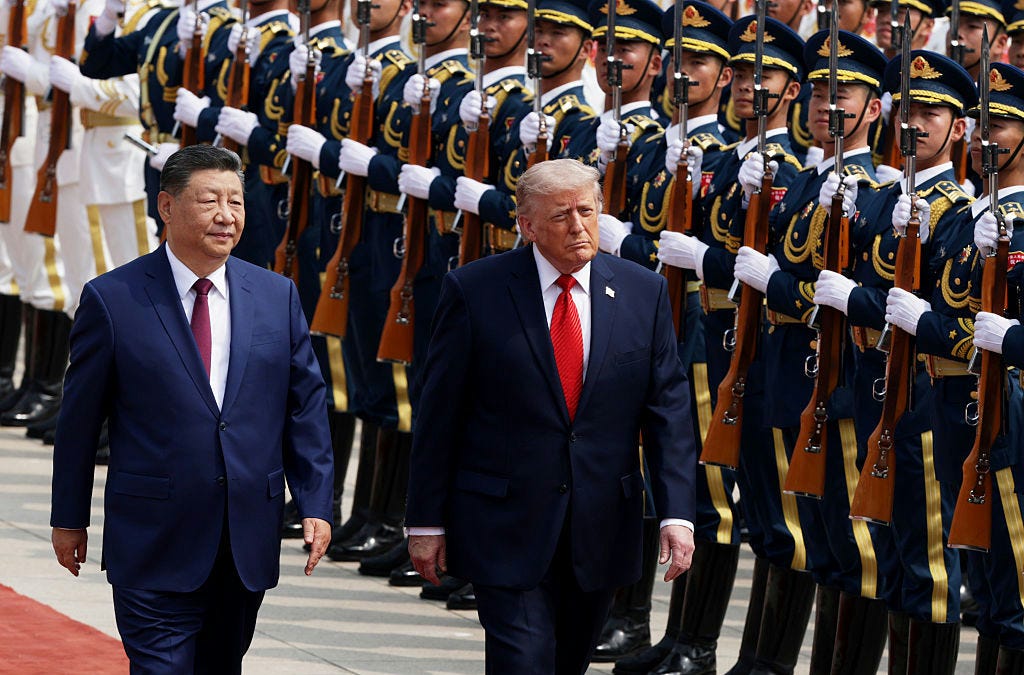
Xi Jinping cited the 'Thucydides Trap' during a summit in Beijing with the U.S., signaling continued awareness of great-power rivalry between Washington and Beijing. The piece is largely interpretive and historical rather than market-specific, with no direct policy, trade, or economic announcements. Market impact is limited, though the geopolitical backdrop remains relevant for risk sentiment.
The market implication is not the quote itself, but the signaling function: when Beijing adopts a strategic vocabulary of structural rivalry, it usually means policy is being framed for endurance rather than accommodation. That tends to support a longer period of policy inconsistency across trade, export controls, data access, and industrial subsidies, which is bearish for cross-border multiples in cyclical and hardware supply chains even if headline volatility stays muted.
The second-order winner is the domestic policy stack on both sides. In the U.S., a more entrenched rivalry narrative raises the odds that industrial-policy beneficiaries continue to receive bipartisan support through election cycles; in China, it strengthens the case for self-sufficiency spending and selective stimulus aimed at strategic sectors. The losers are firms whose margin structure depends on frictionless East-West flow: semiconductor equipment, advanced materials, precision manufacturing, and global logistics names face a slower-burn compression in ROIC as compliance costs, inventory buffers, and duplicated capacity rise.
The contrarian point is that consensus often overprices immediate decoupling and underprices gradualism. A “Thucydides Trap” frame can actually reduce near-term tail risk by making both sides more explicit about red lines, lowering the odds of accidental escalation in the next 3-6 months. The real risk window is 12-24 months, when election incentives, Taiwan-related incidents, or export-control retaliation can turn rhetoric into policy shock; until then, the better trade is not panic, but selective positioning around deglobalization winners versus globally levered losers.
AI-powered research, real-time alerts, and portfolio analytics for institutional investors.
Request DemoOverall Sentiment
neutral
Sentiment Score
0.00
