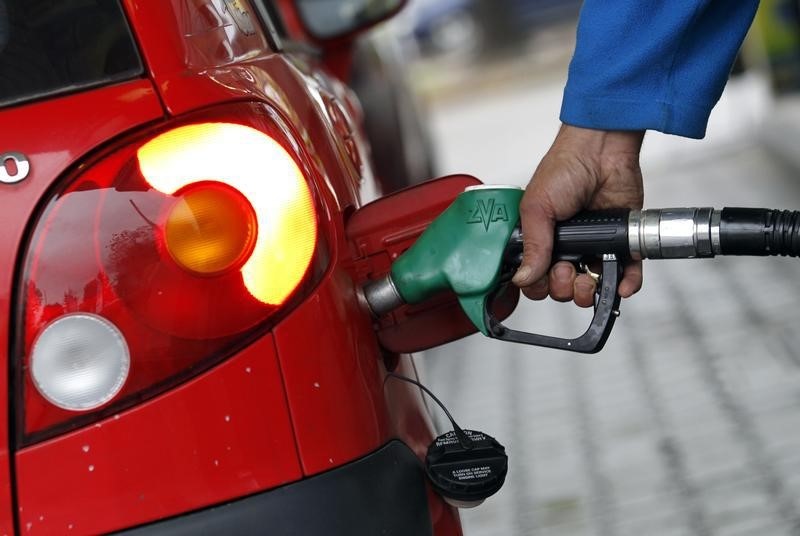
Northwest European gasoline refinery margins fell about 14% to $27.42 per barrel as regional stockpiles rose and crude prices strengthened. Gasoline inventories in the Amsterdam-Rotterdam-Antwerp hub increased 8.3% to 1.17 million tons, while EU-27 and UK gasoline/blending-component exports dropped to 657,000 bpd from 945,000 bpd in April. Trading volumes were active, with roughly 24,000 metric tons of E5 barges and 4,000 tons of E10 barges changing hands.
The move looks less like a broad energy bear case and more like a localized crack-spread air pocket driven by inventory accumulation faster than export clearance. In the near term, that is a margin problem for European refining rather than a demand-collapse signal, but it does imply weaker incremental cash conversion for firms with meaningful Northwest Europe product exposure. The second-order effect is that barrels displaced from the region will likely pressure Atlantic Basin product balances, making U.S. Gulf and Mediterranean gasoline economics more volatile over the next 2-6 weeks.
For TTE, the marginal hit is limited unless this persists into the next pricing cycle; its downstream portfolio can absorb a short-lived crack compression better than pure refiners, but the data still argues for slightly lower near-term refining earnings estimates. SHEL is more insulated on a relative basis because its trading and integrated model can monetize regional dislocations and inventory arbitrage even when outright refinery margins soften. The more interesting loser may be independent European refiners and distributors not in the ticker list, as they lack the upstream hedge and trading optionality to offset weaker product cracks.
The catalyst to watch is whether lower exports are a temporary logistics issue or the start of a broader seasonal demand rollover. If inland demand stays steady while exports remain constrained for another month, product stocks could keep building and push the crack complex another 10-15% lower. Conversely, a crude pullback or a re-opening of export flows would reverse this quickly, so this is a flow-sensitive trade rather than a structural thesis.
Consensus may be overestimating how bearish this is for integrated majors. A localized margin drawdown often becomes a buying opportunity for names with diversified earnings streams because the market tends to extrapolate spot cracks linearly while ignoring inventory rebalancing and trading gains. The asymmetric setup is to fade standalone refining exposure, not to short the whole European energy complex.
AI-powered research, real-time alerts, and portfolio analytics for institutional investors.
Request DemoOverall Sentiment
mildly negative
Sentiment Score
-0.25
Ticker Sentiment
