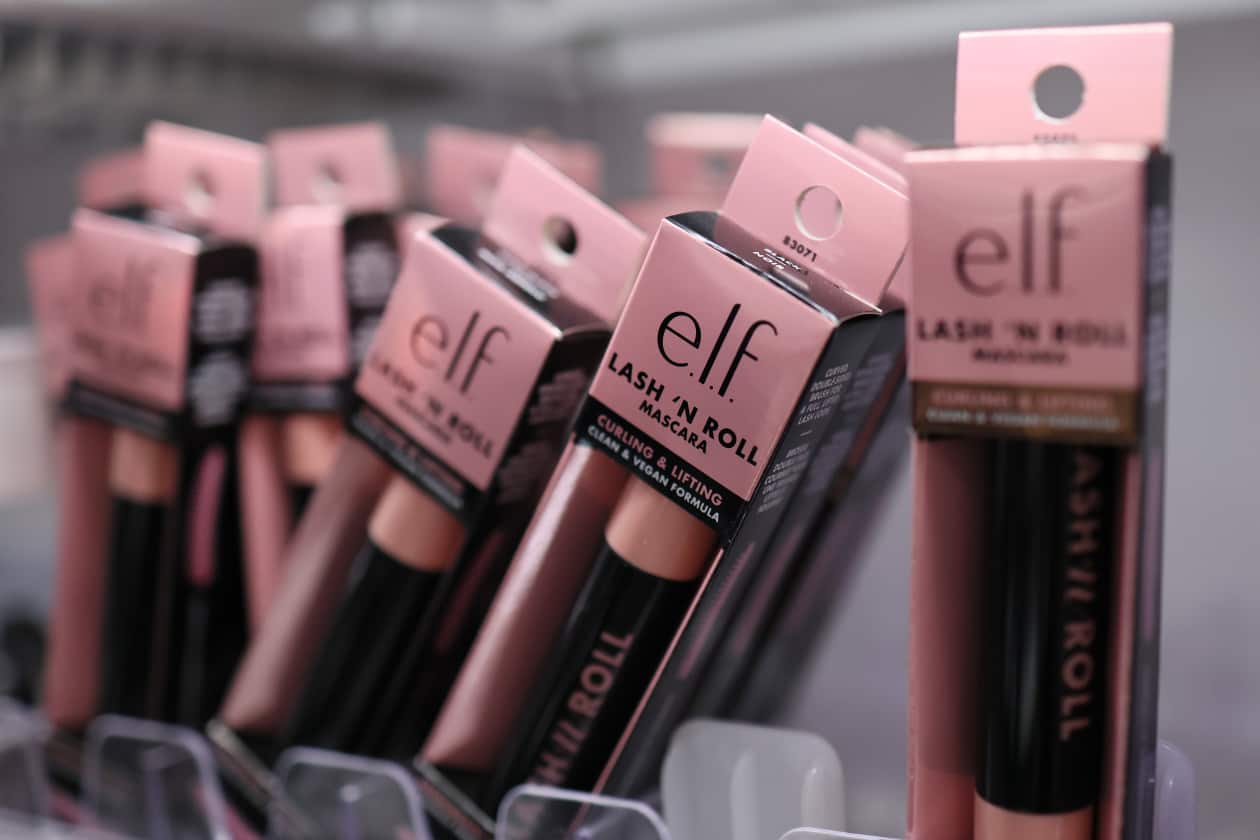
E.l.f. Beauty said it will cut prices on some products to stimulate demand, after last August’s $1 tariff-related price increase and amid rising gas prices that are pressuring younger consumers. Management said the new spring product rollout is underperforming expectations, suggesting demand is starting to crack after years of resilience in beauty spending.
This reads less like a one-off promotional tweak and more like an early warning that the lowest-income cohort is becoming elastic to cumulative cost pressures. The first-order loser is ELF, but the second-order damage is bigger: if a value-led beauty brand has to re-trade prices downward to defend velocity, it signals that adjacent mass beauty names will have less pricing power over the next 1-2 quarters. That matters because the category has been treated as unusually inflation-resistant; a crack in unit demand would force a shift from margin expansion to traffic defense across the aisle.
The key mechanism is not just gas in isolation, but gas as the budget line item that exposes sticker shock from a dozen small purchases. Younger consumers usually trade down within beauty before they exit the category, so watch for mix shifts toward promo-heavy SKUs, smaller basket sizes, and slower sell-through at spring resets. If that shows up in channel checks, the pain can propagate to retailers via lower inventory turns and a more aggressive markdown cadence into summer.
The contrarian setup is that management is likely choosing to absorb pricing pressure early to preserve share, which could make near-term numbers look worse while extending the brand's competitive moat longer term. In other words, the market may over-penalize the gross margin reset if it assumes permanent demand deterioration; the real risk is a 2-3 quarter digestion period, not a structural collapse. The catalyst to reverse this is a stabilization in gasoline prices and/or a stronger back-to-school beauty cycle, which would confirm the issue is budget timing rather than category saturation.
AI-powered research, real-time alerts, and portfolio analytics for institutional investors.
Overall Sentiment
mildly negative
Sentiment Score
-0.35
Ticker Sentiment
