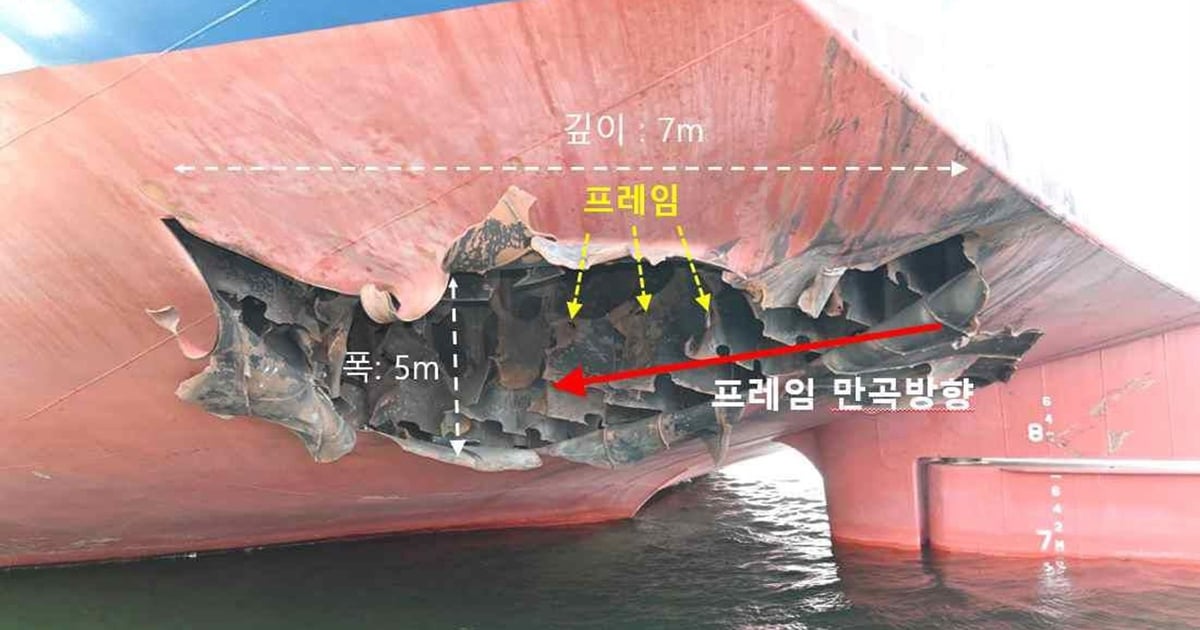
The HMM Namu was hit twice in the Arabian Gulf on 4 May, puncturing the hull, causing a fire, and damaging an area about five metres wide with impact extending roughly seven metres into the ship. All 24 crew were safe, but South Korea condemned the attack and said it will continue investigating the perpetrator and projectile type. The incident underscores elevated geopolitical risk for civilian shipping and could add pressure to maritime security and freight markets.
This is less about the single vessel and more about the market repricing the probability of a broader escalation path where “civilian” maritime lanes are no longer treated as neutral. The immediate second-order effect is not a permanent removal of capacity, but a rise in effective capacity cost: higher war-risk premia, longer routing friction, more idle time, and a higher probability that owners keep marginal tonnage out of exposed Gulf rotations. That tends to show up first in short-haul multipurpose and feeder assets, but the contagion eventually reaches time-charter rates for cleaner tonnage as operators reoptimize fleet deployment.
The real winners are security-adjacent service providers and assets with optionality to avoid the region, not the obvious headline-shipping names. Tankers and select dry bulk can benefit if rerouting or schedule disruption tightens vessel availability, but the trade is asymmetric: one or two additional incidents can lift freight forwards quickly, while any successful diplomatic de-escalation can unwind the move just as fast. The most exposed losers are liner operators and multipurpose carriers with Gulf exposure or limited ability to pass through war-risk costs immediately, especially those running fixed-rate contracts signed before the risk repricing.
The key catalyst window is days to weeks, not quarters: insurers, naval escorts, and charterers typically react within one or two incident cycles, while actual cargo diversion takes longer. A sustained pattern of attacks would force a broader behavioral shift—owners reroute, shippers raise inventories, and customers front-load replenishment—which becomes inflationary for freight and negative for global trade-sensitive industrials. If instead the incident is isolated and attribution stays murky, the market will likely fade the move, but only after war-risk premiums and volatility remain elevated for several sessions.
Consensus is probably underestimating the optionality embedded in shipping equities that have clean balance sheets and spot-rate exposure. The market tends to overreact to headline geopolitics in the first 24-48 hours, but underprices the fact that repeated “near misses” can persistently improve carrier pricing power without a full blockade scenario. That makes this a better volatility trade than a pure directional macro call.
AI-powered research, real-time alerts, and portfolio analytics for institutional investors.
Request DemoOverall Sentiment
strongly negative
Sentiment Score
-0.55
