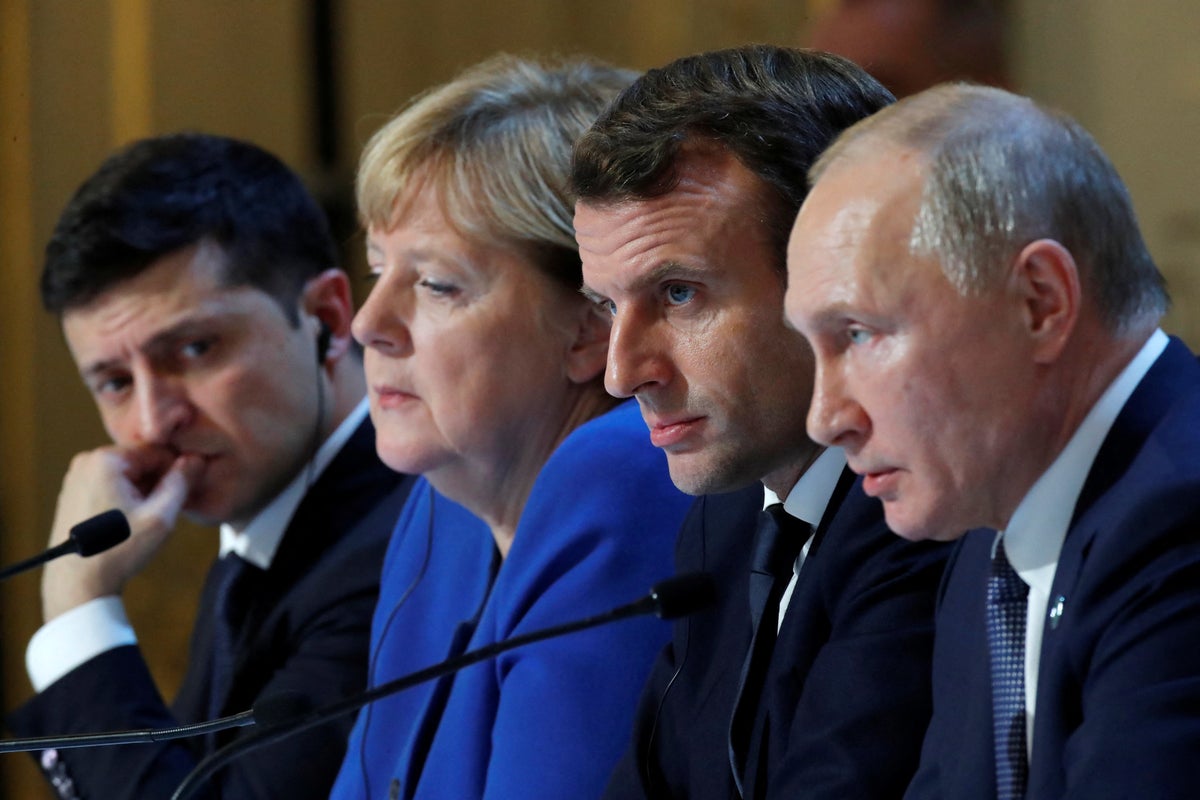
European officials are considering sending Angela Merkel, Mario Draghi, Alexander Stubb or Sauli Niinistö to reopen dialogue with Vladimir Putin as US-brokered Russia-Ukraine talks remain stalled. The US has reportedly signaled support for Europe to engage directly with Moscow, but EU ministers remain skeptical and rejected Gerhard Schröder as an impartial intermediary. The article underscores ongoing diplomatic uncertainty rather than any immediate policy breakthrough.
The market implication is not “peace is near,” but that Europe is being pulled from passive support toward direct diplomatic ownership of the conflict. That shifts the marginal probability of a negotiated freeze higher over the next 1-3 months, which is bearish for the most war-premium assets: NATO defense beneficiaries, select Eastern Europe risk premia, and any commodity trade built on a prolonged energy disruption.
Second-order, a Europe-led channel is more important than the personality involved. If Brussels can create a parallel track, Russia gains a face-saving route to probe sanctions relief without conceding on the battlefield, while Europe gains a mechanism to delay escalation risk into winter rather than solve the war immediately. That tends to compress volatility first, then only later reprice fundamentals if talks mature.
The bigger miss is that a diplomatic opening can be incrementally negative for defense order backlogs even without a ceasefire. European governments under fiscal pressure will use the existence of talks to justify slower marginal procurement growth, especially for air defense, artillery ammo replenishment, and border security upgrades. That makes the trade asymmetrical: the first move is usually multiple compression in defense names before any real budget cuts show up.
Contrarian view: the consensus may be overestimating the probability that a mediator changes Moscow’s behavior. A cosmetic process that produces headlines but no verifiable troop withdrawal can actually extend the conflict by reducing urgency around sanctions escalation and support packages. In that case, the right trade is not outright cyclical peace exposure, but volatility-sensitive expressions that benefit if rhetoric improves faster than the battlefield.
AI-powered research, real-time alerts, and portfolio analytics for institutional investors.
Request DemoOverall Sentiment
neutral
Sentiment Score
-0.05
Ticker Sentiment
