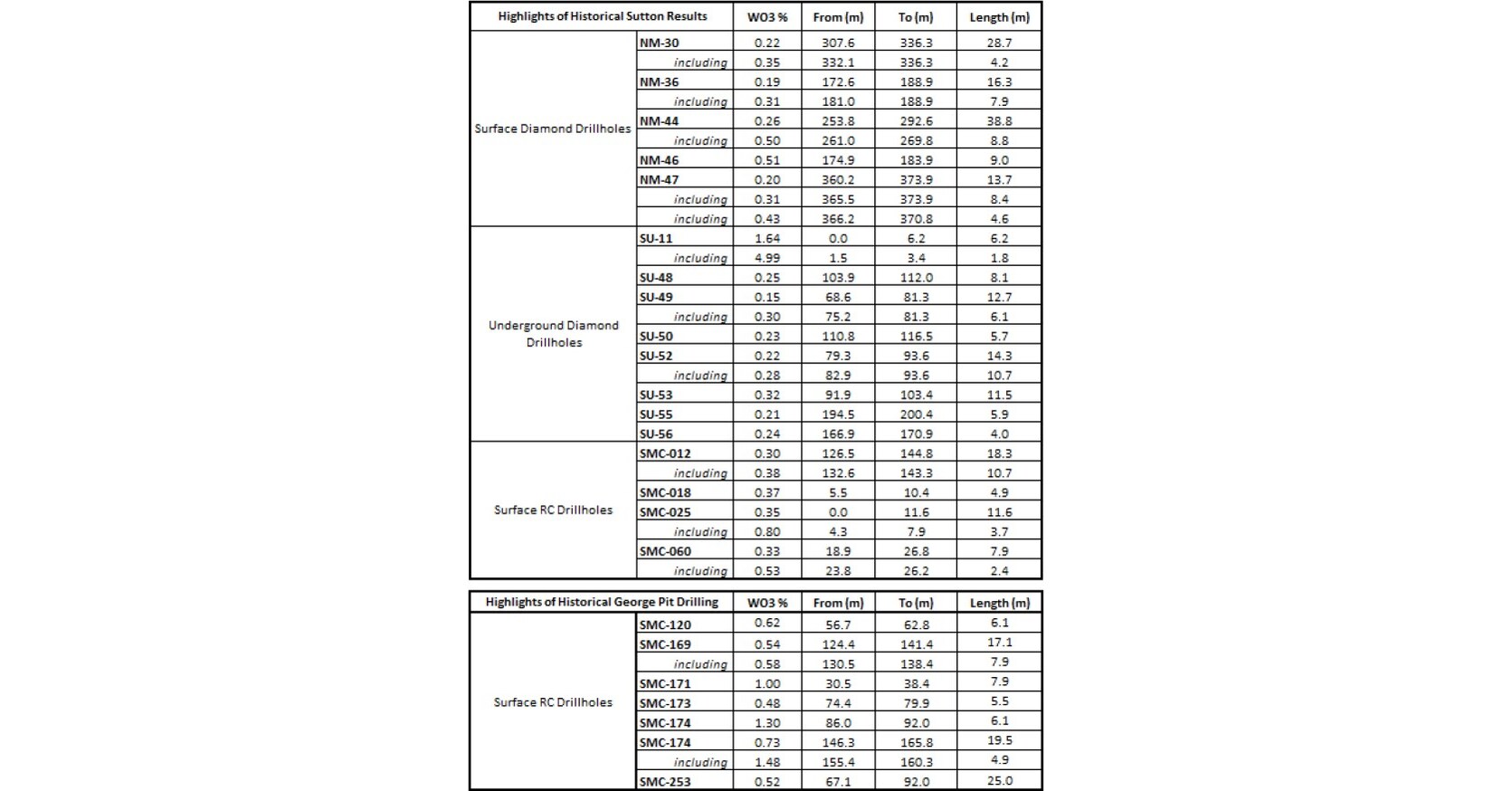
Blue Moon announced a 67,000-metre (6-rig) diamond drilling program at its Springer tungsten project starting in early/mid-August 2026, plus re-logging/re-assaying of 18,000 metres of historical core (sampling coverage up to ~44% from ~5%). The company is also planning stockpile verification (16 historical stockpiles) and tailings auger sampling over ~1.94 km², alongside new radiometric/magnetic geophysics and LiDAR/drone mapping. Management highlighted early observations that the skarn system may be only ~12% of total mineralization and could extend to a distinct sheeted quartz vein system within the granodiorite stock; results are pending and the program is positioned to support its previously stated Q4 2027 production target.
The investable event here is not the drilling itself; it is whether the re-logging and metallurgical work can convert a long-dated exploration story into a restartable brownfield asset with lower capital intensity. If the stockpiles/tailings and existing plant can be shown to deliver saleable feed at acceptable recoveries, the project’s equity value could re-rate faster than a normal discovery because the market will start underwriting cash-flow timing rather than just ounces/pounds in the ground.
The main second-order winner is the service layer: assay labs, drill contractors, and processing-test vendors get paid now regardless of geologic outcome, while the bigger strategic beneficiary is the North American tungsten supply chain if domestic concentrate optionality improves. For larger miners like TECK, the benefit is mostly narrative and policy optionality, not direct earnings; the more important read-through is whether critical-minerals capital becomes easier to source if Springer starts to look financeable.
The risk is that management is still several months away from proving that historical high-grading did not leave the project with a misleading grade profile and weak recoveries. If initial assays or ore-sorting results disappoint, the market will likely reframe this as a cash-burning exploration spend ahead of another dilutive financing, which is the key 1-3 month downside catalyst. The contrarian miss is that consensus may be underweight the speed of a positive brownfield thesis, but overweights the “global significance” language before independent metallurgy and resource reconciliation are in hand; the thesis is falsified by subpar WO3 reconciliation, poor flotation/ore-sort recovery, or a need for heavily dilutive equity to finish the program.
AI-powered research, real-time alerts, and portfolio analytics for institutional investors.
Request DemoOverall Sentiment
mildly positive
Sentiment Score
0.25
Ticker Sentiment
