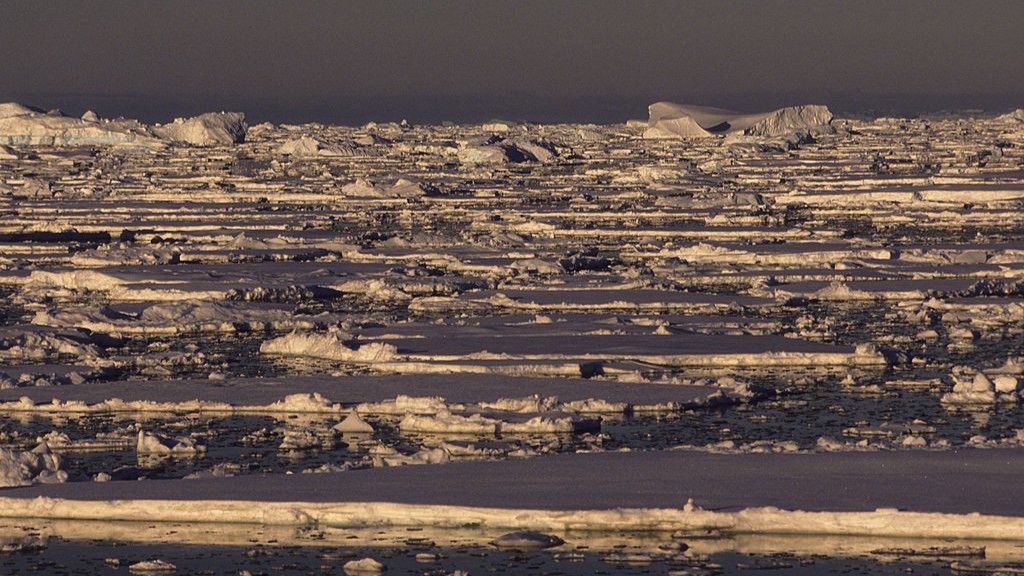
Antarctica’s sea ice hit a record low in February 2023 and the continent has remained below its historical average through 2025 and early 2026, with researchers identifying strong westerly winds and ocean destratification as the drivers. The study finds a three-phase decline from 2013 to 2023, culminating in self-reinforcing heat absorption that accelerated melting after 2015. While primarily climate science, the findings imply longer-term risks to carbon storage, ecosystems, and exposure of Antarctic ice shelves to warmer water.
The market implication is not the climate headline itself, but the regime shift in Southern Ocean heat storage. A weaker sea-ice shield means less albedo and less brine-driven overturning, which raises the probability of a multi-year step-up in atmospheric and oceanic warmth rather than a linear drift; that is the kind of nonlinear forcing that tends to reprice long-duration cash flows, not just commodity weather trades. The first-order asset losers are likely to be insurers, reinsurers, and coastal infrastructure proxies with embedded tail-risk underpricing, while the second-order winners are firms with adaptation exposure: cooling, flood control, industrial water, and satellite/weather analytics.
From a commodities lens, the more important channel is not immediate temperature swings but carbon and nutrient sequestration. If the Southern Ocean stores less heat and carbon at depth, the implied medium-term bid for carbon-intensive assets is worse than the usual “warmer winters” trade suggests, while also increasing volatility in maritime logistics and insurance around southern routes. Agriculture is a nuanced beneficiary/loser mix: fewer Antarctic sea-ice feedbacks can amplify global temperature variance, which is usually bearish for broad crop-input stability and bullish for volatility-sensitive fertilizer and ag-tech names.
The contrarian point is that the consensus may be too linear on “permanent collapse.” If precipitation and glacier melt freshen the surface faster than expected, the ocean can partially re-stratify and temporarily slow the feedback loop, creating sharp but tradable mean reversion in sea-ice-related risk premia. That argues against chasing a one-way climate narrative and instead favoring convexity: long-dated options on adaptation beneficiaries and short-dated hedges on climate-exposed insurance/utility names around seasonal extremes.
The cleanest trading edge is to express this as a volatility and dispersion event, not a directional macro call. The real tradable inflection is that the market may underprice the correlation between Antarctic stratification loss and global climate tail risk over a 12-36 month horizon, especially if 2026 sea ice remains structurally below normal into the Southern Hemisphere winter.
AI-powered research, real-time alerts, and portfolio analytics for institutional investors.
Request DemoOverall Sentiment
moderately negative
Sentiment Score
-0.45
